Search
for
Sort by
Research
30-60 / 1000+ resultsresearch Polymorphism of keratin-associated protein (KAP) 7 gene and its association with wool traits in Rambouillet sheep
The KAP 7 gene affects wool traits in Rambouillet sheep, with the BB genotype showing the best wool characteristics.
research GJB6 missense variant in a Labrador Retriever with paw pad hyperkeratosis
A genetic variant in the GJB6 gene likely caused the Labrador's paw pad condition.
research Inhibitory effect of 7DHC and BM15766 in HF organoid culture.
7DHC and BM15766 damage hair follicle structure and reduce key gene expression.
research Read-Through for Nonsense Mutations in Type XVII Collagen‒Deficient Junctional Epidermolysis Bullosa
A new therapy for a skin blistering condition has not been developed yet.
research Case of non-Herlitz junctional epidermolysis bullosa withCOL17A1mutation
Genetic testing is crucial for diagnosing and managing non-Herlitz junctional epidermolysis bullosa.
research Maintaining arc consistency using adaptive domain ordering
EREG therapy may help treat hair loss by promoting hair growth.

research Wnt7a can up-regulates cell adhesion related protein fibronectin expression and promotes cell proliferation in corneal epithelial cells
Wnt7a helps corneal cells grow and stick together, aiding in repair.

research 645 MIG6 is MEK-regulated and affects EGF-induced migration in mutant NRAS melanoma
Decreasing MIG6 can increase the movement and invasiveness of MEK-inhibited mutant NRAS melanoma, particularly when stimulated by EGF.
research Expression of E6 and E7 papillomavirus oncogenes in the outer root sheath of hair follicles extends the growth phase and bypasses resting at telogen.
E6/E7 oncogenes in hair follicles cause continuous hair growth by skipping the resting phase.
research Dominant dystrophic epidermolysis bullosa: Seven familial cases
The document concludes that detailed clinical descriptions of seven family cases help understand dominant dystrophic epidermolysis bullosa's symptoms and inheritance.
research Morphological analysis of polymers on hair fibers by SEM and AFM
Polyquaternium 7® builds up on hair, improving its look and feel, and AFM is good for measuring these changes.

research BC05 Technological and clinical demonstration of a skin ageing analysis prototype
The prototype for analyzing skin aging works technically and clinically.
research Hair eruption initiates and commensal skin microbiota aggravate adverse events of anti-EGFR therapy
Anti-EGFR therapy can cause skin issues, but FGF7 treatment might help.
research 861 EGFR/MEK inhibitor therapy induces partial hair follicle immune privilege collapse in vivo and ex vivo
research 7DHC and BM15766 treated mice (C57BL/6; n = 5) failed to regrow the hairs.
The treatments stopped hair regrowth in mice.
research Analysis of Keratin-Associated Protein-7 (KRTAP7) protein structure and function in Indian dromedary camel (Camelus dromedarius)
All Indian dromedary camel breeds have the same KRTAP7 gene affecting hair quality.
research Identification of the Rat Rex Mutation as a 7-bp Deletion at Splicing Acceptor Site of the Krt71 Gene
A gene mutation causes curly hair and hair loss in rats.

research Mapping of a novel locus for keratosis follicularis squamosa on chromosome 7p14.3–7p12.1
A new gene location for Keratosis follicularis squamosa was found on chromosome 7p14.3-7p12.1.

research De Novo design of a potent Wnt Surrogate specific for the frizzled7 subtype members
A new Wnt surrogate specifically targets the Frizzled7 receptor, promoting organoid formation and hair growth.
research Identification and molecular characterization of a new ovarian cancer susceptibility locus at 17q21.31
A new genetic region, 17q21.31, is linked to higher ovarian cancer risk.
research Morphologic and molecular characterization of two novel Krt71 (Krt2-6g) mutations: Krt71 rco12 and Krt71 rco13
research Inherited Epidermolysis Bullosa: A Clinical Case
A 37-year-old male with severe skin and internal issues has a rare inherited skin condition called dystrophic epidermolysis bullosa.
research 441 Anti-melanoma gene signature in dermal sheath fibroblasts from scalp hair follicles in Recessive Dystrophic Epidermolysis Bullosa (RDEB)
research 882 Syndactyly type III and hypotrichosis in oculodentodigital syndrome with GJA1 mutation
A boy with Oculodentodigital syndrome had a unique GJA1 gene mutation causing his symptoms.
research Histological and molecular restoration of type VII collagen in Recessive dystrophic epidermolysis bullosa mouse skin by topical injection of keratinocyte-like cells differentiated from human adipose-derived mesenchymal stromal cells
Injecting specific cells into the skin can help improve skin structure and reduce blisters in a genetic skin disorder.

research 560 Isolation of an “early” transit amplifying keratinocyte population in interfollicular human epidermis: a role for CD271 receptor
Scientists found a new type of skin cell that could help with skin repair and these cells work better with a certain protein.
research KASUS RECESSIVE DYSTROPHIC EPIDERMOLYSIS BULLOSA-MITIS YANG TERDIAGNOSIS PADA SAAT LANJUT USIA
Accurate diagnosis of RDEB-mitis in older adults is crucial for proper management without immunosuppressants.
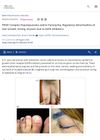
research PRIDE Complex (Papulopustules and/or Paronychia, Regulatory Abnormalities of Hair Growth, Itching, Dryness Due to EGFR Inhibitors)
PRIDE complex side effects from EGFR inhibitors can be managed without stopping treatment.
research 671 The adenosine-generating ecto-enzyme, CD73, functions as an intrafollicular regulator of human hair growth
CD73 may regulate hair growth and could be targeted for hair growth treatments.