12 citations
,
August 2001 in “PubMed” CE-PTG is a better method for analyzing hair growth in androgenetic alopecia.
 5 citations
,
May 2018 in “Drug Safety”
5 citations
,
May 2018 in “Drug Safety” Using electronic health records can help identify drug side effects but has some limitations.
4 citations
,
January 2023 in “Indian Dermatology Online Journal” A simple test can help diagnose a rare bruising disorder after ruling out other causes.
17 citations
,
December 2022 in “Biosensors” Triboelectric nanogenerators can power wearable medical devices for long-term self-treatment and monitoring.
 February 2023 in “International journal of research - granthaalayah”
 The new microscope method helps study energy from pre-cancerous skin cells.
 October 2024 in “INTERNATIONAL JOURNAL OF SCIENTIFIC RESEARCH”
 Trichoscopy can help diagnose Vitamin B12, Vitamin D3, and ferritin deficiencies without blood tests.
 April 2026 in “Dermatology and Therapy”
 The device improved hair growth and thickness in men without side effects.
 1 citations
,
May 2018 in “jurnal veteriner”
1 citations
,
May 2018 in “jurnal veteriner” Scraping is the best method to diagnose demodicosis in dogs.
 September 2025 in “Pakistan Journal of Science”
 Diabetics have lower essential element levels, which may contribute to diabetes, and certain plants might help manage it.
4 citations
,
September 1993 in “Steroids” The method accurately measures testosterone metabolites with high sensitivity and low environmental impact.
 17 citations
,
August 2019 in “Frontiers in Immunology”
17 citations
,
August 2019 in “Frontiers in Immunology” Non-invasive methods show promise for diagnosing skin diseases like psoriasis and lupus but need more research for regular use.
20 citations
,
February 1968 in “Journal of Histochemistry & Cytochemistry” A new test more accurately detects citrulline in hair follicles and pilomatrixomas.
 2 citations
,
December 2017 in “Journal of The American Academy of Dermatology”
2 citations
,
December 2017 in “Journal of The American Academy of Dermatology” The article suggests that five common skin-related lab tests may be unnecessary and could cause extra cost and anxiety without improving patient care.
 14 citations
,
May 2005 in “Farmaco”
14 citations
,
May 2005 in “Farmaco” A method was created in 2005 to identify minoxidil, a hair growth ingredient, in products using two types of capillary zone electrophoresis, and it found that most products had about 2% minoxidil.
 September 2025 in “PubMed”
 Auricular electrostimulation reduces itching in mice.
February 2025 in “Skin Research and Technology” New non-invasive techniques can improve diagnosis and treatment of scalp and hair diseases.
1 citations
,
August 1985 in “Proceedings annual meeting Electron Microscopy Society of America” SEM/EDX can analyze hair elements but struggles with trace elements, limiting its forensic use.
 39 citations
,
January 2015 in “Journal of Electroanalytical Chemistry”
39 citations
,
January 2015 in “Journal of Electroanalytical Chemistry” New sensor detects minoxidil accurately and effectively.
January 2026 in “JAAD International” 1 citations
,
August 2025 in “Medicina” Non-invasive imaging techniques improve scalp condition diagnosis and patient quality of life.
March 2022 in “Book Publisher International (a part of SCIENCEDOMAIN International)” Human hair has bipolar electrical charges due to gaps in the hair follicle's electromagnetic fields.
 8 citations
,
January 2023 in “Biosensors”
8 citations
,
January 2023 in “Biosensors” Piezoelectric Nanogenerators are promising for non-invasive health monitoring but need efficiency and durability improvements.
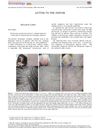 July 2021 in “Australasian Journal of Dermatology”
 The trichoscopy-assisted hair pull test is useful for diagnosing different types of hair loss.
 9 citations
,
September 1947 in “Archives of dermatology and syphilology”
9 citations
,
September 1947 in “Archives of dermatology and syphilology” Electrolysis is better for permanent hair removal with less scarring.
 April 2023 in “Journal of Investigative Dermatology”
 The improved EczemaNet more reliably and clearly identifies and assesses the severity of atopic dermatitis from photos.
 12 citations
,
September 2002 in “Epilepsia”
12 citations
,
September 2002 in “Epilepsia” Monitoring new epilepsy drugs after they're sold is crucial to find rare and long-term side effects that initial tests might miss.
 May 2022 in “Голова и шея.”
 Functional tests and manual muscle testing effectively assess muscle performance in children with health issues.
1 citations
,
December 2022 in “Skin Appendage Disorders” Teledermatology can effectively diagnose Loose Anagen Syndrome remotely.
6 citations
,
August 2022 in “Molecules” A hair test shows promise for early mood disorder diagnosis.
7 citations
,
June 2019 in “Coloration Technology” Translucent keratin films are better for testing hair dyes.