 2 citations
,
January 2020 in “BioMed Research International”
2 citations
,
January 2020 in “BioMed Research International” Phaeodactylum tricornutum extract helps hair follicle cells grow by activating the ERK1/2 pathway.
 2 citations
,
January 2017 in “Journal of Pigmentary Disorders”
2 citations
,
January 2017 in “Journal of Pigmentary Disorders” Genetics, stress, and health issues can cause early hair greying, which affects self-esteem, and there's no cure, only hair dye.
 2 citations
,
October 2015 in “Human Gene Therapy”
2 citations
,
October 2015 in “Human Gene Therapy” The congress highlighted new gene therapy techniques and cell transplantation methods for treating diseases.
 2 citations
,
January 2012 in “InTech eBooks”
2 citations
,
January 2012 in “InTech eBooks” Chemotherapy often causes hair loss, which usually grows back within 3 to 6 months, but there's no effective treatment to prevent it.
 1 citations
,
July 2021 in “Current Issues in Molecular Biology”
1 citations
,
July 2021 in “Current Issues in Molecular Biology” Father's finasteride use may affect son's fertility and testicular function.
 1 citations
,
July 2019 in “Microscopy Today”
1 citations
,
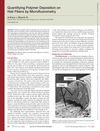
July 2019 in “Microscopy Today” Microfluorometry effectively measures how much polymer coats and penetrates hair, useful for evaluating hair products.
 1 citations
,
January 2010 in “Springer eBooks”
1 citations
,
January 2010 in “Springer eBooks” Certain micronutrients may improve hair and nail health, but more research is needed to confirm their benefits.
 June 2026 in “International Journal of Drug Delivery Technology”
 Herbal remedies show promise for managing premature hair greying but need more research.
 March 2026 in “Plastic and Aesthetic Research”
 Adipose-derived stem cell exosomes can help reduce skin aging from UV exposure.

NaOH treatment improves hair strength and suitability for textiles.
 January 2026 in “Drug Delivery and Translational Research”
 Multicomponent crystals in microneedles improve drug delivery for hair loss treatment.
 January 2026 in “Nano-Micro Letters”
 4D scaffolds made with melt electrowriting can change shape for use in medicine.
 January 2026 in “International Journal of Applied Pharmaceutics”
 Nanoparticle-embedded microneedles improve drug delivery through the skin but face challenges in stability and safety.
 December 2025 in “Al-Iraqia Medical College Journal”
 Virus infection risk is linked to heat tolerance and size, but decreases with high humidity and mutation rate.
 June 2025 in “Medical academic journal”
 Modified liposomes with exosomes effectively deliver RNA to stem cells.
 April 2025 in “Dermatology Practical & Conceptual”
 Increased LC3 gene expression may be linked to premature graying of hair.

Polarized microscopy helps identify hair irregularities in genetic disorders.
 December 2024 in “Mağallaẗ ʻulūm al-rāfidayn”
 Adding more zinc oxide nanoparticles increases sunblock SPF.
 August 2024 in “Qucosa (Saxon State and University Library Dresden)”
 White fat tissue in the skin helps control inflammation by affecting certain immune cells.
 July 2024 in “Scholars Journal of Medical Case Reports”
 Combining low-level laser therapy and exosome therapy promotes hair growth.
 November 2022 in “CARDIOMETRY”
 A group has developed therapies that show promise for treating cancer and various other conditions.
 September 2022 in “Institutional Repositories DataBase (IRDB)”
 Adipose-derived stem cells can be transformed into hair-forming cells using specific extracellular vesicles, offering potential for hair regeneration therapies.
 March 2021 in “bioRxiv (Cold Spring Harbor Laboratory)”
 Removing a specific gene in certain skin cells causes hair loss on the body by disrupting normal hair development.
March 2021 in “Research Square (Research Square)” Ketoconazole's structure and dynamics are linked, aiding antifungal drug development.
 August 2020 in “Research Square (Research Square)”
 Neural progenitor cell-derived nanovesicles help hair growth by activating a key signaling pathway.

PlacMA hydrogels from human placenta are versatile and useful for cell culture and tissue engineering.
 December 2019 in “University of Malaya Students Repository”
 Mimosine from Leucaena leucocephala can enhance biodiesel stability.
 May 2018 in “White Rose eTheses Online (University of Leeds, The University of Sheffield, University of York)”
 Alopecia areata may be treated by using EGCG to balance immune cells and reduce inflammation.
 November 2016 in “Elsevier eBooks”
 Genetic mutations can affect female sexual development, requiring personalized medical care.

Forensic hair analysis for drugs is now more reliable and accurate.