 11 citations
,
January 2000 in “Journal of Cutaneous Pathology”
11 citations
,
January 2000 in “Journal of Cutaneous Pathology” Short telomeres contribute to aging and cancer, and while telomerase can delay aging, it may also promote cancer.
 4 citations
,
March 2012 in “European journal of wildlife research”
4 citations
,
March 2012 in “European journal of wildlife research” Wire brush snares are best for collecting Eurasian Lynx hair for DNA analysis.
 March 2024 in “International Journal of Drug Delivery Technology”
 Electrospun nanofiber mats are effective drug carriers for improving wound healing.
 May 2021 in “Austin journal of pharmacology and therapeutics”
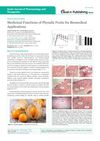
 Physalis fruits have medicinal properties that can help treat various diseases and have anti-inflammatory, antioxidant, antibacterial, and antitumor effects.
May 2026 in “ACS Catalysis” Efficient enzyme function relies on specific residue interactions and structural coordination.
24 citations
,
March 2024 in “Small Science” Single-cell encapsulation shows promise for medical use but faces production challenges.
4 citations
,
September 2025 in “Pharmaceutics” Natural hydrogels can improve wound healing but face challenges in becoming widely used in clinics.
73 citations
,
February 2023 in “Polymers” Peptide hydrogels are promising for drug delivery and tissue repair in medicine.
55 citations
,
October 2020 in “Frontiers in Pharmacology” Targeting endolysosomes may help treat COVID-19.
4 citations
,
November 2024 in “Materials” The film creates vibrant colors and can be used in food sensors and cosmetics.
 December 2023 in “The journal of physical chemistry. B (1997 : Online)”
 Human hair keratin might be good for filtering out harmful substances from water.
Peptide hydrogels show promise for healing skin, bone, and nerves but need improvement in stability and compatibility.
November 2025 in “Journal of Natural Fibers” Human hair waste can be valuable in engineering and materials due to its unique properties.
213 citations
,
September 2020 in “Journal of Functional Biomaterials” Bio-based electrospun fibers improve wound healing but face production and regulatory challenges.
169 citations
,
October 2020 in “Pharmaceutics” Polysaccharide-based nanofibers are promising for better wound healing.
128 citations
,
February 2023 in “Molecules” Chitosan-based hydrogels effectively control bleeding and have promising medical uses.
125 citations
,
March 2017 in “Micromachines” Microfluidic technology improves cell spheroid creation for better drug testing and tissue engineering.
122 citations
,
December 2022 in “International Journal of Molecular Sciences” Nanoparticles improve skin treatment but need more research on safety and effectiveness.
65 citations
,
March 2017 in “Experimental Dermatology” Curly hair is influenced by specific genetic variations.
61 citations
,
September 2024 in “Micromachines” Electrospun nanofiber membranes are promising for non-invasive medical uses like tissue repair and health monitoring.
54 citations
,
March 2024 in “Journal of Medicinal Chemistry” N-oxides are important in medicine for improving drug properties and targeting.
18 citations
,
February 2025 in “Macromolecular Rapid Communications” Thermo-responsive polymers in nanoparticles enable targeted drug delivery and advanced therapies by releasing drugs at specific temperatures.
16 citations
,
September 2021 in “Frontiers in Bioengineering and Biotechnology” The nanofibers improved cell adhesion and could be used for tissue-engineered blood vessels.
15 citations
,
April 2023 in “Biology” Plant and algal lipid droplets are promising for natural oil production but need better extraction methods.
15 citations
,
June 2016 in “Computers in Biology and Medicine” Ascorbyl Tetraisopalmitate penetrates skin better in the stratum corneum than in the infundibulum.
13 citations
,
April 2025 in “International Journal of Nanomedicine” The new gallic acid hydrogel speeds up wound healing and reduces scarring.
8 citations
,
November 2023 in “Frontiers in Bioengineering and Biotechnology” Combining metals and herbs in microneedles can improve wound healing.
 8 citations
,
January 2023 in “Biosensors”
8 citations
,
January 2023 in “Biosensors” Piezoelectric Nanogenerators are promising for non-invasive health monitoring but need efficiency and durability improvements.
7 citations
,
November 2025 in “Pharmaceutics” Polymer- and lipid-based nanostructures can improve wound healing by controlling contamination, supporting cell growth, and aiding tissue repair.
 6 citations
,
February 2023 in “Biomaterials Research”
6 citations
,
February 2023 in “Biomaterials Research” Special gels help heal diabetic foot sores and reduce the risk of amputation or death.