117 citations
,
April 2008 in “Developmental biology” Ectodysplasin inhibits Wnt signaling to help form hair follicles.
 11 citations
,
March 2020 in “American Journal of Medical Genetics Part A”
11 citations
,
March 2020 in “American Journal of Medical Genetics Part A” A mutation in the EDNRA gene causes Oro-Oto-Cardiac syndrome, affecting face and heart development.
 December 2022 in “Research Square (Research Square)”
 The QuantAnts machines can find cancer markers and create CRISPR targets for them.
 3 citations
,
May 2004 in “Journal of neurosurgery”
3 citations
,
May 2004 in “Journal of neurosurgery” Endoscopy-assisted surgery for craniosynostosis showed excellent outcomes with minimal complications and most patients went home the day after surgery.
9 citations
,
February 1984 in “Zentralblatt für Veterinärmedizin Reihe A” Biotin is essential for healthy skin and claws in pigs.
28 citations
,
September 1998 in “Journal of Investigative Dermatology” Two distinct caspases in human skin help with cell death and skin formation.
 39 citations
,
April 1992 in “Development”
39 citations
,
April 1992 in “Development” Both cell and non-cell parts are important for rat whisker follicle regrowth.
5 citations
,
January 2002 in “European journal of pediatrics” "D-CHRAMPS syndrome" is a newly identified condition with multiple severe symptoms.
 24 citations
,
November 2015 in “Scientific reports”
24 citations
,
November 2015 in “Scientific reports” Human hair has a new region with ordered filaments and the cuticle contains β-keratin sheets.
3 citations
,
March 2013 in “American Journal of Dermatopathology” Ossification in trichilemmal cysts is more common than previously believed.
The treatment improved facial structure and corrected bite issues in patients.
19 citations
,
July 1997 in “British Journal of Dermatology” LHTric-1 is a specific antibody useful for studying hair and nail formation.
3 citations
,
March 2023 in “Annals of the New York Academy of Sciences” Mutations in claudin-1 and claudin-3 cause hair loss in baby mice.
1 citations
,
July 2017 in “PubMed” Two patients with Cronkhite-Canada syndrome achieved remission after treatment.
 January 2024 in “Dermatologic Surgery”
 The device is useful for anesthesia, healing treatments, and preventing hair loss.
18 citations
,
April 2002 in “Journal of cutaneous pathology” Tiny infundibular cysts are the main lesions in chloracne, not comedones.
11 citations
,
December 2013 in “Clinical and experimental dermatology” A child with skin and heart issues had rare genetic mutations affecting skin and heart cell cohesion.
 April 2017 in “Journal of Investigative Dermatology”
 Certain mutations in the KLHL24 gene cause a skin disorder by breaking down an important skin protein.
 September 2024 in “Journal of Medicine and Life”
 A specific gene mutation causes a severe skin disorder in a family.
 August 2007 in “Microscopy and Microanalysis”
 Hair fibers break by cuticle cell slipping, shape changing, cuticle fraying, and surface cracking when stretched under specific conditions.
8 citations
,
February 2025 in “Cell Systems” Engineered bacteria can deliver antioxidants to protect skin.
 April 2019 in “Journal of Investigative Dermatology”
 Calcium signals and SHH guide the direction of feather growth in chicken skin.
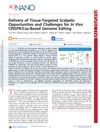 60 citations
,
July 2020 in “ACS Nano”
60 citations
,
July 2020 in “ACS Nano” Using CRISPR for gene editing in the body is promising but needs better delivery methods to be more efficient and specific.
75 citations
,
September 2016 in “EMBO journal” PRC2 is essential for maintaining intestinal cell balance and aiding regeneration after damage.
January 2018 in “Zurich Open Repository and Archive (University of Zurich)” April 2021 in “The journal of investigative dermatology/Journal of investigative dermatology” CTCF protein is essential for skin and hair follicle development in mice.
October 2020 in “Tierärztliche Praxis. Ausgabe Grosstiere, Nutztiere” Cows moving from tie-stalls to free-stalls had fewer leg injuries but more stress and heel horn erosions.
99 citations
,
January 2002 in “Plastic & Reconstructive Surgery” Fetal rat wounds heal without scars at 16.5 days gestation.
 1 citations
,
July 1997 in “The Lancet”
1 citations
,
July 1997 in “The Lancet” Scientists found a new protein, AMY117, common in Alzheimer's patients, which could be important for treatment and diagnosis.
46 citations
,
May 2003 in “Mechanisms of Development” Increasing calcium sensing receptor speeds up skin and hair development in mice.