 8 citations
,
November 1990 in “Archives of Dermatology”
8 citations
,
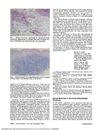
November 1990 in “Archives of Dermatology” A woman with EMS showed unusual skin mucinosis without the typical hard skin syndrome, suggesting EMS can cause skin mucinosis.
IP-PA1 helps grow hair in mice and affects human cell growth-related genes differently than traditional hair growth treatments.
15 citations
,
June 2012 in “British Journal of Dermatology” A new mutation in the KRT86 gene causes a hair disorder with variable expression.
63 citations
,
February 2010 in “Journal of Neurophysiology” Microstimulation of certain facial and mouth nerves can evoke specific sensations, while deeper nerves may require multiple stimulations to affect perception.
 2 citations
,
June 2016 in “Korean journal of veterinary research”
2 citations
,
June 2016 in “Korean journal of veterinary research” Emodin may help hair grow similarly to minoxidil and could treat baldness.
 January 2024 in “Wiadomości Lekarskie”
 New technologies improve diagnosis and treatment of digestive disorders.
 6 citations
,
September 2022 in “Frontiers in pharmacology”
6 citations
,
September 2022 in “Frontiers in pharmacology” Epimedium extract helps increase skin pigmentation and could be a new treatment for conditions with reduced pigmentation.
1 citations
,
April 2025 in “Drug Delivery and Translational Research”  January 2024 in “Wiadomości Lekarskie”
 Pemigatinib may be effective for treating ZMYM2::FGFR1 fusion-positive leukemia.
August 2019 in “Key engineering materials” A microemulsion with Carthamus tinctorius extract effectively inhibits 5α-reductase and improves skin and hair follicle delivery.
Hair follicles emit electromagnetic fields due to S100 proteins.
Daily use of emollients from birth may reduce atopic dermatitis in infants, but results are mixed.
29 citations
,
December 2004 in “Developmental biology” cDermo-1 causes dense skin, feathers, and scales in chickens.
 1 citations
,
October 2018 in “International research journal of pharmacy”
1 citations
,
October 2018 in “International research journal of pharmacy” Rampai leaves extract can significantly stimulate hair growth.
7 citations
,
April 2000 in “Mammalian Genome” A new mutation in mice causes crooked whiskers and messy hair.
 August 2025 in “International Journal of Pharmaceutical Sciences and Nanotechnology”
 The new minoxidil nanoemulgel may treat hair loss more effectively with fewer side effects.
 July 2026 in “International Journal of Drug Delivery Technology”
 The herbal emulgel with Piper betle leaf extract promotes hair growth and is safe for skin use.
18 citations
,
January 2019 in “European journal of histochemistry” Cattle skin has leptin which might control skin and hair growth.
 2 citations
,
October 1999 in “Annals of the New York Academy of Sciences”
2 citations
,
October 1999 in “Annals of the New York Academy of Sciences” Melatonin and cortisol affect mink winter hair growth, but β-endorphin levels do not.
 3 citations
,
August 2021 in “Research Square (Research Square)”
3 citations
,
August 2021 in “Research Square (Research Square)” The most common sign of aging at the gene level is more Ectodysplasin A2 Receptor (EDA2R) being made.
January 2013 in “The Thai Journal of Pharmaceutical Sciences”  July 2023 in “Journal of Cosmetic Dermatology”
 Ethosomes could improve how well skin treatments work, but more research is needed on their safety and stability.
49 citations
,
July 2000 in “Journal of Histochemistry & Cytochemistry” POMC-derived peptides are important for skin functions like immune response and stress management.
10 citations
,
August 1998 in “Journal of Investigative Dermatology” 24 citations
,
January 2023 in “Frontiers in Medicine” Moist Exposed Burn Ointment speeds up healing of diabetic wounds.
56 citations
,
November 1958 in “The Journal of Cell Biology” A unique skin cell similar to hair bulb melanocytes was identified, with better preservation using permanganate fixation.

Meis2 is essential for touch sensation and proper nerve connection to touch receptors in certain skin areas of mice.
January 2017 in “Seoul National University Open Repository (Seoul National University)” AIMP1 can boost hair growth by increasing stem cell activity.
1 citations
,
April 2023 in “International journal of molecular sciences” Certain skin proteins can form anchoring structures without the protein AMACO.
November 2025 in “OPAL (Open@LaTrobe) (La Trobe University)” Gentamicin-loaded exosomes improve healing of infected diabetic wounds in mice.