
GV-350 improves hair growth and quality of life in iron-deficient women without side effects.
 September 2025 in “Journal of Dermatology Research Reviews & Reports”
 Rigenera® effectively improves hair condition in Androgenetic Alopecia, and HairMetrix® tracks progress well.
 April 2025 in “International Journal of Ayurveda and Pharma Research”
 Ayurvedic treatment can reverse premature graying and improve hair health.
 April 2025 in “International Journal of Homoeopathic Sciences”
 Homeopathy helped regrow hair and improve emotional health in alopecia areata.
 April 2025 in “International Journal of Homoeopathic Sciences”
 Homeopathic treatment improved PCOS symptoms in a 24-year-old woman.
 January 2025 in “Dermatology Practical & Conceptual”
 Perinevoid alopecia can be effectively treated with non-invasive corticosteroids.
 January 2025 in “TURKDERM”
 Alopecia areata incognito in children can be effectively treated with triamcinolone acetonide and supplements, leading to full hair regrowth.
 January 2025 in “International Journal of Unani and Integrative Medicine”
 Combining modern and Unani treatments may offer better care for hirsutism in PCOS.
 December 2024 in “Biomedical & Pharmacology Journal”
 Hair Tonic A, with white tea extract, is better for improving hair health.
 November 2024 in “Journal of Young Pharmacists”
 Siddha medicine helped a child regrow hair lost from alopecia areata.

The new gel for hair loss is safe, effective, and reduces side effects.
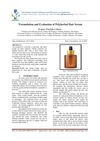 June 2024 in “International Journal of Pharmaceutical Research and Applications”
 Polyherbal hair serum can hydrate the scalp and promote hair growth safely.
 May 2024 in “Brazilian Journal of Hair Health”
 Finasteride-loaded nanoparticles were successfully created for potential improved hair growth treatment.
 April 2024 in “International Journal of Advanced Multidisciplinary Research and Studies”
 Early investigation and a team approach are crucial for managing primary amenorrhea effectively.

The Chromolaena odorata patch significantly speeds up wound healing.
 January 2024 in “Seven Editora eBooks”
 Different techniques measure hair properties to ensure cosmetic products work.
 January 2024 in “Archives of dermatological research”
 Both treatments for alopecia areata showed similar modest effectiveness.
 January 2024 in “International Journal of Homoeopathic Sciences”
 Homeopathic treatment may help manage alopecia areata.
 October 2023 in “European medical journal. Dermatology”
 Hair loss greatly affects quality of life, and dermatologists are crucial for proper diagnosis and treatment.
 September 2023 in “International Journal For Multidisciplinary Research”
 Ayurvedic treatments can help manage PCOS symptoms.
 January 2023 in “Asian Journal of Pediatric Research”
 Trichoscopy is crucial for diagnosing and assessing alopecia areata in children.
 January 2023 in “International Journal of Research Publication and Reviews”
 Some herbal ingredients like linalool and tea tree oil have anti-dandruff properties and are safe for use in shampoos.
 January 2022 in “Frontiers in Medical Science Research”
 Blood stasis is the main cause of spot baldness, and treatments should focus on improving blood circulation.
 February 2020 in “Drug Analytical Research”
 Magistral pharmacies had issues with production quality and dosage accuracy.
 January 2019 in “Springer eBooks”
 Some chemicals and drugs can cause hair loss, which usually grows back after stopping the treatment.
 June 2018 in “The Medical Journal of Cairo University/The Medical Journal of Cairo University”
 Dermoscopy can quickly and reliably distinguish Tinea Capitis from Alopecia Areata by identifying specific hair patterns.
 April 2016 in “The journal of investigative dermatology/Journal of investigative dermatology”
 MPZL3 is crucial for seborrheic dermatitis development.
 April 2016 in “Medical Acupuncture”
 The document concludes that hair loss in women is treated with medications, therapies, and surgery in Western medicine, and with acupuncture and herbs in Chinese medicine, but hereditary hair loss is hard to reverse.
 December 2014 in “Bali Medical Journal”
 Females have higher estrogen receptor levels in hair than males, and these levels decrease in white hair compared to black hair.
 November 2013 in “John Wiley & Sons, Ltd eBooks”
 The document concludes that accurate diagnosis of male and female gonadal disorders is crucial for effective treatment and better patient outcomes.