April 2026 in “Future Medicinal Chemistry” PROTACs have become a breakthrough in medicine by effectively targeting and degrading specific proteins to treat diseases.
 7 citations
,
December 2013 in “The Journal of Dermatology”
7 citations
,
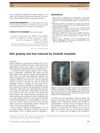
December 2013 in “The Journal of Dermatology” A woman's hair turned gray and fell out after starting a cancer drug called imatinib mesylate.
 July 2022 in “The journal of investigative dermatology/Journal of investigative dermatology”
 Blocking mTORC1 activity with rapamycin could help increase hair pigmentation and growth, potentially reversing gray hair.
16 citations
,
August 2023 in “JAAD Case Reports” JAK inhibitors, like ruxolitinib, may effectively treat frontal fibrosing alopecia.
 7 citations
,
April 2023 in “Frontiers in immunology”
7 citations
,
April 2023 in “Frontiers in immunology” Oral baricitinib and ruxolitinib are effective and safe for treating alopecia areata.
 29 citations
,
September 2017 in “Oncology and therapy”
29 citations
,
September 2017 in “Oncology and therapy” The document provides advice on how to recognize and treat skin-related side effects of cancer drugs known as EGFR inhibitors.
2 citations
,
December 2015 in “DOAJ (DOAJ: Directory of Open Access Journals)” Targeted anticancer therapies often cause skin issues, affecting treatment adherence and quality of life.
 192 citations
,
January 2015 in “Journal of the American Academy of Dermatology”
192 citations
,
January 2015 in “Journal of the American Academy of Dermatology” Targeted cancer therapies often cause serious skin problems that need careful management.
1 citations
,
September 2023 in “Journal of the American Academy of Dermatology” Ritlecitinib effectively regrows and maintains scalp, eyebrow, and eyelash hair in alopecia areata patients.
August 2024 in “JAAD Case Reports” Upadacitinib successfully regrew hair in a child with alopecia universalis and specific genetic mutations.
25 citations
,
March 2021 in “Australasian Journal of Dermatology” Ustekinumab successfully treated a man's resistant skin condition when other treatments failed.
 November 2022 in “The journal of investigative dermatology/Journal of investigative dermatology”
 TYK2 inhibition may help treat alopecia areata by promoting hair growth and reducing immune response.
December 2025 in “Journal of Human Immunity” JAK inhibitors may help improve symptoms in adults with APECED.
July 2024 in “Journal of Investigative Dermatology” PH-762 shows promise in treating skin cancer by effectively targeting and silencing PD-1 in tumors with minimal side effects.
April 2025 in “The Journal of Dermatology” Janus kinase inhibitors may help treat cutaneous T-cell lymphoma, but more research is needed.
56 citations
,
July 2014 in “PloS one” SARMs may be an effective treatment for a certain type of breast cancer by blocking cancer growth and spread.
 January 2024 in “Revista de la Asociación Colombiana de Dermatología y Cirugía Dermatológica/Revista de la Asociacion Colombiana de Dermatologia y Cirugia Dermatologica”
 Baricitinib successfully treated severe hair loss.
 October 2024 in “Journal of the European Academy of Dermatology and Venereology”
 Ritlecitinib and baricitinib are similarly effective for hair regrowth in severe alopecia areata.
 July 2026 in “Frontiers in Pediatrics”
 An 11-year-old girl with severe hair loss regrew and repigmented her hair after JAK inhibitor treatment.
 January 2025 in “Journal of Cutaneous Immunology and Allergy”
 Baricitinib is effective for treating severe alopecia areata in Japanese patients, but long-term safety needs more study.
97 citations
,
January 2020 in “Advances in chronic kidney disease” Calcineurin inhibitors, used in kidney transplants, can cause a wide range of side effects including kidney damage and other health issues.
 October 2021 in “Revista Medicina Cutánea Ibero-Latino-Americana”
 PRIDE syndrome helps identify skin side effects from EGFR inhibitors like erlotinib.
1 citations
,
November 2024 in “Blood” PI3Kδ inhibition may effectively treat cutaneous chronic graft-versus-host disease.
 2 citations
,
August 2019 in “BMC Complementary and Alternative Medicine”
2 citations
,
August 2019 in “BMC Complementary and Alternative Medicine” Asiasari radix extract may be a potential treatment for melanoma because it selectively triggers cell death in melanoma cells by affecting p53 regulation.
 7 citations
,
April 2021 in “British Journal of Dermatology”
7 citations
,
April 2021 in “British Journal of Dermatology” Topical tofacitinib may effectively and safely regrow facial hair in some people with alopecia areata.
9 citations
,
November 2013 in “BMC Pharmacology and Toxicology” Suppressing eIF4E can prevent hair loss from chemotherapy.
January 2026 in “Medicina” JAK inhibitors show promise for treating various skin disorders effectively and safely.
22 citations
,
March 2017 in “Journal of the Formosan Medical Association” The guidelines help doctors manage skin problems from certain cancer treatments to improve patients' lives.
 June 2024 in “Indian Dermatology Online Journal”
 Topical tofacitinib is effective and safe for treating alopecia areata.
2 citations
,
October 2023 in “JURNAL ILMU KEFARMASIAN INDONESIA” Kenikir leaf extract nanosuspension may help inhibit breast cancer cell growth.