1 citations
,
April 2008 in “Pigment Cell & Melanoma Research” Foxn1 is essential for hair pigmentation by directing pigment transfer to hair cells.
22 citations
,
April 2017 in “Journal of Investigative Dermatology” Non-coding RNAs are crucial for skin development and health.
14 citations
,
January 2019 in “Advances in experimental medicine and biology” Skin stem cells are promising for healing wounds and skin regeneration due to their accessibility and regenerative abilities.
23 citations
,
September 2013 in “Molecular Carcinogenesis” Increased Stat3 activity reduces hair follicle stem cells and boosts other stem/progenitor cells.
19 citations
,
November 1985 in “Archives of Dermatology” The newborn's skin blisters healed without scarring, leaving some light spots, and stopped forming after four months.
122 citations
,
April 2020 in “American Journal Of Pathology” Skin aging is a complex process influenced by various factors, leading to wrinkles and sagging, and should be considered a disease due to its health impacts.
48 citations
,
March 2020 in “Stem Cell Research & Therapy” Using a collagen sponge scaffold helps stem cells become more like skin cells.
45 citations
,
September 2012 in “The Journal of Steroid Biochemistry and Molecular Biology” Vitamin D3 and its receptor help protect skin from UVB-related cancer.
45 citations
,
December 2007 in “The FASEB journal” There are two types of stem cells in rodent hair follicles, each with different keratin proteins.
40 citations
,
November 2021 in “International Journal of Molecular Sciences” Mutant keratins cause inflammation in Epidermolysis Bullosa Simplex, suggesting targeting them could help treat the disorder.
37 citations
,
January 2010 in “Journal of Clinical Investigation” N-WASP is essential for normal hair growth in mice.
 April 2023 in “Journal of Investigative Dermatology”
 POUF51 and HES3 are key in controlling stem cell numbers in psoriasis.
 2 citations
,
August 2019 in “Journal of skin and stem cell”
2 citations
,
August 2019 in “Journal of skin and stem cell” The study concludes that regulating apoptosis could lead to new treatments for various skin and hair conditions.
17 citations
,
October 2023 in “Molecules” Plant-derived PDRN from ginseng roots effectively heals skin and improves its barrier.
14 citations
,
July 2015 in “International Journal of Molecular Sciences” S-Methylmethionine sulfonium can protect skin from UVB damage.
 10 citations
,
August 2022 in “International Journal of Molecular Sciences”
10 citations
,
August 2022 in “International Journal of Molecular Sciences” Leptin-deficient mice, used as a model for Type 2 Diabetes, have delayed wound healing due to impaired contraction and other dysfunctional cellular responses.
 32 citations
,
April 2014 in “The journal of investigative dermatology/Journal of investigative dermatology”
32 citations
,
April 2014 in “The journal of investigative dermatology/Journal of investigative dermatology” Loss of keratin K2 causes skin problems and inflammation.
 December 2025 in “Portuguese Journal of Dermatology and Venereology”
 Erosive palmoplantar lichen planus in North-East India mainly affects the feet and often involves nails, with unique inflammatory skin changes.
 August 2010 in “The Journal of Dermatology”
 The document concludes that low-dose acne treatment is most suitable for moderate acne, with high patient satisfaction and low relapse rates.
22 citations
,
October 1996 in “Dermatologic clinics” Understanding intermediate filaments helps explain hair health and related diseases.
46 citations
,
March 2011 in “Science Advances” 3D bioprinting can now create skin with hair-like structures for medical use.
23 citations
,
January 2023 in “Journal of Developmental Biology” Reptile skin protects and prevents water loss, helping them adapt to land.
82 citations
,
November 1985 in “Archives of Dermatology” The newborn's skin condition improved over time, leaving only lighter skin patches.
20 citations
,
December 2010 in “Journal of Morphology” Lizard claws have hair-like keratins similar to those in mammals.
67 citations
,
June 2019 in “Proceedings of the National Academy of Sciences” A new 3D culture system helps grow and study mouse skin stem cells for a long time.
 42 citations
,
April 2012 in “Seminars in Oncology”
42 citations
,
April 2012 in “Seminars in Oncology” Targeted cancer therapies often cause skin problems that need careful management to improve patient quality of life and treatment success.
 January 2018 in “Turkiye Klinikleri Journal of Dermatology”
 Stem cell treatments show promise for treating hair loss.
 April 2018 in “Journal of Investigative Dermatology”
 IL-9 increases skin cell movement but decreases their ability to invade, and this effect is controlled by cell contractility, not by MMPs.
 53 citations
,
September 1999 in “The journal of cell biology/The Journal of cell biology”
53 citations
,
September 1999 in “The journal of cell biology/The Journal of cell biology” K16 can partially replace K14 but causes hair loss and skin issues.
 4 citations
,
March 2012 in “Annals of oncology”
4 citations
,
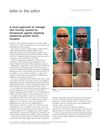
March 2012 in “Annals of oncology” New treatment with green tea polyphenols and nicotinamide improves skin problems from cancer therapy.