 9 citations
,
November 2012 in “Biomolecules & therapeutics”
9 citations
,
November 2012 in “Biomolecules & therapeutics” A compound from brown algae boosts the production of a certain inflammatory substance in skin cells.
47 citations
,
January 1998 in “Molecular Carcinogenesis” ErbB2 signaling is crucial for skin cell growth and cancer development in mice.
73 citations
,
January 2002 in “Journal of Investigative Dermatology” Epidermal stem cells don't use gap junctions to communicate.
35 citations
,
January 2018 in “Vitamins and hormones” DHEA affects various tissues by interacting with multiple receptors and can be converted into sex hormones.
32 citations
,
March 2013 in “EMBO journal” The plant hormone auxin activates the TOR pathway, affecting gene expression related to growth and cell size.
13 citations
,
July 2020 in “World journal of stem cells” Vitamin D and calcium are important for skin stem cell function and wound healing.
22 citations
,
August 2013 in “Experimental Dermatology” EGFR hyperactivation increases sebaceous gland size and sebum production in mice.
125 citations
,
August 2003 in “Development” Mice with human-like EGFR had growth issues, skin defects, heart problems, and unusual bone development.
10 citations
,
January 2019 in “International Immunology” Immune cells help keep skin healthy and repair it, but imbalance can cause disease.
77 citations
,
September 2017 in “Journal of Investigative Dermatology” TRPV3 in skin cells causes inflammation and cell death.
ETS2 drives cancer progression in squamous cell carcinoma and is linked to poor patient outcomes.
 May 2026 in “Journal of Health and Allied Sciences NU”
 Optimized culture conditions improve human epidermal stem cell growth for skin regeneration.
CRISPR gene editing reduces harmful molecules in cells from Emery–Dreifuss Muscular Dystrophy patients.
 11 citations
,
August 2014 in “PLoS ONE”
11 citations
,
August 2014 in “PLoS ONE” GFRα2 is essential for controlling neuron size but not for target innervation in certain sensory neurons.
 April 2023 in “bioRxiv (Cold Spring Harbor Laboratory)”
 Sweat gland development involves two unique skin cell programs and a temporary skin environment.
 1 citations
,
January 2018 in “Recent clinical techniques, results, and research in wounds”
1 citations
,
January 2018 in “Recent clinical techniques, results, and research in wounds” Using developmental signaling pathways could improve adult wound healing by mimicking scarless embryonic healing.
 13 citations
,
July 2024 in “Heart Failure Reviews”
13 citations
,
July 2024 in “Heart Failure Reviews” The apelinergic system might protect the heart from damage caused by doxorubicin.
31 citations
,
December 2022 in “Cold Spring Harbor Perspectives in Biology” Understanding cell transitions can lead to better wound healing treatments.
 31 citations
,
October 2010 in “Progress in lipid research”
31 citations
,
October 2010 in “Progress in lipid research” LPA3 is crucial for embryo implantation and links LPA to prostaglandin signaling.
29 citations
,
March 2022 in “Biomedicines” Enhancing antioxidant responses can improve treatments for various diseases.
 April 2023 in “Journal of Investigative Dermatology”
 Aging changes skin cells, leading to different DNA methylation and gene activity, affecting cell metabolism and aging signs.
37 citations
,
June 2004 in “Human molecular genetics online/Human molecular genetics” The HCR gene contributes to psoriasis risk.
30 citations
,
December 2014 in “BMC Genetics” Certain genes and proteins may influence wool growth in Aohan fine wool sheep.
November 2025 in “Advanced Science” A new nanozyme using EGCG and L-arginine boosts hair growth by safely increasing beneficial oxidative stress.
 9 citations
,
July 2017 in “Dermatologic Therapy”
9 citations
,
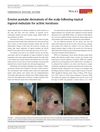
July 2017 in “Dermatologic Therapy” Two elderly men developed scalp inflammation after using a gel for skin lesions, which healed with treatment except for some permanent hair loss.
44 citations
,
June 2023 in “Cell Reports” IL-1 promotes fat cell growth in skin, while WNT inhibits it and encourages scar formation.
3 citations
,
August 2024 in “Molecular Biology Reports” LncRNA018392 helps goat skin cells grow by increasing CSF1R.
January 2000 in “Medical Entomology and Zoology”  April 2025 in “Journal of Skin and Stem Cell”
 PDRN from trout sperm helps skin and hair regeneration but is costly and complex to produce.
 March 2026 in “Folia Histochemica et Cytobiologica”
 LTBP1 is a key regulator in diseases and a potential target for new treatments.