 33 citations
,
October 2010 in “Journal of Dermatological Science”
33 citations
,
October 2010 in “Journal of Dermatological Science” Hair follicle stem cells are a practical and ethical option for nerve repair in regenerative medicine.
 April 2025 in “Cytotherapy”
 UC-MSCs derived secretome therapy may help treat hair loss safely.
 31 citations
,
December 2014 in “Advances in Clinical and Experimental Medicine”
31 citations
,
December 2014 in “Advances in Clinical and Experimental Medicine” Stem cells could improve plastic surgery but are not widely used due to cost and safety concerns.
 34 citations
,
December 2012 in “Indian Journal of Dermatology, Venereology and Leprology”
34 citations
,
December 2012 in “Indian Journal of Dermatology, Venereology and Leprology” Mesotherapy shows promise for cellulite and facial rejuvenation but has mixed results for body sculpting and hair loss, with more research needed for safety and effectiveness.
February 2017 in “Developmental Cell” Mammary stem cells drive mammary gland growth by branching and cell mixing.
 43 citations
,
January 2011 in “Plastic and Reconstructive Surgery”
43 citations
,
January 2011 in “Plastic and Reconstructive Surgery” Stem cells have great potential for improving wound healing, but more research is needed to find the best types and ways to use them.
58 citations
,
April 2009 in “Current stem cell research & therapy” Adult stem cells can become many different cell types, offering wide possibilities for repairing damaged tissues.
8 citations
,
October 2021 in “Experimental cell research” Engineered vesicles from macrophages help hair growth in mice and humans.
 November 2023 in “Stem cells and cloning”
 A new treatment using stem cell-conditioned media significantly improved hair growth in people with temporary hair loss.
 10 citations
,
January 2013 in “Stem Cells and Development”
10 citations
,
January 2013 in “Stem Cells and Development” Scientists identified a unique type of human skin stem cell that could help with tissue repair.
13 citations
,
August 2024 in “iScience” 3D spheroid culture makes stem cells better at reducing inflammation.
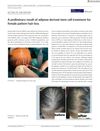 April 2021 in “Journal of Cosmetic Dermatology”
 Stem cell treatment improved hair density in female hair loss patient.
December 2022 in “Faculty Opinions – Post-Publication Peer Review of the Biomedical Literature”  6 citations
,
January 2016 in “Dermatology Review”
6 citations
,
January 2016 in “Dermatology Review” Stem cells show promise for treating skin conditions and aiding healing.
 2 citations
,
January 2013 in “Journal of the Korean Association of Oral and Maxillofacial Surgeons”
2 citations
,
January 2013 in “Journal of the Korean Association of Oral and Maxillofacial Surgeons” Dental tissues are a promising and accessible source of adult stem cells for regenerative medicine.
1 citations
,
February 2025 in “Cell Cycle” HAP stem cell sheets speed up wound healing and reduce scarring.
 September 2011 in “Clinical Biochemistry”
 The demineralized bone matrix scaffold is better for cell attachment than the mineralized bone allograft.
294 citations
,
January 2016 in “Stem Cells International” Adipose-derived stem cells are promising for tissue and organ repair due to their easy access and versatility.
 12 citations
,
November 2015 in “Cell Death & Differentiation”
12 citations
,
November 2015 in “Cell Death & Differentiation” Inflammation helps stem cells repair tissue by directing their behavior.
 20 citations
,
September 2020 in “Journal of Translational Medicine”
20 citations
,
September 2020 in “Journal of Translational Medicine” Mesenchymal stromal cells may help treat severe COVID-19, but more research is needed to confirm their effectiveness.
 December 2024 in “Biomaterials Research”
 Exosomes from hair stem cells can reduce skin aging from UVB exposure.
January 2009 in “Hubei nongye kexue” Stem cells in cashmere goats are found in hair follicles and have a slow growth rate.
80 citations
,
September 2007 in “Cell Cycle” Stem cells in hair follicles can become various cell types, including neurons.
 12 citations
,
February 2013 in “The Open Stem Cell Journal”
12 citations
,
February 2013 in “The Open Stem Cell Journal” DPSCs and SHED have great potential for medical treatments and tissue repair.
1 citations
,
December 2025 in “Stem Cell Research & Therapy” Mesenchymal stem cells help heal wounds by using Cx43 hemichannels to improve tissue repair.
3 citations
,
August 2025 in “Stem Cell Research & Therapy” Adipose-derived stem cells show promise in treating hair loss by promoting hair regrowth and improving hair follicle function.
 58 citations
,
November 2012 in “PLoS ONE”
58 citations
,
November 2012 in “PLoS ONE” Human skin cells can be turned into versatile stem cells, but their ability to do so decreases with repeated use.
20 citations
,
December 2019 in “International Journal of Molecular Sciences” HB-EGF boosts the hair growth ability of stem cells, making it a potential hair loss treatment.
 January 2012 in “Institutional Repositories DataBase (IRDB)”
 Cells from skin and lung can help regenerate hair follicles.
April 2024 in “Biosaintifika Journal of Biology & Biology Education” SH-MSCs can improve hair growth by balancing gene expressions in fluconazole-related hair loss.