 June 2026 in “International Journal of Innovative Technologies in Social Science”
 Topical eflornithine effectively reduces facial hair in women and improves quality of life.
1 citations
,
April 2025 in “Clinical Cosmetic and Investigational Dermatology” A rare skin lesion in a 64-year-old woman was successfully treated with a laser, showing minimal redness and no return after one month.
 May 2024 in “Pigment International”
 Several treatments are effective for pigmentary disorders like vitiligo and melasma.
1 citations
,
December 2024 in “Case Reports in Dermatology” Cyclophosphamide likely causes skin darkening by affecting hair follicles.
July 2000 in “The Pediatric Infectious Disease Journal” Tinea faciei should be considered in neonatal vesicular lesions and confirmed with KOH examination and culture.
 6 citations
,
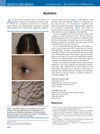
August 2012 in “The Journal of Pediatrics”
6 citations
,
August 2012 in “The Journal of Pediatrics” A 12-year-old girl was diagnosed with monilethrix, a genetic condition causing fragile, beaded hair that breaks easily, with no effective treatment available.
 January 2020 in “Annals of the Academy of Romanian Scientists Series of Medicine”
 Folliculitis decalvans is a rare skin disease causing hair loss and requires personalized treatment.
July 2022 in “Journal of Investigative Dermatology” January 2016 in “Dermatology online journal” A 15-year-old girl has a benign skin tumor on her neck.
 January 2018 in “Skin appendage disorders”
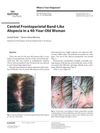
 A woman's hair loss was correctly diagnosed as Lichen planopilaris after initial misdiagnosis, highlighting the usefulness of trichoscopy in diagnosing hair disorders.
 September 2021 in “CRC Press eBooks”
 Acne keloidalis nuchae is a hair loss condition affecting men of African descent, causing scar-like bumps on the scalp and neck.
17 citations
,
January 2014 in “Journal of Oral and Maxillofacial Pathology” Seborrheic keratosis is a common, harmless skin growth that can look like cancer, so it may need a biopsy.
 March 2021 in “CRC Press eBooks”
 Trichoscopy helps tell apart Lichen planopilaris and Frontal fibrosing alopecia from other hair loss conditions.
56 citations
,
December 2010 in “The journal of investigative dermatology/Journal of investigative dermatology” Hair follicle cells age faster and lose pigment due to less catalase, causing hair to turn gray.
127 citations
,
November 2010 in “Pigment cell & melanoma research” We need more research on human hair follicle pigmentation, not just mouse models.
 9 citations
,
November 2012 in “Archives of Dermatological Research”
9 citations
,
November 2012 in “Archives of Dermatological Research” MC4R gene variants not linked to female hair loss.
October 2019 in “European Journal of Dermatology” The boy's hair and skin color differences are due to a pigmentation disorder.
2 citations
,
February 1945 in “Archives of Dermatology and Syphilology” Alopecia in the woman was likely caused by vitamin A deficiency, not a fungal infection.
 32 citations
,
September 2015 in “Dermatology”
32 citations
,
September 2015 in “Dermatology” Certain leukemia drugs can cause severe skin reactions that may require stopping treatment.
 December 2025 in “Journal of Pakistan Association of Dermatologists”
 Stopping afatinib improved a rare scalp condition in a patient.
 June 2017 in “Journal of clinical and investigative dermatology”
 Red blood cell folate levels are reliable indicators of long-term folate status in alopecia areata patients.
25 citations
,
April 2010 in “Clinical and Experimental Dermatology” Erlotinib can cause hair loss and scalp issues, which improve after stopping the drug.
October 2012 in “Indian Journal of Dermatology, Venereology and Leprology” August 2018 in “Journal of the American Academy of Dermatology” August 2025 in “Annals of African Medicine” June 2025 in “British Journal of Dermatology” Melanocytic matricoma can look like skin cancer but is usually harmless; surgery and follow-up are advised.
 October 2025 in “Indian Dermatology Online Journal”
 Trichoscopy helped correctly diagnose and treat a scalp and eyebrow fungal infection.
10 citations
,
January 2018 in “International journal of trichology” Eruptive vellus hair cysts are rare and often misdiagnosed, requiring biopsy for accurate diagnosis.
4 citations
,
November 2019 in “Dermatology - Open Journal” Lichen planus pigmentosus is hard to treat and may be more common in North Africa than previously thought.

A 12-year-old girl was misdiagnosed with alopecia areata but actually had a nevus sebaceus with a genetic mutation.