February 2023 in “Materials today bio” The treatment effectively promotes hair regrowth in androgenetic alopecia without causing skin irritation.
50 citations
,
September 2023 in “Biomarker Research” S100A6 is important for cell functions and can help diagnose and treat diseases.
November 2005 in “CRC Press eBooks” SEPA 0009 is a promising and safe skin penetration enhancer for topical use.
Compound 6 is a promising candidate for better wound healing.
21 citations
,
January 2023 in “International Journal of Molecular Sciences” S100A6 protein is linked to disease progression, especially in cancers.
 111 citations
,
August 2002 in “Journal of Medicinal Chemistry”
111 citations
,
August 2002 in “Journal of Medicinal Chemistry” New compounds were made that block an enzyme linked to breast cancer better than existing treatments.
January 2011 in “Zhongguo nongye Kexue” Transgenic sheep cells with spider silk gene were successfully created for future sheep hair expression.
 April 2016 in “Journal of Investigative Dermatology”
 Decreasing MIG6 can increase the movement and invasiveness of MEK-inhibited mutant NRAS melanoma, particularly when stimulated by EGF.
306 citations
,
August 2011 in “Journal of cachexia, sarcopenia and muscle” Enobosarm significantly increased muscle mass and improved physical function in elderly men and postmenopausal women without serious side effects.
 April 2016 in “Journal of The American Academy of Dermatology”
 Ixekizumab is effective and safe for patients who did not improve with etanercept treatment for psoriasis.
1 citations
,
October 2018 in “PubMed” EK significantly improved wound healing and reduced infection in burn wounds.
5 citations
,
May 2023 in “Frontiers in Cell and Developmental Biology” Integrin α6 helps identify different neural crest cell types in the skin.
July 2024 in “Journal of Investigative Dermatology” Recombinant human TSG-6 speeds up wound healing in diabetic mice.
45 citations
,
October 2018 in “JCI Insight” Entospletinib effectively prevents eye and skin GVHD in mice.
 37 citations
,
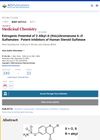
September 2003 in “Journal of Medicinal Chemistry”
37 citations
,
September 2003 in “Journal of Medicinal Chemistry” A substance called Compound 2g can strongly block STS (a hormone-related enzyme) without affecting estrogen levels, making it potentially good for treating breast cancer.
3 citations
,
February 2025 in “Metabolites” The research found enzymes in Stephania epigaea that help make cepharanthine.
4 citations
,
March 2023 in “IP International Journal of Comprehensive and Advanced Pharmacology” The new drug delivery system improves exemestane's absorption and effectiveness.
July 2026 in “Chemical Engineering Journal”  April 2016 in “Journal of Investigative Dermatology”
 The Engrailed-1 gene plays a key role in the development of sweat glands in mice.
44 citations
,
May 1997 in “Journal of Biological Chemistry” The human keratin 6a gene's specific sequences trigger expression in skin layers after injury.
January 2015 in “Elsevier eBooks” CA VI helps maintain pH balance and is important for various bodily functions.
64 citations
,
October 2018 in “Thérapie” Enriching the French health care database with external data greatly improved its usefulness.

Removing SIX1 in fat cells reduces skin fibrosis.
46 citations
,
May 1995 in “Proceedings of the National Academy of Sciences” A specific gene region can control targeted and responsive gene expression in mice, useful for skin disorder treatments.
 May 2025 in “Wound Repair and Regeneration”
 TSN6 peptide improves skin thickness and hair growth.
8 citations
,
June 2024 in “Pharmaceutics” PEA-ENL improves skin delivery and reduces inflammation without side effects.
1 citations
,
August 2025 in “Molecules” Hederagenin shows promise for cancer and inflammation treatment but needs modifications to improve effectiveness.
7 citations
,
May 2022 in “Indonesian Journal of Science and Technology” Compounds from Etlingera alba may help treat Triple Negative Breast Cancer.
 4 citations
,
May 2019 in “Zeitschrift für Naturforschung C”
4 citations
,
May 2019 in “Zeitschrift für Naturforschung C” Ishige sinicola extract helps bone-building cells grow and mature, which could aid in treating osteoporosis.
July 2024 in “Journal of Investigative Dermatology” ATR12-351 ointment safely delivers LEKTI protein to the skin, reducing enzyme activity in Netherton syndrome.