 1 citations
,
January 2025 in “BIO Integration”
1 citations
,
January 2025 in “BIO Integration” Combining ultrasound and microneedles improves drug delivery through the skin.
 1 citations
,
October 2023 in “European journal of histochemistry”
1 citations
,
October 2023 in “European journal of histochemistry” Ozone and procaine boost the release of healing factors in platelet-rich plasma.
 1 citations
,
August 2023 in “Biomolecules & therapeutics”
1 citations
,
August 2023 in “Biomolecules & therapeutics” HAPLN1 can promote hair growth and may help treat hair loss.
 1 citations
,
October 2017 in “Circulation”
1 citations
,
October 2017 in “Circulation” A new technology showed that the SOX9 gene might control heart scar formation after injury, suggesting new treatment possibilities.
 1 citations
,
February 2012 in “The American Journal of Cosmetic Surgery”
1 citations
,
February 2012 in “The American Journal of Cosmetic Surgery” UBM helps hair regrowth in men and women with hair loss.
Finding functions for unknown GPCRs is hard but key for making new drugs.
 April 2026 in “Journal of Pharmaceutical Investigation”
 Nanotechnology could improve treatment for scars and atopic dermatitis by targeting skin issues more effectively.
 February 2026 in “Revista Eletrônica Polidisciplinar Voos.”
 A balanced approach using dutasteride and Serenoa repens can improve hair transplant success by protecting follicles and minimizing side effects.
 January 2026 in “Archives of Internal Medicine Research”
 PRP, exosomes, and physical therapies show promise for hair and tissue repair, but need more research for optimization.
 December 2025 in “Nature Communications”
 Skin organoids can model tuberculosis infection and help test treatments.
 November 2025 in “Molecular and Cellular Biomedical Sciences”
 There is no significant link between the MMP-1 rs1799750 polymorphism and androgenetic alopecia in the Indonesian population.
 August 2025 in “MedScien”
 Tumor-targeted drug carriers can improve chemotherapy precision and reduce side effects.

Managing oxidative stress and inflammation is crucial for better hair transplant results.

LGF injections may improve early Peyronie's disease by reducing penile curvature and plaque size.
Photobiomodulation effectively improves skin and hair conditions with minimal side effects.
 September 2023 in “bioRxiv (Cold Spring Harbor Laboratory)”
 The mTurq2-Col4a1 mouse model shows that cells can divide while attached to stable basement membranes during development.
 February 2023 in “Cosmoderma”
 Combining red LED therapy with beta-carotene is more effective for treating photoaging than red LED therapy alone.
Nanotechnology can improve alopecia treatments but faces stability challenges.
The review found that PRP is the most effective treatment for hair loss with few side effects.
 June 2020 in “Journal of Investigative Dermatology”
 Scientists successfully grew mini hair follicles using human skin cells, which could help treat baldness.
 April 2020 in “Journal of the Endocrine Society”
 A patient with untreated congenital adrenal hyperplasia had large benign tumors in her adrenal glands removed, improving her symptoms.
 March 2020 in “Central European Journal of Biology”
 The study found that stem cells and neutrophils are important for regenerating hair follicle structures in mice.

PlacMA hydrogels from human placenta are versatile and useful for cell culture and tissue engineering.
 January 2019 in “Springer eBooks”
 PRP may help with hair loss and improve hair quality with few side effects, but more research is needed.
 January 2018 in “Stem cell biology and regenerative medicine”
 The conclusion is that the nuclear lamina and LINC complex in skin cells respond to mechanical signals, affecting gene expression and cell differentiation, which is important for skin health and can impact skin diseases.
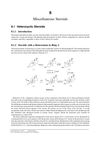
The document concludes that scientists created various steroids with different properties, including a more effective semi-synthetic vitamin D.
 October 2010 in “Epilepsy Currents”
 Ketogenic diet, neurosteroids, and HMGB1-TLR4 signaling pathway are potential targets for new epilepsy treatments.
 July 2010 in “Journal of Investigative Dermatology”
 Scientists found gene mutations that affect hair loss, skin stem cells, and skin disorders, and identified drugs that may help treat blood vessel and skin conditions.
 August 2004 in “Journal of the American College of Surgeons”
 Dermagraft and Dermalogen had a lot of granulation, while Alloderm, Integra, and ADM had good blood vessel growth for skin healing.
 19 citations
,
July 1990 in “Cleveland Clinic journal of medicine”
19 citations
,
July 1990 in “Cleveland Clinic journal of medicine” Androgen excess disorders in women were effectively treated with spironolactone, estrogen, and dexamethasone.