 1 citations
,
January 2009 in “Elsevier eBooks”
1 citations
,
January 2009 in “Elsevier eBooks” Combining proper shaving, topical treatments, and laser therapy effectively reduces Pseudofolliculitis Barbae.
July 2026 in “Journal of Investigative Dermatology” 25 citations
,
January 2006 in “Journal of the European Academy of Dermatology and Venereology” A new technique effectively treats and diagnoses eruptive vellus hair cysts without recurrence.
March 2023 in “Reactions Weekly”  1 citations
,
January 2013
1 citations
,
January 2013 Depilatories use chemicals to weaken hair for easy removal.
DPC-Exos can help regenerate hair follicles and heal wounds by activating the Wnt/β-catenin pathway.
 4 citations
,
March 2021 in “Journal of Surfactants and Detergents”
4 citations
,
March 2021 in “Journal of Surfactants and Detergents” Shampoo B, which uses water-soluble silicone, is better at detangling hair in wet conditions due to its two-layer conditioning film.
18 citations
,
November 2005 in “Archives of Dermatological Research” July 2002 in “Journal of Cosmetic Dermatology” Laser and Eflornithine are more effective for hair removal than traditional methods.
 September 2017 in “Journal of Investigative Dermatology”
 Hair care products used for 4 weeks made hair smoother.
 October 2010 in “Journal of Drugs in Dermatology”
 In 2010, Marco Toscani's team introduced a new scalpel for hair transplants that cuts parallel to hair follicles, reducing hair loss and improving on previous methods.
 April 2026 in “Zenodo (CERN European Organization for Nuclear Research)”
 Cationic conditioning systems improve hair combability and sensory feel.
February 2025 in “Experimental Cell Research” Combining specific proteins and cell-derived particles may help treat hair loss.
39 citations
,
July 2005 in “Current medical research and opinion” Topical cream eflornithine 11.5% can slow hair growth and may help reduce hair removal frequency.
 April 2026 in “Zenodo (CERN European Organization for Nuclear Research)”
 Cationic conditioning systems improve hair combability and sensory feel.
June 2026 in “BMC Microbiology” This study investigates the use of cyanoacrylate glue (CAG) as a skin-decontamination method for sampling the hair follicle microbiome, using roe deer as a nonhuman model. The research highlights the challenge of contamination from skin surface microbes during biopsy. Results show that CAG significantly reduces microbial contamination in biopsy samples, decreasing bacterial and fungal presence by 3.7-fold compared to untreated samples. The study suggests that CAG is an effective decontamination step, providing valuable insights for future human hair follicle microbiome research.
97 citations
,
January 2005 in “Wear” Human hair and skin friction vary by ethnicity, hair type, and environmental conditions.
August 1993 in “Journal of Dermatological Science” 1 citations
,
August 2015 in “PubMed” Human hair's strength comes from a honeycomb-like structure and macrofibrils.
 1 citations
,
January 2016 in “Journal of cosmetology & trichology”
1 citations
,
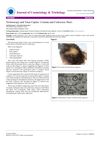
January 2016 in “Journal of cosmetology & trichology” Trichoscopy helped diagnose and treat a child's fungal scalp infection by spotting specific hair shapes.
 5 citations
,
June 2024 in “Cureus”
5 citations
,
June 2024 in “Cureus” The methods tested are reliable for assessing dandruff reduction.
 7 citations
,
November 2021 in “Clinical, Cosmetic and Investigational Dermatology”
7 citations
,
November 2021 in “Clinical, Cosmetic and Investigational Dermatology” The new hair graft device is faster, more efficient, and reduces damage to hair follicles.
 27 citations
,
August 2005 in “The journal of investigative dermatology/Journal of investigative dermatology”
27 citations
,
August 2005 in “The journal of investigative dermatology/Journal of investigative dermatology” Researchers found new genes involved in hair growth, which could help develop new hair treatments.
June 2014 in “Professional Beauty”  3 citations
,
June 2017 in “Journal of Biomaterials Applications”
3 citations
,
June 2017 in “Journal of Biomaterials Applications” Keratin extract from human hair was found to promote hair growth in mice.
 September 2025 in “PubMed”
 The treatment effectively promotes hair growth and is well-tolerated.
 July 2024 in “Journal of Nanobiotechnology”
 Mouse cell exosomes help hair regrowth and wound healing by activating a specific signaling pathway.
 3 citations
,
January 2019 in “Skin research and technology”
3 citations
,
January 2019 in “Skin research and technology” All wiping methods are as effective as washing for removing cleaning agent from hair.
November 2024 in “Stem Cell Research & Therapy” A new method improves the isolation of hair follicle cells for better hair growth research.