 38 citations
,
June 2019 in “International Journal of Molecular Sciences”
38 citations
,
June 2019 in “International Journal of Molecular Sciences” Tiny particles called extracellular vesicles could help with skin healing and hair growth, but more research is needed.
 38 citations
,
January 2016 in “Cell Death and Disease”
38 citations
,
January 2016 in “Cell Death and Disease” The TCL1 transgenic mouse model is useful for understanding human B-cell leukemia and testing new treatments.
 18 citations
,
December 2020 in “Frontiers in cell and developmental biology”
18 citations
,
December 2020 in “Frontiers in cell and developmental biology” miR-140-5p in certain cell vesicles helps hair growth by boosting cell proliferation.
 17 citations
,
June 2018 in “Frontiers in Physiology”
17 citations
,
June 2018 in “Frontiers in Physiology” ADM scaffolds help skin heal by promoting a healing-type immune response.
 14 citations
,
May 2019 in “Experimental Dermatology”
14 citations
,
May 2019 in “Experimental Dermatology” Fat tissue extract may help treat vitiligo by reducing cell stress and promoting skin repair.
 10 citations
,
June 2016 in “Wound Repair and Regeneration”
10 citations
,
June 2016 in “Wound Repair and Regeneration” The microenvironment, especially mechanical forces, plays a crucial role in hair growth and could lead to new treatments for hair loss.
 1 citations
,
January 2023 in “Burns and trauma”
1 citations
,
January 2023 in “Burns and trauma” Tiny particles from 3D-grown skin cells speed up wound healing by promoting blood vessel growth.
 January 2026 in “Journal of Biomedical Research”
 Small extracellular vesicles from stem and immune cells show promise for treating various diseases but face challenges in clinical use.
 August 2025 in “MedScien”
 Tumor-targeted drug carriers can improve chemotherapy precision and reduce side effects.
 September 2022 in “Institutional Repositories DataBase (IRDB)”
 Adipose-derived stem cells can be transformed into hair-forming cells using specific extracellular vesicles, offering potential for hair regeneration therapies.
 June 2020 in “Journal of Investigative Dermatology”
 Tiny particles from skin cells can help activate hair growth.
 April 2026 in “Journal of Pharmaceutical Investigation”
 Nanotechnology could improve treatment for scars and atopic dermatitis by targeting skin issues more effectively.
 256 citations
,
October 2013 in “Proceedings of the National Academy of Sciences of the United States of America”
256 citations
,
October 2013 in “Proceedings of the National Academy of Sciences of the United States of America” Growing human skin cells in a 3D environment can stimulate new hair growth.
 38 citations
,
June 2017 in “The Journal of Dermatology”
38 citations
,
June 2017 in “The Journal of Dermatology” Aging in hair follicle stem cells leads to hair graying, thinning, and loss.
 18 citations
,
September 2020 in “International Journal of Nanomedicine”
18 citations
,
September 2020 in “International Journal of Nanomedicine” Both human and animal-derived small extracellular vesicles speed up skin healing equally well.
 9 citations
,
January 2021 in “RSC Advances”
9 citations
,
January 2021 in “RSC Advances” Non-thermal plasma helps hair grow by improving the area around hair follicles.
 46 citations
,
January 2020 in “Theranostics”
46 citations
,
January 2020 in “Theranostics” Injecting a special gel with human protein particles can help hair grow.
 May 2024 in “International journal of nanomedicine”
 Plant-derived extracellular vesicles show promise for treating diseases like cancer and inflammation.
 239 citations
,
December 2013 in “Scientific Reports”
239 citations
,
December 2013 in “Scientific Reports” A new method quickly creates controllable cell clusters for tissue engineering and drug testing.
 3 citations
,
September 2023 in “Frontiers in immunology”
3 citations
,
September 2023 in “Frontiers in immunology” Chronic inflammatory skin diseases are caused by disrupted interactions between skin cells and immune cells.
 March 2026 in “Research Square”
 Polymer dot nanozymes and exosomes, with laser stimulation, speed up wound healing.
 March 2026 in “Folia Histochemica et Cytobiologica”
 LTBP1 is a key regulator in diseases and a potential target for new treatments.
 July 2025 in “Scientific Reports”
 Six key genes can predict bladder cancer outcomes and may serve as prognostic biomarkers.
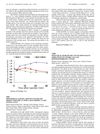 April 2010 in “The Journal of Urology”
 Human prostate cells produce more WISP1/CCN4 when there's not enough oxygen.
November 2024 in “Journal of Investigative Dermatology” Changes in hair follicle structure may help diagnose and monitor alopecia.
 2 citations
,
April 2020 in “bioRxiv (Cold Spring Harbor Laboratory)”
2 citations
,
April 2020 in “bioRxiv (Cold Spring Harbor Laboratory)” The skin's basement membrane is specially designed to support different types of connections between skin layers and hair follicles.
Extracellular matrix components affect stem cell growth and adhesion differently based on their source.
 79 citations
,
January 2015 in “Journal of Materials Chemistry B”
79 citations
,
January 2015 in “Journal of Materials Chemistry B” Smart biomaterials that guide tissue repair are key for future medical treatments.
 April 2026 in “Microsystems & Nanoengineering”
 HA-gel-dex hydrogels help heal wounds and regenerate tissue effectively.
 June 2026 in “Frontiers in Cell and Developmental Biology”
 MicroRNAs can help regenerate hair by influencing stem cells and immune responses, but delivery challenges exist.