 13 citations
,
November 2013 in “Seizure: European Journal of Epilepsy”
13 citations
,
November 2013 in “Seizure: European Journal of Epilepsy” Levetiracetam may cause hair loss, which can potentially reverse with lower doses or stopping the drug.
28 citations
,
October 2011 in “British Journal of Pharmacology” Midazolam's seizure prevention is partly due to increased neurosteroid production.
 1 citations
,
October 2023 in “Journal of clinical psychopharmacology”
1 citations
,
October 2023 in “Journal of clinical psychopharmacology” Divalproex sodium can cause pleural effusion, which stops when the drug is discontinued.
 10 citations
,
June 2011 in “Archives of Dermatology”
10 citations
,
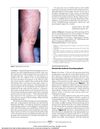
June 2011 in “Archives of Dermatology” Finasteride caused blisters on hands and feet.
 April 2023 in “Neurology”
 Valproic acid is a more effective treatment for vomiting in Alexander disease than other medications, with few side effects.
2 citations
,
August 2002 in “British Journal of Ophthalmology” Tangent screens help detect visual field defects from vigabatrin.
 2 citations
,
January 2011 in “Andrologia”
2 citations
,
January 2011 in “Andrologia” Flutamide and a new synthetic steroid affected brain and prostate chemicals and showed potential for treating androgen-related conditions and epilepsy.
15 citations
,
July 1968 in “JAMA” Severe itching can be an early sign of hyperthyroidism.
 19 citations
,
June 2011 in “British Journal of Dermatology”
19 citations
,
June 2011 in “British Journal of Dermatology” Severe digestive issues in DRESS need early endoscopy for better treatment.
 65 citations
,
September 2010 in “Journal of the Neurological Sciences”
65 citations
,
September 2010 in “Journal of the Neurological Sciences” Kennedy's disease leads to muscle weakness and sensory issues, has no cure but manageable symptoms, and future treatments look promising.
21 citations
,
July 2011 in “Journal of the American Academy of Dermatology” A man developed a rash similar to pityriasis rubra pilaris after starting sorafenib for cancer, possibly due to the drug's effect on skin cells.
13 citations
,
June 2008 in “International Journal of Dermatology” Sorafenib can cause a unique skin reaction.
March 2025 in “Molecular Neurobiology” 3 citations
,
August 2013 in “Journal of the American Academy of Dermatology” A new method quickly detects hair changes from EGFR inhibitors using a microscope.
January 2024 in “Indian Journal of Psychiatry” Precision neuromodulation may improve schizophrenia symptoms.
 July 2022 in “The journal of investigative dermatology/Journal of investigative dermatology”
 The early genes of a specific virus can cause abnormal skin cell growth and hair follicle changes.
 June 2022 in “Indian journal of clinical and experimental opthalmology”
 The report shows a young man with Hutchinson-Gilford Progeria Syndrome had typical and additional eye problems related to the disease.
21 citations
,
December 2006 in “Archives of dermatology” A kidney transplant patient developed pink skin bumps with spiny centers on her face and limbs.
 1 citations
,
March 2012 in “Revue neurologique”
1 citations
,
March 2012 in “Revue neurologique” Proper diet management is crucial for preventing severe symptoms in phenylketonuria.
3 citations
,
August 2023 in “The Journal of Pediatrics” Sodium valproate can rarely cause skin darkening, which may improve after stopping the drug.
20 citations
,
November 2020 in “Stem Cell Research & Therapy” Enhanced stem cells from the placenta can help treat Graves' eye disease by stopping fat cell growth.

Enhanced stem cells from the placenta can reduce fat cell formation in eye disease.
 4 citations
,
February 2022 in “International Journal of Molecular Sciences”
4 citations
,
February 2022 in “International Journal of Molecular Sciences” Myotonic Dystrophy may age cells faster, and drugs that target aging could be potential treatments.
 November 2023 in “Magna Scientia Advanced Research and Reviews”
 Trazodone might help reverse post finasteride syndrome.
 25 citations
,
June 2017 in “Scientific reports”
25 citations
,
June 2017 in “Scientific reports” Stress worsens Tourette symptoms by increasing allopregnanolone levels.
February 2025 in “Skin Appendage Disorders” GLP-1 receptor agonists can cause skin reactions, facial fat loss, and hair loss, but may help with wound healing and skin conditions.
 47 citations
,
June 2011 in “Movement Disorders”
47 citations
,
June 2011 in “Movement Disorders” The LRRK2-G2019S mutation in Parkinson's disease has a lifetime penetrance of 25-35%, and finasteride may help reduce symptoms in adult male Tourette syndrome patients.
12 citations
,
January 2001 in “Der Hautarzt” Trichorhinophalangeal syndrome causes hair, facial, and bone issues, with no specific treatment beyond gentle care.
 December 2025 in “Journal of Pakistan Association of Dermatologists”
 Stopping afatinib improved a rare scalp condition in a patient.
 12 citations
,
December 1985 in “Dicp-The annals of pharmacotherapy”
12 citations
,
December 1985 in “Dicp-The annals of pharmacotherapy” Carbamazepine can cause hair loss, which may reverse when the medication is stopped.