 November 2025 in “Frontiers in Immunology”
 SQSTM1 gene issues may increase the risk of alopecia areata.
 November 2025 in “Clinical Cosmetic and Investigational Dermatology”
 Tattoos may trigger autoimmune symptoms in some people.
 September 2025 in “Cureus”
 Early recognition and multidisciplinary management are crucial for improving outcomes in Parry-Romberg syndrome.
 September 2025 in “Cureus”
 Personalized anti-aging treatments improve youthfulness and quality of life.
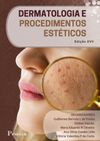 September 2025 in “Editora Pasteur eBooks”
 Continuous learning and personalized treatments are crucial in dermatology due to rapid technological advancements.
 August 2025 in “The American Journal of Medical Sciences and Pharmaceutical Research”
 Non-injection carboxytherapy is effective and safe for treating problematic skin.

Ion sequential therapy improves heart function after a heart attack.
 March 2024 in “Frontiers in medicine”
 PRP treatment can safely improve short-term vision in acute NAION patients.
 January 2024 in “Clinical, cosmetic and investigational dermatology”
 Dermatologists should customize cosmetic treatments for dark-skinned patients to minimize risks and complications.
 January 2024 in “Biological trace element research”
 Isotretinoin affects trace element levels and requires monitoring of liver and kidney functions.
 August 2023 in “International journal of medical science and clinical research studies”
 PRP therapy helps heal pediatric surgical wounds faster and with fewer scars but needs more research for safety and cost.
 May 2023 in “Dermatology and therapy”
 The document concludes that identifying the cause of eyebrow and eyelash loss is key to treating it and improving quality of life.
 July 2021 in “Archives of Aesthetic Plastic Surgery”
 The combined surgery effectively rejuvenates the upper face without serious complications.
 December 2019 in “Buletin de psihiatrie integrativă”
 Skin treatments can improve both skin health and emotional well-being, but they require careful management of patient expectations and potential addiction risks.
 January 2018 in “Springer eBooks”
 Men and women need different facial rejuvenation treatments due to distinct aging processes and anatomical differences.
Tailored nonsurgical cosmetic procedures are crucial for safely treating diverse skin types, especially skin of color.
 May 2017 in “InTech eBooks”
 Hair pulling disorder is treated with therapy and medication; hair loss from tension can be reversed if caught early.
 September 2016 in “Springer eBooks”
 Looking older on the outside might be linked to aging faster on the inside and can be affected by lifestyle choices and health risks.
 January 2016 in “Springer eBooks”
 The document concludes that there are various causes and treatments for hair loss, with hair transplantation being a notable option.
 January 2016 in “Georg Thieme Verlag eBooks”
 Hair transplantation in East Asians needs special techniques to ensure natural results and prevent complications due to their unique hair and scalp characteristics.
 August 2014 in “Plastic Surgery”
 Dr. WP Unger suggested that traditional strip harvesting might be better for hair transplants than Follicular Unit Extraction due to higher hair survival rates and less risk of a patchy look at the donor site.
 July 2014 in “Nasza Dermatologia Online”
 True facial beauty is natural, but cosmetic procedures can enhance it temporarily.
 November 2013 in “Facial Plastic Surgery Clinics of North America”
 The document concludes that careful techniques, proper patient selection, and management strategies are crucial to minimize complications in facial plastic surgery.
 August 2010 in “The Journal of Dermatology”
 The document concludes that low-dose acne treatment is most suitable for moderate acne, with high patient satisfaction and low relapse rates.
 December 2008 in “The American Journal of Cosmetic Surgery”
 Multi-pass laser skin treatments improved healing, reduced pain, and had no major complications.
 June 2008 in “Springer eBooks”
 The document concludes that permanent hair loss conditions are complex, require early specific treatments, and "secondary permanent alopecias" might be a more accurate term than "secondary cicatricial alopecia."
 June 2006 in “The American Journal of Cosmetic Surgery”
 Advancements in cosmetic and reconstructive surgery improve techniques and patient satisfaction.
 September 2005 in “Clinics in Plastic Surgery”
 The document provides a comprehensive index of medical and surgical topics, including hair removal, hair restoration, and various treatments for injuries and conditions.
 June 2005 in “British Journal of Oral & Maxillofacial Surgery”
 Advancements in aesthetic surgery from 2002-2003 include improved skin resurfacing, effective migraine surgery, satisfying hair transplants, alternative treatments for skin nevi, successful endoscopic midface enhancement, and safe techniques for facial rejuvenation.
 January 1998 in “Lasers in Surgery and Medicine”
 Lasers are effective and safe for various medical treatments, including cancer, wound healing, and skin conditions.