Low-dose oral isotretinoin improved hair loss and facial bumps in patients with a specific type of hair loss.
1 citations
,
August 2018 in “Journal of the American Academy of Dermatology” A young woman developed facial bumps before hair loss, which is unusual for her condition.
 January 2024 in “Journal of Clinical Images and Medical Case Reports”
 Baricitinib may help treat frontal fibrosing alopecia and facial papules.
 August 2021 in “Case Reports”
 A woman thought to have rosacea was actually suffering from Frontal Fibrosing Alopecia, a hair loss condition. Despite treatment, her condition didn't change, showing the importance of accurate early diagnosis.
 August 2020 in “Acta medica Iranica”
 Bumps on the face may be an early sign of a type of hair loss called frontal fibrosing alopecia.
 September 2019 in “Actas dermo-sifiliográficas/Actas dermo-sifiliográficas”
 Isotretinoin at low doses effectively treats facial papules in frontal fibrosing alopecia.
January 2018 in “JAMA dermatology” Facial papules can occur with lichen planopilaris.
 32 citations
,
September 2017 in “Journal of the American Academy of Dermatology”
32 citations
,
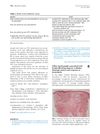
September 2017 in “Journal of the American Academy of Dermatology” Oral isotretinoin effectively treats yellow facial papules in frontal fibrosing alopecia patients.
 August 2023 in “British journal of dermatology/British journal of dermatology, Supplement”
 Rubbing or pressing on the face can cause small bumps, and changing posture along with certain creams can improve them.
2 citations
,
May 2006 in “Archives of Pathology & Laboratory Medicine” Early recognition of skin lesions in Birt-Hogg-Dubé syndrome is crucial for detecting renal tumors early.
20 citations
,
November 2004 in “Archives of Pathology & Laboratory Medicine” A rare benign skin growth called melanocytic matricoma was identified in a 69-year-old man.
 17 citations
,
November 2018 in “Dermatology”
17 citations
,
November 2018 in “Dermatology” Most patients with frontal fibrosing alopecia had facial bumps, with Hispanic/Latino and premenopausal women being more affected, suggesting a more severe condition.
 6 citations
,
August 2020 in “Clinical case reports”
6 citations
,
August 2020 in “Clinical case reports” Isotretinoin was not effective in treating facial lichen planopilaris.
 15 citations
,
December 2014 in “Dermatology and therapy”
15 citations
,
December 2014 in “Dermatology and therapy” Sorafenib can cause facial acne-like eruptions, which improve after reducing the dose or stopping the drug.
CDPDFM can improve acne symptoms in rabbit ears.
 339 citations
,
February 2014 in “Journal of The American Academy of Dermatology”
339 citations
,
February 2014 in “Journal of The American Academy of Dermatology” Most patients with frontal fibrosing alopecia are postmenopausal women, and treatments like finasteride and dutasteride can improve or stabilize the condition.
73 citations
,
January 2004 in “Journal of the American Academy of Dermatology” Immunocompromised patients can develop skin and hair issues due to a virus.
 26 citations
,
August 2016 in “Actas Dermo-Sifiliográficas”
26 citations
,
August 2016 in “Actas Dermo-Sifiliográficas” Frontal Fibrosing Alopecia in men is often missed and can come with symptoms like facial bumps and hair loss on eyebrows and limbs.
 21 citations
,
October 2017 in “Journal of the European Academy of Dermatology and Venereology”
21 citations
,
October 2017 in “Journal of the European Academy of Dermatology and Venereology” Various potential triggers may be causing the rise in frontal fibrosing alopecia, and avoiding these could help stop the disease's increase.
 11 citations
,
April 2020 in “Journal of Dermatological Treatment”
11 citations
,
April 2020 in “Journal of Dermatological Treatment” Taking oral isotretinoin with creams worked better for treating a type of hair loss than creams alone.
 9 citations
,
July 2020 in “Journal of Dermatology”
9 citations
,
July 2020 in “Journal of Dermatology” Asian patients with Frontal Fibrosing Alopecia often lose eyebrow hair and respond well to combined antiandrogen or antimalarial and topical treatments.
 8 citations
,
October 2016 in “Actas Dermo-Sifiliográficas”
8 citations
,
October 2016 in “Actas Dermo-Sifiliográficas” FFA in men, often mistaken for other hair loss types, may be more common than thought and needs larger studies for confirmation.
 5 citations
,
March 2014 in “Journal of The American Academy of Dermatology”
5 citations
,
March 2014 in “Journal of The American Academy of Dermatology” The study suggests hormonal factors may play a role in Frontal Fibrosing Alopecia and that treatments like oral antiandrogens and steroids could be beneficial.
2 citations
,
July 2012 in “BMJ” FFA can be mistaken for rosacea, requiring specific treatment for accurate diagnosis and management.
1 citations
,
August 2024 in “Anais Brasileiros de Dermatologia” Recognizing skin symptoms helps diagnose and treat frontal fibrosing alopecia.
 1 citations
,
September 2021 in “CRC Press eBooks”
1 citations
,
September 2021 in “CRC Press eBooks” Frontal Fibrosing Alopecia is a hair loss condition mainly affecting postmenopausal women, with unclear causes and various clinical patterns.
 1 citations
,
December 2017 in “Anais Brasileiros de Dermatologia”
1 citations
,
December 2017 in “Anais Brasileiros de Dermatologia” Frontal fibrosing alopecia can mimic traction alopecia but has distinct features like facial papules and eyebrow thinning.
June 2025 in “British Journal of Dermatology” Frontal fibrosing alopecia can occur in men and may be linked to immune triggers like vaccines.
April 2025 in “International Journal of Dermatology” Renaming frontal fibrosing alopecia to a syndrome could improve diagnosis and treatment.
November 2024 in “International Journal of Women’s Dermatology” Frontal fibrosing alopecia in Bogotá mainly affects postmenopausal women, with possible links to hormonal changes and sunscreen use.