August 2025 in “Seminars in Nephrology” Regenerative repair is essential to prevent long-term kidney function issues after obstruction.
 March 2025 in “International Journal of Molecular Sciences”
 Free long-chain fatty acids can stimulate hair growth in mice.
 February 2025 in “Science Advances”
 Wnt signaling helps regenerate hair follicles by affecting how skin cells sense and respond to mechanical forces.
 February 2025 in “Stem Cell Research & Therapy”
 Maintaining healthy mitochondria may help treat hair loss.
January 2025 in “Molecules” Caffeine may help with hair loss, but more research is needed to confirm its effectiveness.

Intermittent fasting slows hair growth by damaging hair follicle cells.
September 2024 in “Journal of Microbiology and Biotechnology” The tonic boosts hair growth and fights dandruff using natural electric energy.
July 2024 in “International Journal of Molecular Sciences” MicroRNAs could help assess and manage multiple chronic diseases.
 April 2024 in “Journal of translational medicine”
 Melanocytes are important for normal body functions and have potential uses in regenerative medicine and disease treatment.
February 2024 in “International journal of molecular sciences” Type 3 Innate Lymphoid Cells help maintain skin health and balance, and are involved in skin diseases and healing.
 January 2024 in “Journal of Tissue Engineering”
 A new ethical skin model using stem cells offers a reliable alternative for dermatological research.

Nanocarriers with plant extracts show promise for safe and effective hair growth treatment.
 July 2023 in “Journal of Biomedical Science”
 Different people show different symptoms for genetic diseases because of how sensitive their bodies are to small changes in important factors.
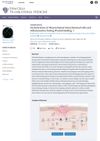 July 2023 in “Stem Cells Translational Medicine”
 Mesenchymal Stem/Stromal Cells (MSCs) help in wound healing and tissue regeneration, but can also contribute to tumor growth. They show promise in treating chronic wounds and certain burns, but their full healing mechanisms and potential challenges need further exploration.
 July 2023 in “Biomolecules”
 The circadian clock plays a key role in hair growth and its disruption can affect hair regeneration.
 June 2023 in “Frontiers in Medicine”
 Protein tyrosine kinases are key in male pattern baldness, affecting skin structure, hair growth, and immune responses.
ISX9 helps regrow hair by activating a specific cell signaling pathway.
CCC1 is essential for pH balance and normal cell function in plants.
CCC1 is essential for ion balance and proper plant cell function.
Stem cell therapy shows promise for better burn healing but needs more research and standardization.
Different types of sun exposure damage skin cells and immune cells, with chronic exposure leading to more severe and lasting damage.
 January 2017 in “Journal of Investigative Dermatology Symposium Proceedings”
 The 2015 Hair Research Congress concluded that stem cells, maraviroc, and simvastatin could potentially treat Alopecia Areata, topical minoxidil, finasteride, and steroids could treat Frontal Fibrosing Alopecia, and PTGDR2 antagonists could also treat alopecia. They also found that low-level light therapy could help with hair loss, a robotic device could assist in hair extraction, and nutrition could aid hair growth. They suggested that Alopecia Areata is an inflammatory disorder, not a single disease, indicating a need for personalized treatments.
March 2009 in “Dermatology Online Journal” Manipulating EGFR signaling may help treat hair loss and promote hair growth.

Single-cell omics can improve sheep and goat breeding by enhancing traits like wool quality and fertility.

Chirality influences the structure, strength, and biological uses of peptide-based hydrogels.
 March 2026 in “International Journal of Molecular Sciences”
 A temporary capillary cell type helps skin repair after radiation by promoting blood vessel growth.
 February 2026 in “International Journal of Molecular Sciences”
 Targeting mitochondria can improve skin healing and rejuvenation.
 February 2026 in “Cosmetics”
 Milk-derived exosomes may help treat hair loss by boosting hair follicle growth.