2 citations
,
July 2012 in “BMJ” FFA can be mistaken for rosacea, requiring specific treatment for accurate diagnosis and management.
June 2026 in “British Journal of Dermatology” Frontal fibrosing alopecia is linked to thyroid disease, lupus, vitiligo, and heart disease.
24 citations
,
July 2018 in “British Journal of Dermatology” Contact allergies might contribute to frontal fibrosing alopecia.
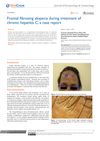 September 2017 in “Journal of Dermatology & Cosmetology”
 Hepatitis C treatment may cause frontal fibrosing alopecia.
 10 citations
,
June 2005 in “The journal of investigative dermatology/Journal of investigative dermatology”
10 citations
,
June 2005 in “The journal of investigative dermatology/Journal of investigative dermatology” FP-1 is a key protein in rat hair growth, active only during the growth phase.
 8 citations
,
December 2017 in “Journal of The American Academy of Dermatology”
8 citations
,
December 2017 in “Journal of The American Academy of Dermatology” The authors updated the criteria for diagnosing frontal fibrosing alopecia, making it easier to diagnose without a biopsy.
18 citations
,
February 2018 in “Journal of the American Academy of Dermatology” The document suggests a possible link between frontal fibrosing alopecia and rosacea.
31 citations
,
July 2012 in “Journal of Lipid Research” ACBP is crucial for healthy skin in mice.
26 citations
,
January 2012 in “Journal of the American Academy of Dermatology” Eflornithine cream makes laser hair removal more effective for treating pseudofolliculitis barbae.
 17 citations
,
June 1996 in “The Journal of Steroid Biochemistry and Molecular Biology”
17 citations
,
June 1996 in “The Journal of Steroid Biochemistry and Molecular Biology” FCE 28260 is a stronger and longer-lasting inhibitor of 5α-reductase than finasteride, which may make it a better treatment for certain medical conditions.
4 citations
,
April 2019 in “DOAJ (DOAJ: Directory of Open Access Journals)” 5-α-reductase inhibitors, intralesional steroids, and hydroxychloroquine are the most effective treatments for frontal fibrosing alopecia.
2 citations
,
November 2009 in “DSpace (Federal University of Santa Catarina)” Brunfelsia uniflora has good antioxidant properties and moderate antibacterial activity.

Early combination therapy can effectively regrow hair in frontal fibrosing alopecia.
6 citations
,
January 2014 in “Genetics and Molecular Research” The method successfully created stable transfection donor cells for goat hair follicle research.
19 citations
,
November 2012 in “Cell Communication and Signaling” FGF-9 speeds up the early development of certain organs, showing potential for organ regeneration.
 3 citations
,
February 2022 in “Dermatology practical & conceptual”
3 citations
,
February 2022 in “Dermatology practical & conceptual” The study concludes that early diagnosis of Frontal Fibrosing Alopecia is important, as it is often found in postmenopausal women, may be related to Lichen Planopilaris, and eyebrow hair loss is a common sign.
 April 2026 in “Zenodo (CERN European Organization for Nuclear Research)”
 The model improves understanding of androgen interactions by focusing on signal intensity and system capacity.
 7 citations
,
January 2009 in “Biological & pharmaceutical bulletin”
7 citations
,
January 2009 in “Biological & pharmaceutical bulletin” Ferrous Ferric Chloride may improve skin cell function and increase hair growth in mice.
 November 2025 in “SKIN The Journal of Cutaneous Medicine”
 Baricitinib shows promise in improving frontal fibrosing alopecia symptoms.
 April 2026 in “Zenodo (CERN European Organization for Nuclear Research)”
 The model improves understanding of androgen interactions by focusing on signal intensity and system capacity.
39 citations
,
July 1993 in “The journal of investigative dermatology/Journal of investigative dermatology” FGF and EGF are crucial for hair follicle development and growth.
November 2024 in “International Journal of Women’s Dermatology” Frontal fibrosing alopecia in Bogotá mainly affects postmenopausal women, with possible links to hormonal changes and sunscreen use.
 September 2019 in “The journal of investigative dermatology/Journal of investigative dermatology”
 Eyebrow hair transplants in patients with frontal fibrosing alopecia may look good at first but often lose the new hair after a few years.
 9 citations
,
July 2020 in “Journal of Dermatology”
9 citations
,
July 2020 in “Journal of Dermatology” Asian patients with Frontal Fibrosing Alopecia often lose eyebrow hair and respond well to combined antiandrogen or antimalarial and topical treatments.
October 2024 in “Benha Journal of Applied Sciences” Frontal fibrosing alopecia is a complex condition with no definitive treatment.
83 citations
,
February 1991 in “Development” Fos protein is crucial for cell transition to cornification in keratinized tissues.
3 citations
,
December 2021 in “Frontiers in Pharmacology” Ficus benghalensis leaf extracts can effectively promote hair growth and inhibit hair loss.
 April 2023 in “The journal of investigative dermatology/Journal of investigative dermatology”
 EGFR deficiency causes significant changes in skin cells and hair follicles.
 20 citations
,
January 2016 in “Intractable & Rare Diseases Research”
20 citations
,
January 2016 in “Intractable & Rare Diseases Research” Combination therapy, especially with finasteride, is effective for treating frontal fibrosing alopecia.
5 citations
,
February 2016 in “Sultan Qaboos University medical journal” The patient had a severe itchy rash and hair loss in the armpits.