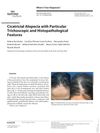
 November 2018 in “Skin appendage disorders”
 The document concludes that a woman has both Frontal Fibrosing Alopecia and Lichen Simplex Chronicus, a previously unreported combination of conditions.
 January 2012 in “The Japanese Journal of Veterinary Dermatology”
 The dog's hair loss healed on its own without treatment.
 19 citations
,
January 2008 in “The veterinary clinics of North America. Exotic animal practice”
19 citations
,
January 2008 in “The veterinary clinics of North America. Exotic animal practice” Adrenal gland disease is common in ferrets and causes hair loss and other symptoms.
 1 citations
,
January 2022 in “Advances in animal and veterinary sciences”
1 citations
,
January 2022 in “Advances in animal and veterinary sciences” Ketoconazole cream effectively treats fungal skin infections in cats.
5 citations
,
September 2008 in “Journal of the Chinese Medical Association” A kidney transplant patient got a fungal infection from her dogs, but treatment improved her condition and hair grew back.
38 citations
,
September 2017 in “Journal of zoo and wildlife medicine” Oclacitinib maleate successfully treated alopecia in Andean bears.
 March 2024 in “Brazilian Journal of Veterinary Pathology”
 The dog likely has a canine alopecia X-like disorder.
January 2016 in “Indian dermatology online journal” The patient has frontal fibrosing alopecia (FFA).
 June 2023 in “JAAD case reports”
 The document concludes that "hot comb alopecia" is now called "central cicatricial centrifugal alopecia" and its causes are complex.
 1 citations
,
January 2023 in “Advances in animal and veterinary sciences”
1 citations
,
January 2023 in “Advances in animal and veterinary sciences” Most cats with dermatophytosis had fungal infections, mainly caused by M. canis.
 5 citations
,
October 2013 in “Veterinary Clinics of North America: Equine Practice”
5 citations
,
October 2013 in “Veterinary Clinics of North America: Equine Practice” Some horses lose hair without inflammation or itching due to various conditions, and while mainly a cosmetic issue, diagnosis requires examination and biopsies, and breeding is not advised if it's hereditary.
 January 2025 in “International Journal of Advanced Biochemistry Research”
 Three Persian cats with mange were successfully treated with Ivermectin injections.
 1 citations
,
May 2003 in “Archives of Pathology & Laboratory Medicine”
1 citations
,
May 2003 in “Archives of Pathology & Laboratory Medicine” The boy had trichotillomania, causing hair loss, and treatment focused on habit reversal and support.
 November 2023 in “The journal of investigative dermatology/Journal of investigative dermatology”
 The study developed a mouse model for Alopecia Areata that responds to treatment, useful for future research.
 January 2014 in “Revista del Centro Dermatológico Pascua”
 Cutaneous lupus can cause permanent hair loss by damaging hair follicles.
57 citations
,
August 2002 in “American Journal Of Pathology” Cathepsin L deficiency causes hair and skin issues in mice.
 February 2025 in “Veterinary Clinical Pathology”
 The ferret had a malignant apocrine gland tumor and did not survive surgery.
32 citations
,
November 2006 in “Veterinary dermatology” Congenital alopecia in domestic animals is rare and involves abnormal hair follicle development, needing better understanding and classification.
 1 citations
,
December 2010 in “The journal of small animal practice/Journal of small animal practice”
1 citations
,
December 2010 in “The journal of small animal practice/Journal of small animal practice” The book helps veterinarians understand and treat hair loss in animals.
January 2024 in “Elsevier eBooks”  June 2022 in “Veterinary evidence”
 Clomipramine alone does not reduce overgrooming in cats with psychogenic alopecia.
 December 2019 in “Mehmet Akif Ersoy Üniversitesi Sağlık Bilimleri Enstitüsü dergisi”
 One cat with low thyroid hormone had growth issues, and another with high thyroid hormone had skin problems; both got better with treatment.
 2 citations
,
July 2013 in “Veterinary dermatology”
2 citations
,
July 2013 in “Veterinary dermatology” Dog skin with hair loss, when transplanted to mice, regrew hair, suggesting the hair loss cause is likely body-wide, not skin-specific.
19 citations
,
April 2014 in “Veterinary Dermatology” Demodicosis should be considered in cats with facial skin issues exposed to inhalant glucocorticoids.
 January 2026 in “The Pharma Innovation”
 A kitten with mange was cured using selamectin, shampoo, supplements, and ointment.
 29 citations
,
January 2004 in “Experimental Dermatology”
29 citations
,
January 2004 in “Experimental Dermatology” Topical anthralin helped regrow hair in mice with a condition similar to human alopecia.
4 citations
,
November 2025 in “Nature Reviews Disease Primers” 9 citations
,
January 1989 in “Journal of Small Animal Practice” Abyssinian cats can have a hair abnormality that makes their coat look rough and dull.
 July 2025 in “JAAD Case Reports”
 A thorough assessment and combined treatment are crucial for managing complex alopecia, especially in patients with skin of color.