July 2021 in “Zenodo (CERN European Organization for Nuclear Research)” Mealworm farming is a sustainable, low-cost way to produce high-quality protein-rich feed.
 November 2022 in “Journal of Investigative Dermatology”
 Butyrate helps hair grow longer, improves hair cell health, increases pigment production, and boosts hair's natural defenses.
4 citations
,
April 2022 in “Microorganisms” Povidone iodine reduced skin bacteria more than chlorhexidine gluconate, but neither met FDA reduction standards.
April 2026 in “ACS Applied Materials & Interfaces” A new treatment using probiotic microneedles shows promise for promoting hair growth and reducing inflammation in androgenetic alopecia.
 December 2021 in “Daehanhanuihakoeji”
 The traditional herbal formulas Yongdamsagan-Tang and Paljung-san, along with the drug finasteride, can reduce inflammation and may work together without affecting each other's effectiveness against benign prostatic hyperplasia.
24 citations
,
January 2018 in “Journal of Pharmacy And Bioallied Sciences” Licorice shampoo cleans well, is safe, and helps with hair issues like commercial shampoo.
 January 1983 in “Journal of the American Oil Chemists' Society”
 The U.S. soybean industry wanted government help due to foreign competition, while the jojoba industry was growing and expected to stabilize.
December 2024 in “PubMed”  January 2025 in “Investigative and Clinical Urology”
 SHPro® improved urinary symptoms and erectile function in men and is safe.
April 2026 in “IntechOpen eBooks” Exo.Reset® uses extracellular vesicle technology for skin rejuvenation.
 June 2026 in “Lahore Garrison University Journal of Life Sciences”
 The combination showed limited antifungal effects against dandruff-causing fungus.
40 citations
,
July 2008 in “PROTEOMICS” A new model helps study acne and test treatments.
11 citations
,
January 2020 in “Engineered science”  2 citations
,
September 2022 in “Advances in Environmental Biology”
2 citations
,
September 2022 in “Advances in Environmental Biology” Avicennia marina leaf extract can fight Vancomycin-resistant bacteria.
1 citations
,
June 2012 in “OhioLink ETD Center (Ohio Library and Information Network)” A new 3-D bioreactor system improves drug screening and reduces animal testing.
October 2025 in “Jurnal Mutu Pangan Indonesian Journal of Food Quality” Adding 25% Brebes shallot powder to wet noodles extends their shelf life and improves flavor but reduces elasticity.
1 citations
,
January 2004 in “China Surfactant Detergent & Cosmetics” The compound improves hair conditioning in shampoos.
 September 2020 in “Research Square (Research Square)”
 Certain genes influence immunoglobulin levels in Chinese Holstein cows, which can improve calf health.
A new method improves betulin delivery in experiments, showing promise against certain tumors.
 November 2025 in “Frontiers of Agricultural Science and Engineering”
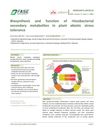
 Rhizobacterial strain RT3 helps lettuce survive drought by producing protective substances like proline.
3 citations
,
October 2023 in “Cosmetics” Effervescent cleansing tablets with Asiatic acid were successfully developed, showing good stability and cleansing effectiveness.
1 citations
,
November 2022 in “International Journal of Cosmetic Science” Lotus corniculatus seed extract reduces oily skin by decreasing sebum production.
 January 2022 in “Pharmaceutical Sciences Asia”
 Liposomes with butterfly pea extract and clove oil are stable and effective according to users.
Four bacteria from the lab were found to be resistant to selenium.
 6 citations
,
October 2019 in “Jo'jig gonghag gwa jaesaeng uihag/Tissue engineering and regenerative medicine”
6 citations
,
October 2019 in “Jo'jig gonghag gwa jaesaeng uihag/Tissue engineering and regenerative medicine” Rice bran extract boosts melanin production in hair follicles.
 3 citations
,
November 2018 in “Journal of cellular physiology”
3 citations
,
November 2018 in “Journal of cellular physiology” Serenoa repens and N-acetyl glucosamine/milk proteins complex may help with hair growth and prevent hair loss.
10 citations
,
March 2010 in “Journal of Food Biochemistry” Tamarind seed coats have strong antioxidant properties and could be used in health products and food preservatives.
2 citations
,
November 2009 in “DSpace (Federal University of Santa Catarina)” Brunfelsia uniflora has good antioxidant properties and moderate antibacterial activity.
The study identified a key protein involved in producing underarm odor and found ways to inhibit it.
1 citations
,
January 2008 in “Aesthetic dermatology”