A 16-year-old girl with gum overgrowth and excessive hair growth had successful gum surgery and healed well.
2 citations
,
June 2021 in “Sultan Qaboos University medical journal” Familial frontal fibrosing alopecia is rare, mostly affects women, and often occurs between sisters or mother-daughter pairs.
252 citations
,
March 1998 in “Developmental dynamics” FGFs-4, -8, and -9 have overlapping roles and are repeatedly used in tooth development.
92 citations
,
May 2004 in “Journal of Investigative Dermatology”  September 2017 in “Journal of Clinical Dermatology”
 A growth factor cocktail with FGF9 and microneedling effectively increases hair density and diameter in hair loss patients.
 April 2018 in “Journal of Investigative Dermatology”
 Fgf20 is important for the development and regulation of the cells that form the base of hair follicles.
 March 2022 in “Research Square (Research Square)”
 The new method isolates more hair follicle stem cells from mice quickly and these cells help promote hair growth.
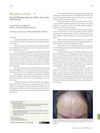 May 2019 in “Anais brasileiros de dermatologia/Anais Brasileiros de Dermatologia”
 Frontal fibrosing alopecia mostly affects postmenopausal women, with diagnosis often delayed by 3 years.
 3 citations
,
July 2019 in “International journal of scientific research in science and technology”
3 citations
,
July 2019 in “International journal of scientific research in science and technology” Herbal hair gel with fenugreek seed extract was found to increase hair growth.
January 2020 in “Hair therapy & transplantation” FUE is a modern hair transplant method that avoids large scars and is good for short hair.
12 citations
,
July 2011 in “Experimental Dermatology” The ethosomal delivery system improves topical drug delivery and promotes hair growth.
January 2014 in “Ghent University Academic Bibliography (Ghent University)” FGF18 may influence hair loss in dogs.
 26 citations
,
December 2021 in “Regenerative Biomaterials”
26 citations
,
December 2021 in “Regenerative Biomaterials” The hydrogel speeds up skin wound healing and helps regenerate tissue.
24 citations
,
February 2023 in “BMC Complementary Medicine and Therapies” Forsythiaside A reduces kidney damage from sepsis by lowering inflammation and cell death.
 8 citations
,
November 2018 in “Australasian Journal of Dermatology”
8 citations
,
November 2018 in “Australasian Journal of Dermatology” Frontal fibrosing alopecia in families shows similar signs to individual cases and may have a genetic link.
1 citations
,
December 2012 in “Journal of Dermatological Science” FGF18 controls hair growth rest phase.
April 2026 in “Journal of Dermatological Treatment” CGF and i-PRF are more effective and safer than PRP for treating female pattern hair loss.
15 citations
,
August 1991 in “Histochemistry and Cell Biology” Enhancing Factor is found in growing tissues like young mouse intestines and skin but not in adults.
12 citations
,
January 2021 in “Journal of Cutaneous and Aesthetic Surgery” Epidermal growth factor helps skin and hair regeneration but needs more research for better understanding.
 October 2022 in “Hair Transplantation”
 Ergonomics can make hair restoration surgery using the FUE technique more efficient and comfortable for surgeons.
 2 citations
,
September 2002 in “Journal of Endocrinological Investigation”
2 citations
,
September 2002 in “Journal of Endocrinological Investigation” The GH-IGF-I axis is likely involved in the hormonal imbalances seen in non-obese women with functional hyperandrogenism.
58 citations
,
April 1993 in “Developmental Biology” bFGF delays hair growth in mice.
28 citations
,
June 1995 in “The Journal of Dermatology” The flaky skin mouse mutation is a natural model for studying human psoriasis.

The document is a guide for practitioners to successfully perform hair transplants using the FUE method.
 April 2016 in “Journal of Investigative Dermatology”
 Gypenosides from Gynostemma pentaphyllum were found to have anti-aging effects, increasing skin collagen and reducing wrinkles.
11 citations
,
June 2010 in “Dermatologic surgery” The dual-wavelength laser system effectively reduces EFFC symptoms with minimal side effects.
 September 2025 in “Journal of Cosmetic Dermatology”
 Rb-bFGF improves hair transplant results and patient satisfaction with fewer complications.
125 citations
,
August 2003 in “Development” Mice with human-like EGFR had growth issues, skin defects, heart problems, and unusual bone development.
2 citations
,
February 2012 in “PubMed” Gp₄G promotes hair growth and improves skin health.
30 citations
,
April 2009 in “Mycoses” Microsporum gypseum fungus breaks down keratin in hair by digesting it enzymatically, starting with less keratinized parts.