 1 citations
,
October 2022
1 citations
,
October 2022 OTEC power output is higher in summer due to greater temperature differences.
 August 2018 in “Journal of The American Academy of Dermatology”
 Regular follow-up visits, especially with dermatologists, can lower death rates for melanoma patients, with socioeconomic factors also affecting outcomes.
 August 2018 in “Journal of The American Academy of Dermatology”
 Melanoma survival rates vary by state and are better where incomes are higher, more people have health insurance and education, and there are more dermatologists.
 July 2008 in “Expert Review of Dermatology”
 Proper planning for hair transplants is crucial for natural results, with careful patient selection and strategic graft placement being key factors.
 October 2025 in “Animal Bioscience”
 Key RNAs and genes linked to cashmere shedding in goats were identified.
 September 2025 in “Arthritis Research & Therapy”
 BMS-470539 reduces skin fibrosis and inflammation.

PmtHEE is a better model for studying pigmented skin because it includes melanocytes and shows improved cell differentiation.
 December 2023 in “Frontiers in endocrinology”
 Excess androgens may cause PCOS, not just be a symptom.
 November 2022 in “Research Square (Research Square)”
 The research provides insights into hair follicle growth in forest musk deer by identifying key genes and pathways involved.
 September 2022 in “Institutional Repositories DataBase (IRDB)”
 Adipose-derived stem cells can be transformed into hair-forming cells using specific extracellular vesicles, offering potential for hair regeneration therapies.
 January 2021 in “bioRxiv (Cold Spring Harbor Laboratory)”
 Mothers have more hair proteins than their children, with age-related differences in protein patterns, and some proteins in hair could indicate early childhood development.
 January 2020 in “Research Portal Denmark”
 A short male anogenital distance may indicate incomplete masculinization due to disrupted androgen action.

L-PGDS has specific binding sites for its functions and could help in drug delivery system design.

Higher cholesterol levels increase aggressive prostate cancer risk.
 6 citations
,
July 2007 in “Developmental Dynamics”
6 citations
,
July 2007 in “Developmental Dynamics” The molecule Wise is involved in the development of various structures in chick embryos.
 86 citations
,
July 2002 in “Clinical and Experimental Dermatology”
86 citations
,
July 2002 in “Clinical and Experimental Dermatology” FPHL is a common, age-related, genetic hair loss with unclear causes and limited treatment options.
January 2024 in “Updates in clinical dermatology” Frontal fibrosing alopecia is a scarring hair loss condition mainly affecting postmenopausal women, with unclear causes.
 January 2019 in “Springer Reference Medizin”
 Follicle Stimulating Hormone is important for fertility.
 1 citations
,
September 2021 in “CRC Press eBooks”
1 citations
,
September 2021 in “CRC Press eBooks” Frontal Fibrosing Alopecia is a hair loss condition mainly affecting postmenopausal women, with unclear causes and various clinical patterns.
2 citations
,
January 2016 in “Dermatology online journal” A 46-year-old man was diagnosed with frontal fibrosing alopecia, a condition usually seen in postmenopausal women.
2 citations
,
June 2021 in “Sultan Qaboos University medical journal” Familial frontal fibrosing alopecia is rare, mostly affects women, and often occurs between sisters or mother-daughter pairs.
 155 citations
,
September 2008 in “British journal of dermatology/British journal of dermatology, Supplement”
155 citations
,
September 2008 in “British journal of dermatology/British journal of dermatology, Supplement” FFA is more common in postmenopausal women, can affect younger women, and may stabilize over time.
 January 2025 in “Indian Journal of Dermatology”
 Frontal fibrosing alopecia is a challenging hair loss condition with no known cause or definitive treatment.
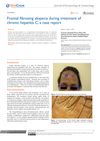 September 2017 in “Journal of Dermatology & Cosmetology”
 Hepatitis C treatment may cause frontal fibrosing alopecia.
 179 citations
,
December 2004 in “Journal of The American Academy of Dermatology”
179 citations
,
December 2004 in “Journal of The American Academy of Dermatology” Some postmenopausal women with frontal fibrosing alopecia stopped losing hair with finasteride treatment, hinting at a possible hormonal cause.
 15 citations
,
July 2020 in “Dermatologic Therapy”
15 citations
,
July 2020 in “Dermatologic Therapy” FPHL is common in women, influenced by genetics and hormones, and can be treated with medications, laser therapy, or hair transplantation.
 71 citations
,
October 2008 in “The journal of investigative dermatology/Journal of investigative dermatology”
71 citations
,
October 2008 in “The journal of investigative dermatology/Journal of investigative dermatology” HFMs can help study hair growth and test potential hair growth drugs.
 7 citations
,
January 2019 in “Australasian Journal of Dermatology”
7 citations
,
January 2019 in “Australasian Journal of Dermatology” A genetic marker linked to a type of hair loss was found in most patients studied.
June 2025 in “Journal of Ultrasound in Medicine” High-frequency ultrasound effectively evaluates and diagnoses frontal fibrosing alopecia.
 12 citations
,
January 2015 in “Indian Journal of Dermatology, Venereology and Leprology”
12 citations
,
January 2015 in “Indian Journal of Dermatology, Venereology and Leprology” A mother and daughter with similar hair loss conditions and identical HLA types suggest a genetic link between the conditions.