4 citations
,
May 2009 in “Clinical and experimental dermatology” Flexural follicular lichen planus is a rare skin condition affecting body folds.
2 citations
,
January 2023 in “Skin Appendage Disorders” Frontal fibrosing alopecia may run in families.
 20 citations
,
January 1979 in “JAMA”
20 citations
,
January 1979 in “JAMA” Fiber implantation for baldness is not recommended because it causes many problems and doesn't work well.
January 2016 in “Indian dermatology online journal” Frontal fibrosing alopecia causes hair loss at the front hairline, and no effective treatment exists.
 8 citations
,
November 2015 in “The American journal of dermatopathology/American journal of dermatopathology”
8 citations
,
November 2015 in “The American journal of dermatopathology/American journal of dermatopathology” Punctate follicular porokeratosis is a skin condition with specific features seen in hair follicles.
66 citations
,
October 2003 in “Dermatologic clinics” Excision and laser techniques can effectively treat acne keloidalis nuchae.
 August 2023 in “British journal of dermatology/British journal of dermatology, Supplement”
 Rubbing or pressing on the face can cause small bumps, and changing posture along with certain creams can improve them.
11 citations
,
April 2012 in “American Journal of Dermatopathology” Adenolipomas may develop from gland entrapment by fat tissue, showing complex and varied forms.
5 citations
,
March 2015 in “Indian Journal of Dermatology” Multiple trichofolliculomas can look like multiple trichoepitheliomas on the face.
5 citations
,
October 2019 in “JAAD Case Reports” These hair loss conditions might be part of a spectrum, not separate issues.
October 2025 in “Portuguese Journal of Dermatology and Venereology” Accurate diagnosis of facial skin tumors requires detailed analysis to distinguish between benign and malignant types.
 January 2020 in “Revista da Sociedade Portuguesa de Dermatologia e Venereologia”
 Frontal fibrosing alopecia in Brazil mostly affects postmenopausal women, often linked with hypothyroidism and eyebrow hair loss.
 February 2021 in “IP Indian journal of clinical and experimental dermatology”
 A rare non-cancerous tumor that grows like hair was found in an unusual spot, the vulva.
 6 citations
,
July 2011 in “Journal of Plastic Reconstructive and Aesthetic Surgery”
6 citations
,
July 2011 in “Journal of Plastic Reconstructive and Aesthetic Surgery” Eyebrow reconstruction using hair follicle grafts was successful in a man with a benign hereditary disorder affecting his eyebrows.
 September 2016 in “Journal of Dermatological Science”
 Björnstad syndrome causes twisted hair from birth.
27 citations
,
December 2005 in “Journal of Cutaneous Pathology” The malignant pilomatricoma showed strong epithelial keratin expression, suggesting it may not calcify.
January 2026 in “Dermatologic Therapy” Folliculotropic Mycosis Fungoides requires stage-based treatment, with early stages using skin therapies and advanced stages needing aggressive treatments.
9 citations
,
December 2004 in “Archives of Pathology & Laboratory Medicine” The neck mass was a rare benign "wattle," surgically removed for diagnosis and appearance.
33 citations
,
May 2015 in “JAMA Dermatology” Early detection of specific skin lesions can help identify Birt-Hogg-Dube syndrome and prevent serious complications.
 6 citations
,
February 2010 in “Journal of The American Academy of Dermatology”
6 citations
,
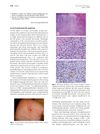
February 2010 in “Journal of The American Academy of Dermatology” A woman had a rare skin condition with recurring painful nodules that heal in 6 weeks, often without needing treatment.
1 citations
,
January 2015 in “Indian Journal of Veterinary Pathology” Two dogs had different types of hair follicle tumors.
 158 citations
,
February 2000 in “Archives of dermatology”
158 citations
,
February 2000 in “Archives of dermatology” Some people with pattern hair loss may also have scalp inflammation and scarring similar to lichen planopilaris.
 1 citations
,
June 2021 in “Curēus”
1 citations
,
June 2021 in “Curēus” A woman with hair loss had a benign sweat duct tumor found during a scalp biopsy.
 September 2025 in “Annals of Plastic Surgery”
 Inverted follicular keratosis on the eyelid can be cured with surgery and has a great prognosis.
 25 citations
,
June 2018 in “Journal of The American Academy of Dermatology”
25 citations
,
June 2018 in “Journal of The American Academy of Dermatology” Genes linked to fibrosis are more active in people with central centrifugal cicatricial alopecia.
4 citations
,
March 2003 in “International Journal of Dermatology” Pimozide treatment resolved cysts and partially restored cheek fat in a man with Barraquer–Simons syndrome.
 155 citations
,
September 2008 in “British journal of dermatology/British journal of dermatology, Supplement”
155 citations
,
September 2008 in “British journal of dermatology/British journal of dermatology, Supplement” FFA is more common in postmenopausal women, can affect younger women, and may stabilize over time.
 1 citations
,
September 2021 in “CRC Press eBooks”
1 citations
,
September 2021 in “CRC Press eBooks” Frontal Fibrosing Alopecia is a hair loss condition mainly affecting postmenopausal women, with unclear causes and various clinical patterns.
 17 citations
,
January 2011 in “Indian journal of dermatology, venereology, and leprology”
17 citations
,
January 2011 in “Indian journal of dermatology, venereology, and leprology” A rare genetic skin condition usually affecting males was found in a 9-year-old girl.
 August 2015 in “Dermatología Argentina”
 Frontal fibrosing alopecia causes hairline recession and eyebrow loss in postmenopausal women.