July 2025 in “Journal of Investigative Dermatology” Discoid lupus erythematosus involves immune activation and fibrosis around hair follicles, with shared pathways across humans, dogs, and mice, suggesting potential treatments for both humans and animals.
 July 2025 in “International Journal of Molecular Sciences”
 Blocking CXCL12 can reverse hair loss and fibrosis in androgenetic alopecia.
Correcting EDA fibronectin organization and YAP translocation can improve wound healing in fibrotic conditions.
 August 2024 in “Life Science Alliance”
 Helminth protein helps wounds heal better by reducing scarring and promoting tissue growth.

Removing SIX1 in fat cells reduces skin fibrosis.
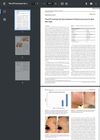 October 2023 in “Skin research and technology”
 The 675 nm laser effectively improved facial acne scars in dark skin with minimal side effects.
 April 2023 in “The journal of investigative dermatology/Journal of investigative dermatology”
 Blocking EGFR can lead to hair loss due to inflammation and stem cell damage.
 November 2022 in “PubMed”
 Deep dermal tissue dislocation injury in pigs leads to thicker fibrotic tissue and increased type III collagen, affecting skin repair.
June 2022 in “bioRxiv (Cold Spring Harbor Laboratory)” Male hormones and reduced plakoglobin can impair heart electrical function and increase arrhythmia risk in males.
July 2020 in “Experimental Dermatology” Aging causes hair thinning in women due to changes in the scalp environment.
 September 2019 in “Romanian Journal of Pediatrics”
 Fetal skin can heal without scars, offering insights for better wound treatments.
 August 2019 in “Journal of Medical Histology”
 EMT helps heal tissues but can cause scarring and other issues if prolonged.
 April 2019 in “The journal of investigative dermatology/Journal of investigative dermatology”
 Targeting cholesterol, fatty acids, fibrosis, and mast cells may help treat CCCA.
 April 2018 in “Journal of Investigative Dermatology”
 Aging reduces skin cell renewal and defense against germs due to TGFbeta, but blocking TGFbeta could help restore these functions.
January 1998 in “Boletín de la Asociación Andaluza de Bibliotecarios/Boletín de la Asociación Andaluza de Bibliotecarios” ADSC therapy is promising for antiaging skin treatment.
 248 citations
,
November 2011 in “The EMBO Journal”
248 citations
,
November 2011 in “The EMBO Journal” Wnt1/βcatenin signaling is crucial for heart repair after injury.
 60 citations
,
May 2015 in “Archives of dermatological research”
60 citations
,
May 2015 in “Archives of dermatological research” PPAR agonists show promise for skin conditions but need more research before being a main treatment.
39 citations
,
April 2022 in “Biomedical Materials” A special gel helps heal skin wounds without scars by calming the immune response.
 25 citations
,
June 2018 in “Journal of The American Academy of Dermatology”
25 citations
,
June 2018 in “Journal of The American Academy of Dermatology” Genes linked to fibrosis are more active in people with central centrifugal cicatricial alopecia.
10 citations
,
September 2021 in “The FASEB Journal” ACKR2 helps prevent skin scarring and hair loss by controlling inflammation.
3 citations
,
April 2018 in “Journal of Investigative Dermatology” CCCA may be a fibroproliferative disorder, and anti-fibrotic therapies could help.
2 citations
,
January 2025 in “JAAD Case Reports” Topical metformin may improve hair regrowth in CCCA when added to standard treatments.
2 citations
,
May 2022 in “bioRxiv (Cold Spring Harbor Laboratory)” Rare Gli1+ fibroblasts are crucial for skin wound healing.
 2 citations
,
January 2017 in “Przegla̧d dermatologiczny”
2 citations
,
January 2017 in “Przegla̧d dermatologiczny” Two trichoscopic patterns found in hair loss: diffuse fibrotic and androgenetic alopecia, affecting treatment choice and regrowth chances.
1 citations
,
March 2023 in “Pharmaceutics” PBMCsec can help reduce and improve thick skin scars.
 1 citations
,
March 2023 in “Science Translational Medicine”
1 citations
,
March 2023 in “Science Translational Medicine” Blocking a certain signal in the gp130 receptor can improve tissue healing and lessen osteoarthritis symptoms.
 1 citations
,
October 2020 in “The Egyptian Journal of Histology”
1 citations
,
October 2020 in “The Egyptian Journal of Histology” Ginseng was more effective than finasteride in treating enlarged prostate in rats.

Bee venom can improve various skin conditions, including varicose veins and psoriasis, and has anti-aging benefits.
 June 2026 in “Preprints.org”
 Atorvastatin in a keratin hydrogel may help treat skin scars effectively.
 April 2026 in “Journal of Pharmaceutical Investigation”
 Nanotechnology could improve treatment for scars and atopic dermatitis by targeting skin issues more effectively.