 February 2026 in “Human Cell”
 MSC-CM can boost skin cell growth and movement, aiding skin repair.
 December 2025 in “Cureus”
 Low serum ferritin is linked to hair loss in women.
 April 2025 in “Dermatology Practical & Conceptual”
 Increased LC3 gene expression may be linked to premature graying of hair.
The model explains how mammal ear hair cells respond to sound and adapt.
 April 2025 in “Journal of the Association for Research in Otolaryngology”
 NM2 and RLC phosphorylation are essential for normal inner ear hair cell function.
 January 2025 in “Journal of Pharmacognosy and Phytochemistry”
 Marine-derived supplements may improve skin and hair health.
 November 2024 in “Benha Journal of Applied Sciences”
 Reduced alpha smooth muscle actin may cause hair loss in androgenetic alopecia.
 January 2024 in “PloS one”
 Rat hair-follicle stem cells can become heart cells with specific supplements.
 December 2023 in “International Journal For Multidisciplinary Research”
 Indian medicinal plants can help with hair growth and common hair issues.
 September 2023 in “bioRxiv (Cold Spring Harbor Laboratory)”
 The mTurq2-Col4a1 mouse model shows that cells can divide while attached to stable basement membranes during development.
 June 2023 in “International Journal for Research in Applied Science and Engineering Technology”
 Emulgel improves skin delivery of various drugs better than traditional methods.
A new system for classifying curly hair types using precise measurements can improve hair care products and cultural inclusion.
 January 2020 in “Medical journal of clinical trials & case studies”
 A 37-year-old male with severe skin and internal issues has a rare inherited skin condition called dystrophic epidermolysis bullosa.
 April 2019 in “Journal of Investigative Dermatology”
 Differences in growth factors in platelet-rich plasma therapy for hair loss can vary between patients and can be influenced by the devices used, possibly leading to inconsistent results.
 April 2018 in “Journal of Investigative Dermatology”
 STIM1 is essential for sweat secretion.
 April 2018 in “Journal of Investigative Dermatology”
 Researchers found a substance in chicken egg yolk that helps hair grow.
 April 2018 in “Journal of Investigative Dermatology”
 Light can activate hair growth through a pathway from the eyes to hair follicles.
 April 2018 in “Journal of Investigative Dermatology”
 People with alopecia areata have higher levels of a heart disease marker in their blood.
 April 2018 in “Journal of Investigative Dermatology”
 Sensitive scalp has higher pH, more redness, abnormal sebum, and altered bacterial makeup.
 January 2015 in “Springer eBooks”
 Hair health is influenced by genetics, aging, and environmental factors, with proper care needed to maintain it.
 January 2014 in “Durham e-Theses (Durham University)”
 Notch1 helps skin heal by attracting cells that aid repair.
 January 2014 in “Sen i Gakkaishi”
 Liposome-encapsulated thioglycolic acid improves hair perming effectiveness and durability.
 375 citations
,
February 2006 in “Journal of Cell Science”
375 citations
,
February 2006 in “Journal of Cell Science” The document concludes that the hair cycle is a complex process involving growth, regression, and rest phases, regulated by various molecular signals.
 286 citations
,
April 2009 in “The journal of neuroscience/The Journal of neuroscience”
286 citations
,
April 2009 in “The journal of neuroscience/The Journal of neuroscience” TRPA1 is crucial for mechanical sensitivity in skin sensory neurons.
 103 citations
,
January 2006 in “Journal of Cell Science”
103 citations
,
January 2006 in “Journal of Cell Science” The document concludes that the hair cycle is a complex process involving growth, regression, and rest phases, regulated by various molecular signals.
 22 citations
,
December 2003 in “Veterinary clinical pathology”
22 citations
,
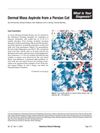
December 2003 in “Veterinary clinical pathology” The Persian cat has a skin infection caused by a fungus, treatable with antifungal medication.
 7 citations
,
January 2012
7 citations
,
January 2012 Neural networks can effectively predict hair loss.
 January 2026 in “Journal of Clinical and Investigative Dermatology”
 A father and son in Yemen have a genetic condition causing hair loss and nail problems.
 January 2023 in “Book of Abstracts”
 COVID-19 can cause different types of hair loss, with telogen effluvium being the most common.
 December 2021 in “Molecular genetics and genomics”
 Cats with abnormal hair had DSG4 gene changes causing hair problems.