 3 citations
,
January 2023 in “PloS one”
3 citations
,
January 2023 in “PloS one” Implanting hair-follicle stem cells in mice brains helped repair brain bleeding and reduced brain inflammation.
 3 citations
,
October 2022 in “PloS one”
3 citations
,
October 2022 in “PloS one” Scientists have developed a method to keep chicken feather follicles alive and structurally intact in a lab for up to a week.
 3 citations
,
July 2011 in “Journal of the Egyptian Women's Dermatologic Society (Print)”
3 citations
,
July 2011 in “Journal of the Egyptian Women's Dermatologic Society (Print)” Acne is common in adult women, often continues from adolescence, and can lead to scarring.
 2 citations
,
January 2020 in “American Journal of Clinical Research and Reviews”
2 citations
,
January 2020 in “American Journal of Clinical Research and Reviews” All skin diseases might start in hair follicles.
 1 citations
,
January 2026 in “Dermatology Reports”
1 citations
,
January 2026 in “Dermatology Reports” Tildrakizumab may cause alopecia areata, but stopping it and using corticosteroids can regrow hair.
 July 2026 in “International Journal of Drug Delivery Technology”
 SCLL improves finasteride delivery for better hair growth in treating hair loss.
 May 2026 in “Research Square”
 Clinical hirsutism can help predict high androgen levels in women.
 May 2026 in “AAPS PharmSciTech”
 PEGylated flavonoid Aspasomes improve brain protection and memory in stress-related disorders.
 March 2026 in “Dermatology Reports”
 FFA has higher long-term remission rates than LPP.
 February 2026 in “Dermatology Reports”
 Trichoscopy helps diagnose and treat dissecting cellulitis early, preventing scarring.
 January 2026 in “Dermatology Reports”
 Upadacitinib improved symptoms and hair regrowth in a teen with multiple autoimmune conditions.
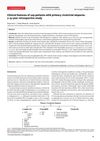 January 2026 in “Acta Dermatovenerologica Alpina Pannonica et Adriatica”
 Primary cicatricial alopecia causes permanent hair loss by destroying hair follicles, and its exact cause is unknown.
 December 2025 in “Italian Journal of Anatomy and Embryology”
 Understanding embryologic layers improves skin disorder diagnosis and supports developing targeted therapies.
 December 2025 in “Dermatology Reports”
 Topical ruxolitinib quickly improves non-segmental vitiligo.
 August 2025 in “Dermatology Reports”
 Rosemary oil may reduce hair greying risk.

Microneedling may improve quality of life and reduce inflammation in frontal fibrosing alopecia.
 January 2025 in “Dermatology Reports”
 Early and accurate diagnosis is crucial for managing rare genetic disorders like this localized variant of junctional epidermolysis bullosa.

Androgenetic alopecia is not linked to higher risks of hypertension or hyperaldosteronism.
Hair analysis can help identify specific minerals and amino acids linked to various diseases.

The Chromolaena odorata patch significantly speeds up wound healing.

Early-onset baldness is linked to genetics, lifestyle, and can indicate higher risk for heart and metabolic diseases, and affects mental health.
 February 2024 in “PloS one”
 Tofacitinib and adalimumab are promising treatments for cicatricial alopecia with few side effects.
 January 2024 in “PloS one”
 Rat hair-follicle stem cells can become heart cells with specific supplements.
 October 2023 in “Research Review”
 Some skin tumors from hair follicles and glands can be linked to genetic syndromes and may be benign or malignant.
 June 2023 in “Diyala Journal of Medicine”
 Alopecia areata is common in young males and linked to stress.
 October 2019 in “Academic medicine”
 The medical student learned to balance medical knowledge with empathy when delivering difficult news to patients.
 July 2018 in “Journal of Dairy & Veterinary Sciences”
 The dog recovered from a skin infection after treatment with medication.

Glycyrrhizic acid and licorice extract can significantly reduce unwanted hair growth.
Avicennia Marina extract and avicequinone C can reduce hair loss hormone production and increase hair growth factors, suggesting they could be used to treat androgenic alopecia.
 April 2005 in “AORN Journal”
 The document concludes that the books are useful for healthcare leaders, providing practical tips and inspiration for industry challenges.