10 citations
,
April 2013 in “Revista cubana de plantas medicinales” Sida cordifolia L. is rich in saponins with antioxidant and antifungal properties.
5 citations
,
November 2014 Musa paradisiaca and M. sapientum have potential health benefits, but need more scientific validation.
2 citations
,
February 2021 in “IOP Conference Series Earth and Environmental Science” Mangkokan leaf contains various beneficial compounds like alkaloids, flavonoids, and steroids.
 1 citations
,
May 2025 in “International Journal of Advanced Biochemistry Research”
1 citations
,
May 2025 in “International Journal of Advanced Biochemistry Research” Hibiscus rosa sinensis is beneficial for health due to its therapeutic properties and is generally safe.
 1 citations
,
January 2017 in “Organic chemistry”
1 citations
,
January 2017 in “Organic chemistry” Tridax procumbens has medicinal properties like healing, pain relief, and infection control.
1 citations
,
January 2006 in “Maia-rivista Di Letterature Classiche” Polygonum multiflorum is used for health benefits but may cause liver issues.
 May 2025 in “Baghdad Journal of Biochemistry and Applied Biological Sciences”
 Adiantum capillus-veneris has many health benefits, including fighting bacteria, reducing inflammation, and helping with hair loss and infections.
 January 2025 in “International Journal for Research in Applied Science and Engineering Technology”
 Eclipta alba promotes hair growth and supports liver health.
 March 2024 in “Journal of medicinal plants studies”
 Hibiscus has medicinal benefits but can be toxic in high doses and is unsafe for pregnant women and infants.
 May 2022 in “International Journal for Research in Applied Science and Engineering Technology”
 Eclipta prostrata has potential as a natural antibiotic.
 July 2026 in “Zenodo (CERN European Organization for Nuclear Research)”
 Herbal cosmetics are beneficial but need more testing and standardization for global use.
 May 2026 in “Zenodo (CERN European Organization for Nuclear Research)”
 Clitoria ternatea has potential health and skincare benefits but needs more testing for safe use.
 May 2026 in “Zenodo (CERN European Organization for Nuclear Research)”
 Clitoria ternatea has potential health and skincare benefits but needs more testing for safe use.
 April 2026 in “Zenodo (CERN European Organization for Nuclear Research)”
 Hibiscus rosa-sinensis has many health benefits, but more research is needed to fully understand its effects.
 April 2026 in “Zenodo (CERN European Organization for Nuclear Research)”
 Hibiscus rosa-sinensis has many health benefits but needs more research for full understanding.
March 2026 in “Plant Science Today” Adenostemma lavenia leaves have potential as a standardized medicinal herb for hair loss treatment.
 October 2025 in “World Journal of Advanced Research and Reviews”
 Onion oil may improve hair health and regrowth.
Marine macroalgae contain compounds that can improve skin health and have cosmetic benefits.
February 2019 in “Mintage journal of pharmaceutical and medical sciences” Erythrina variegata shows promise for treating health issues but needs more research for hair loss treatment.
May 2025 in “World Journal of Biology Pharmacy and Health Sciences” Butterfly pea flower is beneficial for hair serum due to its antioxidant and pigmenting properties.
 79 citations
,
March 1999 in “The journal of investigative dermatology/Journal of investigative dermatology”
79 citations
,
March 1999 in “The journal of investigative dermatology/Journal of investigative dermatology” Procyanidin compounds from grape seeds were found to significantly increase mouse hair growth.
 17 citations
,
April 2021 in “Clinical Phytoscience”
17 citations
,
April 2021 in “Clinical Phytoscience” Chitrak is a medicinal plant with health benefits like fighting microbes, reducing inflammation, and promoting hair growth, but it can be toxic and needs more research.
 1 citations
,
November 2023 in “Naunyn-Schmiedeberg's archives of pharmacology”
1 citations
,
November 2023 in “Naunyn-Schmiedeberg's archives of pharmacology” Henna has potential health benefits and can treat various conditions, but more research is needed to confirm safety and effectiveness.
 May 2023 in “Endocrine, metabolic & immune disorders”
 Hibiscus rosa-sinensis is used in traditional medicine and is safe in high doses, with various health benefits.
 3 citations
,
January 2016 in “Chemical sciences journal”
3 citations
,
January 2016 in “Chemical sciences journal” Tridax procumbens plant extracts, especially from ethanol, have strong antibacterial effects and contain beneficial compounds like flavonoids and tannins.
 1 citations
,
January 2020 in “Indo global journal of pharmaceutical sciences”
1 citations
,
January 2020 in “Indo global journal of pharmaceutical sciences” Citrullus colocynthis and Citrullus lanatus have potential health benefits but may also cause reproductive toxicity.
15 citations
,
March 2023 in “Heliyon” Beehive extracts may help with anxiety, depression, and inflammation.
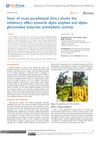 April 2017 in “Advances in Tissue Engineering & Regenerative Medicine Open Access”
 Banana stem extract may help manage diabetes by inhibiting certain enzymes.
16 citations
,
June 2022 in “Evidence-based Complementary and Alternative Medicine” Sterculia villosa and Vernonia patula show potential as antioxidants.
November 2025 in “Quantum Wellness : Jurnal Ilmu Kesehatan” Pacing tawar leaves may help treat itching, insect bites, and promote hair growth.