 December 2015 in “Actas Dermo-Sifiliográficas”
 Hair transplantation for Frontal Fibrosing Alopecia may work if the disease is inactive for 2 years and with ongoing treatment to maintain results.
December 2023 in “JEADV Clinical Practice” Brownish halos around axillary hair can help diagnose frontal fibrosing alopecia.
October 2024 in “Benha Journal of Applied Sciences” Frontal fibrosing alopecia is a complex condition with no definitive treatment.
1 citations
,
June 2021 in “International journal of pharmaceutical compounding” Minoxidil in FOAMIL is stable for at least 180 days at various concentrations.
November 2019 in “British Journal of Dermatology” FOL-005 peptide may help treat excessive hair growth safely.
June 2025 in “Journal of Ultrasound in Medicine” High-frequency ultrasound effectively evaluates and diagnoses frontal fibrosing alopecia.
 March 2026 in “Dermatology Reports”
 FFA has higher long-term remission rates than LPP.
22 citations
,
February 2023 in “European Journal of Neurology” Fremanezumab effectively reduces migraines and improves quality of life with mild side effects.
September 2023 in “Journal of the American Academy of Dermatology” Current guidelines may overlook beard and sideburn involvement in diagnosing frontal fibrosing alopecia in men.
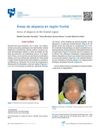 January 2025 in “Revista del Centro Dermatológico Pascua”
 Early diagnosis and treatment can help manage fibrosing alopecia in older women.
60 citations
,
July 2014 in “Autophagy” The protein FLCN is involved in cellular cleanup and is regulated by ULK1.
19 citations
,
September 2019 in “British Journal of Dermatology” FOL-005 peptide can reduce human hair growth by lowering FGF7 levels.
159 citations
,
August 2010 in “British journal of dermatology/British journal of dermatology, Supplement” Hydroxychloroquine effectively reduces symptoms of frontal fibrosing alopecia, especially in the first 6 months.
Protein profiling of forehead skin can help distinguish between frontal fibrosing alopecia and androgenetic alopecia.
 May 2026 in “Scholars Journal of Medical Case Reports”
 Intralesional betamethasone and oral hydroxychloroquine improved hair loss in a woman with frontal fibrosing alopecia.
 8 citations
,
October 2019 in “International Journal of Dermatology”
8 citations
,
October 2019 in “International Journal of Dermatology” The study concluded that combination therapy with topical corticosteroids and hydroxychloroquine or finasteride is effective in treating Frontal fibrosing alopecia in Asians.
 9 citations
,
August 2019 in “Journal of The European Academy of Dermatology and Venereology”
9 citations
,
August 2019 in “Journal of The European Academy of Dermatology and Venereology” Minoxidil activation by hair enzymes predicts treatment success for female hair loss.
May 2026 in “Cell Reports Medicine” FR-1 reduces skin scarring and promotes healing without harmful effects.
 September 2021 in “CRC Press eBooks”
 Fibrosing alopecia in a pattern distribution is a type of hair loss that may often be overlooked, especially in men.
 May 2015 in “Journal of The American Academy of Dermatology”
 5% minoxidil foam helps women with thinning hair.
 July 2018 in “European Medical Journal”
 Fumaric acid esters, especially dimethylfumarate, improve psoriasis treatment.
 24 citations
,
April 2017 in “Aesthetic plastic surgery”
24 citations
,
April 2017 in “Aesthetic plastic surgery” MAFT is a reliable method for forehead contouring with high patient satisfaction and long-term results.
 23 citations
,
October 2018 in “Australasian Journal of Dermatology”
23 citations
,
October 2018 in “Australasian Journal of Dermatology” The current understanding of frontal fibrosing alopecia involves immune, genetic, hormonal factors, and possibly environmental triggers, but more research is needed for effective treatments.
 7 citations
,
October 2015 in “Actas Dermo-Sifiliográficas”
7 citations
,
October 2015 in “Actas Dermo-Sifiliográficas” New treatments for Frontal Fibrosing Alopecia show promise, especially finasteride and dutasteride, with most patients seeing improvement or stabilization.
10 citations
,
June 2022 in “Frontiers in Immunology” Fucoidan reduces bone cell formation by affecting T-cell activity.

Frontal fibrosing alopecia can be managed with personalized combination therapies, but no cure exists yet.
 115 citations
,
March 2019 in “Nature Communications”
115 citations
,
March 2019 in “Nature Communications” Frontal fibrosing alopecia is linked to four genetic areas, especially the HLA-B*07:02 allele.
 42 citations
,
September 2015 in “Gene”
42 citations
,
September 2015 in “Gene” FGF5s can block the effects of FGF5, which may help control hair growth in cashmere goats.
 14 citations
,
September 2018 in “International Journal of Molecular Sciences”
14 citations
,
September 2018 in “International Journal of Molecular Sciences” Mackerel-derived fermented fish oil helps hair grow by activating growth pathways and increasing cell proliferation.
 3 citations
,
February 2022 in “Dermatology practical & conceptual”
3 citations
,
February 2022 in “Dermatology practical & conceptual” The study concludes that early diagnosis of Frontal Fibrosing Alopecia is important, as it is often found in postmenopausal women, may be related to Lichen Planopilaris, and eyebrow hair loss is a common sign.