 14 citations
,
May 2019 in “Journal of Maxillofacial and Oral Surgery”
14 citations
,
May 2019 in “Journal of Maxillofacial and Oral Surgery” FUE hair transplant is a promising method with benefits like less scarring, but requires a skilled surgeon and can damage hair follicles.
13 citations
,
January 2016 in “Annals of Dermatology” Stress can slow hair growth by affecting certain cells and pathways.
 13 citations
,
September 2015 in “Aesthetic Surgery Journal”
13 citations
,
September 2015 in “Aesthetic Surgery Journal” Transplanting hair from the nape and around the ear to the hairline and temples generally satisfies patients and looks natural.
 13 citations
,
August 2002 in “Dermatologic Surgery”
13 citations
,
August 2002 in “Dermatologic Surgery” FUE is a less invasive hair transplant method suitable for many patients, but it has limitations and may not replace traditional techniques.
12 citations
,
March 2012 in “ATLA. Alternatives to laboratory animals” Hair follicles significantly affect the skin absorption of some drugs.
11 citations
,
March 2021 in “The journal of investigative dermatology/Journal of investigative dermatology” A gene mutation causes early keratinocyte maturation leading to hair loss in Olmsted syndrome.
11 citations
,
July 2004 in “Journal of Investigative Dermatology” Certain tyrosine kinases may regulate hair growth and could help develop hair loss treatments.
 11 citations
,
September 2001 in “The Cleft Palate Craniofacial Journal”
11 citations
,
September 2001 in “The Cleft Palate Craniofacial Journal” Hair transplant surgery successfully restored a boy's moustache hair on a cleft lip scar, with natural-looking results and patient satisfaction.
 9 citations
,
March 2020 in “Dermatologic Surgery”
9 citations
,
March 2020 in “Dermatologic Surgery” Both Follicular Unit Transplantation (FUT) and Follicular Unit Excision (FUE) are effective hair transplant methods; the best choice depends on the patient's needs and the surgeon's preference.
 9 citations
,
July 2017 in “Journal of Drug Delivery Science and Technology”
9 citations
,
July 2017 in “Journal of Drug Delivery Science and Technology” Scientists developed a new method to deliver alopecia treatment directly to hair follicles, which could be a promising treatment for hair loss and other hair diseases.
9 citations
,
January 2013 in “BioMed research international” The conclusion suggests a new acne treatment that controls bacteria by reducing water in the skin's pores using sugar-like substances.
 7 citations
,
November 2017 in “Plastic and reconstructive surgery. Global open”
7 citations
,
November 2017 in “Plastic and reconstructive surgery. Global open” FUE and SMP together can effectively treat hair loss, needing fewer procedures.
 6 citations
,
July 2012 in “Experimental Dermatology”
6 citations
,
July 2012 in “Experimental Dermatology” The substance from human hair root cells can help maintain hair growth and make skin cells more capable of growing hair.
 6 citations
,
January 2010 in “Actas Dermo-Sifiliográficas”
6 citations
,
January 2010 in “Actas Dermo-Sifiliográficas” Follicular Unit Hair Transplantation has become a less invasive procedure with natural results, suitable for certain adults with hair loss.
6 citations
,
March 2005 in “Journal of the American Academy of Dermatology” Follicular dystrophy in immunocompromised patients may be linked to medication or viral factors and can improve with treatment changes.
 6 citations
,
September 2001 in “The Cleft Palate Craniofacial Journal”
6 citations
,
September 2001 in “The Cleft Palate Craniofacial Journal” Hair transplant surgery successfully restored a boy's moustache hair on a cleft lip scar, with natural-looking results and patient satisfaction.
 5 citations
,
March 2016 in “Drug Development and Industrial Pharmacy”
5 citations
,
March 2016 in “Drug Development and Industrial Pharmacy” New drug delivery systems improve treatment effectiveness and patient experience.
 5 citations
,
February 2015 in “JEADV. Journal of the European Academy of Dermatology and Venereology/Journal of the European Academy of Dermatology and Venereology”
5 citations
,
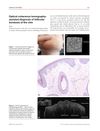
February 2015 in “JEADV. Journal of the European Academy of Dermatology and Venereology/Journal of the European Academy of Dermatology and Venereology” OCT can non-invasively diagnose follicular keratosis and other hair follicle disorders.
 5 citations
,
September 2012 in “Dermatology Online Journal”
5 citations
,
September 2012 in “Dermatology Online Journal” Follicular Unit Extraction (FUE) hair transplant is less invasive, leaves no scars, and has quicker recovery times, but it's more time-consuming and challenging. Automation helps speed up the process and improve graft survival, reducing the need for traditional strip surgery.
 4 citations
,
January 2019 in “Skin appendage disorders”
4 citations
,
January 2019 in “Skin appendage disorders” The new Follicular Map method could help assess hair treatment effectiveness but has some limitations.
4 citations
,
January 2019 in “Archives of clinical and medical case reports” Combining FUE hair transplantation with PRP improves hair density and patient satisfaction in scarring alopecia.
 4 citations
,
August 2017 in “International journal of molecular sciences”
4 citations
,
August 2017 in “International journal of molecular sciences” The conclusion is that Pigmented Epithelioid Melanocytoma can start from hair follicle stem cells or from a mole on the skin.
4 citations
,
May 2009 in “Wound Repair and Regeneration” Genetically modified cells can regenerate skin and hair in rats.
3 citations
,
August 2022 in “International Journal of Molecular Sciences” TSC2-/meth cells can cause skin lesions, hair growth, and lung issues, and may be treated with chromatin remodeling agents.
 3 citations
,
January 2014 in “Plastic surgery (Oakville. Print)”
3 citations
,
January 2014 in “Plastic surgery (Oakville. Print)” Hair transplant surgery is a safe and effective way to treat hair loss from scarring in Chinese patients.
 3 citations
,
February 2000 in “Dermatologic Surgery”
3 citations
,
February 2000 in “Dermatologic Surgery” The document concludes that hair restoration has improved with follicular unit transplantation, making it more scientific and precise.
3 citations
,
April 1997 in “Developmental Dynamics” Trypsin slows hair growth and affects color by causing cell death in hair follicles.
2 citations
,
February 2025 in “Journal of Nanobiotechnology” Modified frameworks with stearic acid enhance drug delivery and promote hair growth.
 2 citations
,
December 2021 in “Aesthetic surgery journal”
2 citations
,
December 2021 in “Aesthetic surgery journal” The new silicone gel wound dressing may speed up early healing after hair transplant surgery compared to Bacitracin.
 2 citations
,
May 2018 in “PubMed”
2 citations
,
May 2018 in “PubMed” Follicular Unit Extraction should be limited to preserve donor hair density and avoid side effects.