July 2025 in “International Journal of Trichology” Trichoscopy effectively diagnoses temporal triangular alopecia in children.
 January 2025 in “Journal of Dermatological Treatment”
 Early treatment can help reverse hair loss caused by cosmetic fillers.
November 2024 in “Actas Dermo-Sifiliográficas” Low-dose oral minoxidil can improve hair and eyebrow growth in frontal fibrosing alopecia.
January 2024 in “Brazilian Journal of Hair Health” Hair science has grown significantly, focusing on conditions like alopecia and improving treatments and techniques.
January 2022 in “Clinical Cases in Dermatology” Early treatment of traction alopecia can reverse hair loss; prevention involves avoiding tight hairstyles.
 September 2021 in “Hair transplant forum international”
 Synthetic hair implants can cause infection and scarring, so safer options like follicular unit excision are recommended.
 December 2020 in “TURKDERM”
 A 3-year-old boy was diagnosed with a rare, non-scarring hair loss condition called temporal triangular alopecia.
 December 2020 in “Skin appendage disorders”
 A young man with an unusual type of scarring hair loss suggests a possible new variant of a known scalp condition.
 September 2017 in “Pediatric Dermatology”
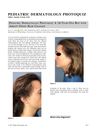
 A 14-year-old boy was diagnosed with a rare hair condition that may lead to hair thinning and has no known effective treatments.
 October 2015 in “Reactions Weekly”
 A woman got a scalp condition from using latanoprost, but it improved after stopping the drug and starting other treatments.
November 2012 in “Annales de Dermatologie et de Vénéréologie” Frontal fibrosing alopecia can occur in children, not just postmenopausal women.
 February 2012 in “Reactions Weekly”
 A woman got male pattern baldness from touching her husband's testosterone gel.
April 2023 in “Dohuk medical journal” Trichoscopy effectively differentiates Androgenetic Alopecia from Telogen Effluvium.
December 1990 in “PubMed” Topical 17 alpha-propylmesterolone increases hair cell growth in androgenetic alopecia.
 81 citations
,
August 2011 in “Journal of The American Academy of Dermatology”
81 citations
,
August 2011 in “Journal of The American Academy of Dermatology” Latanoprost 0.1% may effectively treat hair loss.
 30 citations
,
December 2017 in “Journal of The American Academy of Dermatology”
30 citations
,
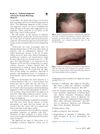
December 2017 in “Journal of The American Academy of Dermatology” New criteria for diagnosing frontal fibrosing alopecia include specific scalp and eyebrow hair loss as major factors and other hair loss areas and hair analysis as minor factors.
 8 citations
,
December 2017 in “Journal of The American Academy of Dermatology”
8 citations
,
December 2017 in “Journal of The American Academy of Dermatology” The authors updated the criteria for diagnosing frontal fibrosing alopecia, making it easier to diagnose without a biopsy.
 4 citations
,
July 2016 in “Dermatologic Surgery”
4 citations
,
July 2016 in “Dermatologic Surgery” Higher epinephrine concentration and specific injection sites increase scalp vasoconstriction time.
October 2025 in “Diagnostics” Temporal triangular alopecia is a harmless, non-progressive hair loss condition.
 July 2024 in “Iranian journal of pathology”
 Frontal fibrosing alopecia mainly affects women over 50, causing hair loss and specific skin changes.
January 2023 in “Indian Dermatology Online Journal” A 23-year-old man has a benign, non-progressive hair loss patch that doesn't respond to treatment but can be cosmetically treated.
November 2021 in “Journal of Asia Pacific Aesthetic Sciences” A hair transplant corrected an unnatural hairline from scalp micropigmentation, giving a natural look.
 March 2021 in “CRC Press eBooks”
 Trichoscopy helps tell apart Lichen planopilaris and Frontal fibrosing alopecia from other hair loss conditions.
Trichoscopic examination is crucial for diagnosing congenital triangular alopecia.
 January 2020 in “Przegla̧d dermatologiczny”
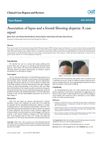
 A 5-year-old boy was diagnosed with congenital triangular alopecia, a type of hair loss without skin changes, usually starting between ages 2-5, with no specific treatment.
 January 2020 in “Clinical Case Reports and Reviews”
 Lupus and frontal fibrosing alopecia may share a common cause.
 December 2019 in “Journal of pediatrics & neonatology”
 A 13-year-old boy had a rare, stable type of hair loss with little chance of regrowth, but treatment is available for looks.
 July 2019 in “Journal of Investigative Dermatology”
 The research found that male pattern hair loss is mostly genetic and involves hair thinning due to hormonal effects and changes in gene expression.
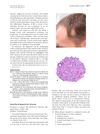
The man has Temporal Triangular Alopecia, a stable, non-scarring hair loss condition best treated with hair transplantation.
January 2016 in “Indian dermatology online journal” Frontal fibrosing alopecia causes hair loss at the front hairline, and no effective treatment exists.