 12 citations
,
March 2018 in “Anais brasileiros de dermatologia/Anais Brasileiros de Dermatologia”
12 citations
,
March 2018 in “Anais brasileiros de dermatologia/Anais Brasileiros de Dermatologia” A patient had both chronic cutaneous lupus erythematosus and frontal fibrosing alopecia.
Frontal Fibrosing Alopecia mainly affects postmenopausal women and is linked to thyroid disease, hyperlipidemia, and anemia.
53 citations
,
June 2019 in “JEADV. Journal of the European Academy of Dermatology and Venereology/Journal of the European Academy of Dermatology and Venereology” Frontal fibrosing alopecia mainly affects postmenopausal women and may be linked to thyroid hormones.
 46 citations
,
January 2015 in “Journal of The American Academy of Dermatology”
46 citations
,
January 2015 in “Journal of The American Academy of Dermatology” Trichoscopy helps diagnose and assess the severity of Frontal Fibrosing Alopecia.
 21 citations
,
October 2017 in “Journal of the European Academy of Dermatology and Venereology”
21 citations
,
October 2017 in “Journal of the European Academy of Dermatology and Venereology” Various potential triggers may be causing the rise in frontal fibrosing alopecia, and avoiding these could help stop the disease's increase.
May 2026 in “International Journal of Dermatology” This type of alopecia areata shows limited hair regrowth and poor response to treatment.
March 2005 in “Journal of the American Academy of Dermatology” Cosmetic treatments can replenish key amino acids in damaged hair, improving its strength and appearance.
 November 2021 in “Dermatologic Surgery”
 The technique removes sweat glands effectively.
 December 2023 in “International Journal of Science and Research (IJSR)”
 FUE is a safe and effective method for beard and moustache transplants.
 March 2022 in “Más dermatología”
 Chronic lupus and frontal fibrosing alopecia can occur together, but their connection is unclear.
January 2016 in “Institutional Repositories DataBase (IRDB)” Sebaceous glands help study fatty acid transporters and binding proteins.
 1 citations
,
October 2008 in “Expert Review of Dermatology”
1 citations
,
October 2008 in “Expert Review of Dermatology” Frontal Fibrosing Alopecia is a slowly progressing hair loss condition, likely underdiagnosed, with ineffective treatments, needing more research to understand it fully.
April 2025 in “International Journal of Dermatology” Renaming frontal fibrosing alopecia to a syndrome could improve diagnosis and treatment.
 11 citations
,
May 2023 in “Journal of Cutaneous Medicine and Surgery”
11 citations
,
May 2023 in “Journal of Cutaneous Medicine and Surgery” Plasma Rich in Growth Factors may help reduce hair loss in Frontal Fibrosing Alopecia.
 33 citations
,
January 2015 in “Journal of Cosmetic Dermatology”
33 citations
,
January 2015 in “Journal of Cosmetic Dermatology” Familial frontal fibrosing alopecia affects premenopausal women too, and early diagnosis is important, but no proven medication exists yet.
1 citations
,
May 2024 in “Skin Appendage Disorders” Trichoscopy helps better diagnose and treat Frontal Fibrosing Alopecia in black patients.
 39 citations
,
November 2015 in “Nanomedicine”
39 citations
,
November 2015 in “Nanomedicine” Improved Finasteride delivery for hair loss treatment.
 8 citations
,
October 2016 in “Actas Dermo-Sifiliográficas”
8 citations
,
October 2016 in “Actas Dermo-Sifiliográficas” FFA in men, often mistaken for other hair loss types, may be more common than thought and needs larger studies for confirmation.
May 2025 in “Skin Appendage Disorders” Frontal fibrosing alopecia can be diagnosed by examining facial areas and treated with specific medications to stop its progression.
 November 2024 in “BMC Surgery”
 Follicular unit extraction is an effective and minimally invasive treatment for male hair loss.
 2 citations
,
March 2016 in “The Journal of Dermatology”
2 citations
,
March 2016 in “The Journal of Dermatology” The Facial Psoriasis Log-based Area and Severity Index is a more effective way to measure improvements in facial psoriasis than the traditional method.
 4 citations
,
January 2012 in “International Society of Hair Restoration Surgery”
4 citations
,
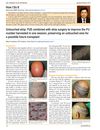
January 2012 in “International Society of Hair Restoration Surgery” Combining FUE and strip surgery increases hair harvested in one session and keeps options open for future transplants.
 1 citations
,
May 2014 in “European Journal of Inflammation”
1 citations
,
May 2014 in “European Journal of Inflammation” A lotion with minoxidil, hydrocortisone butyrate, and 17a-estradiol can improve or stabilize Frontal Fibrosing Alopecia in some cases, but there's no universally-accepted treatment yet.
May 2020 in “riUfes (Universidade Federal do Espírito Santo)” Finasteride is stable except in high pH, and lactose and magnesium stearate should be replaced in formulations.
February 2026 in “Small Ruminant Research” The IRF2BP2 gene affects sheep fleece quality by influencing fiber traits.
October 2022 in “Hair Transplantation” New FUE systems have greatly improved hair restoration surgery.
 August 2018 in “Journal of The American Academy of Dermatology” 2 citations
,
August 2025 in “JAAD reviews.”
August 2018 in “Journal of The American Academy of Dermatology” 2 citations
,
August 2025 in “JAAD reviews.” Frontal fibrosing alopecia significantly affects men, often causing hair loss in eyebrows, beard, and sideburns.
April 2021 in “Aktuelle Dermatologie” Frontal Fibrosing Alopecia is a type of hair loss that mainly affects postmenopausal women, has unclear causes, and lacks evidence-based treatments.
 2 citations
,
November 2007 in “Hair transplant forum international”
2 citations
,
November 2007 in “Hair transplant forum international” The conclusion is that hair transplant surgery should use microscopically dissected natural hair groupings and some new terms were suggested for clarity.