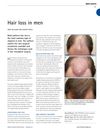
 May 2013 in “Trends in Urology & Men's Health”
 Male-pattern hair loss is normal, often involves hormone effects on hair follicles, and can be treated with medication or surgery, but new treatments are being researched.
 January 2010 in “Elsevier eBooks”
 Hair transplantation is a treatment for hair loss mainly caused by genetics, with various techniques and potential complications, and results visible after 8-12 months.
 March 2009 in “Medical & surgical dermatology”
 Women with androgenetic alopecia have fewer terminal hairs, phenol in nail surgery is safe, and a new hair transplant method is faster and less damaging.
 March 2021 in “Dermatological reviews”
 Hair transplant works well, but needs more research for better results.
 December 2016 in “Journal of Dermatology and Dermatologic Surgery”
 IFHUT shows better hair growth than FUE, but needs improvements in positioning, speed, and accuracy.
 13 citations
,
November 2018 in “Annals of Plastic Surgery”
13 citations
,
November 2018 in “Annals of Plastic Surgery” Nonshaven follicular unit extraction is a good hair transplant option that doesn't require shaving and can transplant up to 3000 grafts daily.
 February 2018 in “Dermatologic Surgery”
 Nonshaven follicular unit extraction is a highly satisfactory method for restoring pubic hair.
 7 citations
,
January 2017 in “International Journal of Trichology”
7 citations
,
January 2017 in “International Journal of Trichology” Hair transplant can cause hard-to-treat keloids in some patients.
 6 citations
,
July 2018 in “Hair transplant forum international”
6 citations
,
July 2018 in “Hair transplant forum international” Dr. Parsa Mohebi created a new tool to improve hair transplant efficiency and reduce follicle damage.
 1 citations
,
October 2021 in “Indian Journal of Plastic Surgery”
1 citations
,
October 2021 in “Indian Journal of Plastic Surgery” Hair transplant surgery in India has progressed from plugs and flaps to advanced techniques using micrografts and follicular unit extraction.
Understanding hair follicle structure and techniques improves hair restoration outcomes.
 4 citations
,
August 2021 in “Journal of Cosmetic Dermatology”
4 citations
,
August 2021 in “Journal of Cosmetic Dermatology” Ergonomic improvements in hair transplant surgery reduce discomfort for surgeons and may improve patient outcomes.
7 citations
,
November 2020 in “Journal of Tissue Viability” Transplanting a person's own hair can heal chronic wounds in certain skin conditions.
 6 citations
,
January 2019 in “Journal of Cutaneous and Aesthetic Surgery”
6 citations
,
January 2019 in “Journal of Cutaneous and Aesthetic Surgery” Follicular unit extraction is an effective hair transplant method for advanced baldness with high patient satisfaction, but some experienced decreased density over time.
 5 citations
,
September 2012 in “Dermatology Online Journal”
5 citations
,
September 2012 in “Dermatology Online Journal” Follicular Unit Extraction (FUE) hair transplant is less invasive, leaves no scars, and has quicker recovery times, but it's more time-consuming and challenging. Automation helps speed up the process and improve graft survival, reducing the need for traditional strip surgery.
 1 citations
,
January 2014 in “Archives of Aesthetic Plastic Surgery”
1 citations
,
January 2014 in “Archives of Aesthetic Plastic Surgery” The FUE technique is effective for Asian female hairline restoration with benefits like no scar and short recovery time.
October 2025 in “Dermatologic Surgery” Twisted hair follicles can survive transplantation as well as intact ones.
 November 2023 in “Facial Plastic Surgery”
 Follicular Unit Excision (FUE) is a popular, less invasive hair restoration method with high patient satisfaction when done correctly, despite some complications from untrained practitioners.
 October 2023 in “Facial Plastic Surgery”
 The document concludes that hair transplant practices, especially Follicular Unit Excision, are continually improving with refined techniques and tools for better results.
 October 2021 in “Indian Journal of Plastic Surgery”
 Hair transplant techniques have improved and become less invasive over time, but there are concerns about unregulated centers. The market is growing, with potential for more growth in India due to increasing hair loss cases. New technologies like robotic transplants are promising for the future. Surgeons are encouraged to prioritize patient safety and understand the science behind their techniques.
 January 2018 in “Journal of Cleft Lip Palate and Craniofacial Anomalies”
 The FUE technique can effectively restore moustaches in patients with cleft lips and alopecia, with few complications.
 October 2022 in “IntechOpen eBooks”
 Hair loss due to scarring can be treated by reducing inflammation, removing scar tissue, and transplanting hair. The Follicular Unit Extraction technique is effective but requires skill and time. Future focus should be on scar-less healing methods.
26 citations
,
January 2016 in “Journal of cutaneous and aesthetic surgery” Hair transplant combining scalp and beard hair with PRP was successful for scarring alopecia.
 10 citations
,
May 2019 in “Archives of Plastic Surgery”
10 citations
,
May 2019 in “Archives of Plastic Surgery” Follicular unit extraction (FUE) causes less postoperative pain than follicular unit transplantation (FUT), but pain from both methods decreases significantly within two days.
 4 citations
,
January 2016 in “Dermatology practical & conceptual”
4 citations
,
January 2016 in “Dermatology practical & conceptual” A man developed a rare skin condition after a hair transplant surgery.
3 citations
,
October 2023 in “Plastic & Reconstructive Surgery Global Open” Nanofat injections before hair transplantation improve eyebrow restoration in burn scars.
 1 citations
,
September 2023 in “Journal of cosmetic dermatology”
1 citations
,
September 2023 in “Journal of cosmetic dermatology” Autologous FUE hair transplantation is effective and safe for treating hair loss due to scarring from infections.
 1 citations
,
January 2020 in “The Egyptian Journal of Plastic and Reconstructive Surgery”
1 citations
,
January 2020 in “The Egyptian Journal of Plastic and Reconstructive Surgery” PRP or nanofat injections improve scar tissue quality but don't significantly boost hair transplant results for scarring hair loss.
 June 2026 in “Journal of Cutaneous and Aesthetic Surgery”
 FUE is effective for improving hair regrowth and appearance in scarred areas.
 October 2025 in “Journal of Pharmacy And Bioallied Sciences”
 PRP significantly improves hair density and satisfaction in hair restoration.