1 citations
,
August 2016 in “Dermatology - Open Journal” Mitochondria change shape to meet energy needs during cell movement.
28 citations
,
October 2014 in “Development” Fz3 and Fz6 can partially replace each other in tissue polarity and axon guidance.
Researchers created a new mouse model, G4, that mimics human PCOS symptoms and links the condition to a specific gene.
Arabidopsis Formin 2 stabilizes actin filaments to aid cell-to-cell trafficking.
July 2026 in “bioRxiv (Cold Spring Harbor Laboratory)” FAKΔe4 helps cells sense and respond to different stiffness levels in their environment.

Certain antiparasitics and antidepressants show promise for treating cryptococcosis, especially when combined with fluconazole.
39 citations
,
May 2006 in “Molecular Plant-Microbe Interactions” Fusaric acid may help control Orobanche ramosa by activating plant defenses.
1 citations
,
September 2025 in “International Journal of Molecular Sciences” Cells from concentrated growth factor can become different cell types.
7 citations
,
December 2023 in “International Journal of Molecular Sciences” Forsythiaside A helps protect cells and liver from damage by reducing oxidative stress and boosting antioxidants.
 February 2025 in “Veterinary Clinical Pathology”
 The ferret had a malignant apocrine gland tumor and did not survive surgery.
 September 2019 in “Journal of Investigative Dermatology”
 Mouse skin fibroblasts vary in function and adaptability based on their environment.
1 citations
,
January 1987 in “PubMed” Candida was found in most heroin users with folliculitis.
 September 2022 in “Piretc”
 The document's conclusion cannot be provided because the document is not accessible or understandable.
January 2020 in “프로그램북(구 초록집)” The treatment increased hair growth and thickness in patients with hair loss.
 15 citations
,
December 2015 in “PLoS ONE”
15 citations
,
December 2015 in “PLoS ONE” Fibroblasts can be mistaken for neural cells, so functional validation is needed.
3D culture better preserves sweat gland cell identity than 2D culture.
 October 2024 in “SPIRE - Sciences Po Institutional REpository”
 Glypicans help hair follicle stem cells differentiate by interacting with specific receptors, influencing hair growth.

A 16-year-old girl with gum overgrowth and excessive hair growth had successful gum surgery and healed well.
3 citations
,
August 2024 in “The Journal of Cell Biology” Actin filaments help stabilize and reshape cell membranes.
 17 citations
,
May 2011 in “Movement Disorders”
17 citations
,
May 2011 in “Movement Disorders” Finasteride significantly reduced tics and obsessive-compulsive symptoms in patients with Tourette syndrome.
11 citations
,
January 1996 in “PubMed” Imaging living plant cells shows dynamic changes in actin and endoplasmic reticulum linked to root hair growth.
 81 citations
,
November 2012 in “Journal of the National Cancer Institute”
81 citations
,
November 2012 in “Journal of the National Cancer Institute” The tumor suppressor gene FLCN affects mitochondrial function and energy use in cells.
75 citations
,
September 2007 in “Journal of Heredity” FGF5 gene mutations cause long hair in domestic cats.
 12 citations
,
May 2019 in “Molecular Medicine Reports”
12 citations
,
May 2019 in “Molecular Medicine Reports” Forsythiaside A helps reduce brain damage from lack of blood flow by activating certain protective pathways.
 May 2024 in “British journal of dermatology/British journal of dermatology, Supplement”
 CYLD deficiency in skin tumors disrupts hair follicle cell processes and protein secretion.
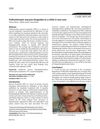 1 citations
,
October 2023 in “Journal of the Pakistan Medical Association”
1 citations
,
October 2023 in “Journal of the Pakistan Medical Association” Folliculotropic mycosis fungoides can occur in children and is diagnosed with specific tests, but often stays in early stages with treatment.
9 citations
,
March 2022 in “Military Medical Research” Small molecules can help turn skin cells into sweat gland-like cells for potential skin repair.
4 citations
,
October 2023 in “Case Reports in Dermatology” Majocchi’s granuloma should be considered when rashes don't improve with typical treatments.
 7 citations
,
June 2011 in “Movement Disorders”
7 citations
,
June 2011 in “Movement Disorders” A specific gene mutation is linked to a hereditary form of dystonia that responds well to certain medications.
21 citations
,
June 2016 in “PloS one” Zebrafish need MYC and FGF to regenerate inner ear hair cells.