 6 citations
,
June 2016 in “Experimental Dermatology”
6 citations
,
June 2016 in “Experimental Dermatology” Frontal Fibrosing Alopecia is a poorly understood condition that is hard to treat and causes distressing hair loss.
April 2026 in “The Journal of Urology” Finasteride 1 mg/day reduces semen quality without affecting hormones or sexual function.
November 2014 in “PharmaTutor” Finasteride may help postmenopausal women with hair loss but is not effective for all and should be used cautiously in premenopausal women.
5 citations
,
May 2023 in “Clinical Rheumatology” Tofacitinib helped regrow hair in a lupus patient with alopecia.
November 1979 in “PubMed”  January 2019 in “Springer Reference Medizin”
 Follicle Stimulating Hormone is important for fertility.
April 2019 in “Journal of Investigative Dermatology” Targeting immune pathways like JAK/STAT may help treat frontal fibrosing alopecia.
 10 citations
,
March 2016 in “Journal of The American Academy of Dermatology”
10 citations
,
March 2016 in “Journal of The American Academy of Dermatology” Antiandrogenic drugs could be a good treatment option for frontal fibrosing alopecia.
 14 citations
,
April 2002 in “Brain Research Protocols”
14 citations
,
April 2002 in “Brain Research Protocols” Quickly get finasteride from tablets using easy methods.
 16 citations
,
January 2007 in “Actas dermo-sifiliográficas/Actas dermo-sifiliográficas”
16 citations
,
January 2007 in “Actas dermo-sifiliográficas/Actas dermo-sifiliográficas” The document concludes that there are no reliable treatments for frontal fibrosing alopecia, with only temporary benefits from current options.
 April 2018 in “Journal of Investigative Dermatology”
 Fgf20 is important for the development and regulation of the cells that form the base of hair follicles.
 28 citations
,
December 2017 in “Journal of Investigative Dermatology Symposium Proceedings”
28 citations
,
December 2017 in “Journal of Investigative Dermatology Symposium Proceedings” Tofacitinib shows promise for treating severe hair loss in adults and teens, with many experiencing regrowth, but hair loss returns when treatment stops.
8 citations
,
July 2020 in “Dermatologic Therapy” Tofacitinib may effectively treat folliculitis decalvans.
 September 2024 in “Cutis”
 Sunscreen use may increase the risk of frontal fibrosing alopecia.
Fgf20 helps form hair follicle structures by stopping cell division and increasing cell movement.
Flutamide effectively treats female pattern hair loss long-term with low doses being safe for the liver.
 26 citations
,
June 2018 in “Australasian Journal of Dermatology”
26 citations
,
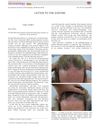
June 2018 in “Australasian Journal of Dermatology” Stopping sunscreen use on the forehead led to hair regrowth in a woman with frontal fibrosing alopecia.
 8 citations
,
November 2002 in “The Canadian journal of psychiatry/Canadian journal of psychiatry”
8 citations
,
November 2002 in “The Canadian journal of psychiatry/Canadian journal of psychiatry” Increasing olanzapine caused hair loss in a woman, which stopped after changing medication.
 105 citations
,
August 2010 in “Pharmacology & therapeutics”
105 citations
,
August 2010 in “Pharmacology & therapeutics” Formyl-peptide receptor agonists could be new anti-inflammatory drugs.
June 2026 in “ChemistryOpen” Modified nanofibers improve finasteride skin absorption.
 January 2021 in “Anais do Congresso Brasileiro de Reumatologia 2020”
 Tofacitinib improved arthritis and partially improved hair loss in a lupus patient without side effects.
 89 citations
,
February 2002 in “Australasian journal of dermatology”
89 citations
,
February 2002 in “Australasian journal of dermatology” A premenopausal woman had hair loss and skin issues, treated with topical steroids.
April 2017 in “Leukemia research” Tofacitinib helped most teenagers in the study regrow hair with mild side effects.
May 2024 in “Indian Journal of Pharmacology” Tofacitinib effectively regrew scalp hair in an 11-year-old girl with alopecia areata.
 12 citations
,
April 2018 in “Physiology & Behavior”
12 citations
,
April 2018 in “Physiology & Behavior” Finasteride raises suicide-linked aggression and stops clozapine's positive effects in schizophrenia animals.
 102 citations
,
April 2014 in “International Journal of Dermatology”
102 citations
,
April 2014 in “International Journal of Dermatology” The treatment helped reduce symptoms and stabilize the hairline in most patients with Frontal Fibrosing Alopecia, but hair regrowth was limited.
 185 citations
,
June 2014 in “Journal of Investigative Dermatology”
185 citations
,
June 2014 in “Journal of Investigative Dermatology” A man with severe hair loss and skin disease regrew his hair with no side effects after taking tofacitinib.
Finasteride reduces DHT levels and affects gene expression in fish, similar to its effects in humans.
9 citations
,
November 1980 in “Geburtshilfe und Frauenheilkunde” Fenoterol treatment causes increased hair growth due to higher metabolism in hair follicles, not hormones.