December 2022 in “Clinical and experimental dermatology and therapies” Adding the topical gel improved hair growth more than using minoxidil or finasteride alone.
3 citations
,
June 2023 in “Molecules/Molecules online/Molecules annual” Cepharanthine has many medicinal uses but needs improvement for better effectiveness.
The treatment changed hormone levels and increased sexual behavior in female capuchin monkeys.

The combined treatment increased hair density in most patients with Androgenetic Alopecia.
2 citations
,
July 2021 in “UNC Libraries” Mutations at Val-889 and Arg-752 disrupt key interactions in androgen receptor dimerization.
61 citations
,
September 2011 in “Pain” PEA reduces pain by increasing neurosteroid synthesis in the spinal cord.
1 citations
,
July 1991 in “PubMed” MRI can show unusual brain changes in adrenomyeloneuropathy.
June 2025 in “Journal of Drug Delivery Science and Technology” A dissolving microneedle patch with dutasteride offers effective, long-lasting hair loss treatment with fewer side effects.
11 citations
,
September 2021 in “American Journal of Medical Genetics Part A” Four new cases of Bachmann-Bupp syndrome suggest potential for targeted treatment.
61 citations
,
January 2007 in “Indian Journal of Dermatology Venereology and Leprology” Garlic gel with betamethasone cream significantly improves hair regrowth in alopecia areata.
 April 2017 in “Advances in Tissue Engineering & Regenerative Medicine Open Access”
 Banana stem extract may help manage diabetes by inhibiting certain enzymes.

Glycyrrhizic acid and licorice extract can significantly reduce unwanted hair growth.
 2 citations
,
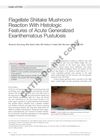
September 2021 in “Cutis”
2 citations
,
September 2021 in “Cutis” Eating shiitake mushrooms caused a man to develop a rash similar to a skin condition known as AGEP.
 August 2023 in “Journal of Investigative Dermatology”
 Ganoderma lucidum extract and its component, ganoderic acid A, may effectively prevent hair loss.
 March 2025 in “Drug Development Research”
 The new gel combining minoxidil and tofacitinib effectively treats alopecia areata by promoting hair growth and reducing inflammation.
Neurosteroids help control dopamine responses in the brain.
6 citations
,
November 2019 in “Journal of Cosmetic Dermatology” The compound improved hair growth and reduced hair loss.
16 citations
,
October 2018 in “BMC Complementary and Alternative Medicine” Crataeva nurvala leaves may help reduce anxiety and improve sleep.
November 2025 in “Drug Testing and Analysis” Epristeride's metabolism involves key metabolites and proteins, affecting its use in doping tests.
 4 citations
,
May 2019 in “Physiology & Behavior”
4 citations
,
May 2019 in “Physiology & Behavior” Cocaine impairs male sexual behavior and alters testosterone metabolism in the brain.
May 2025 in “International Journal of Biological Macromolecules” A new microneedle treatment shows promise for better hair regrowth in androgenetic alopecia.
January 2009 in “Xiandai huagong” Finasteride was successfully synthesized from Pregnadienolone acetate.
27 citations
,
April 2008 in “Neuroscience Letters” Olanzapine reduces stress-related anxiety in rats when given acutely.
12 citations
,
February 2017 in “International journal of developmental neuroscience” Female guinea pigs exposed to less allopregnanolone before birth showed more anxiety-like behavior.
 1 citations
,
September 2022 in “Sudan Journal of Medical Sciences”
1 citations
,
September 2022 in “Sudan Journal of Medical Sciences” Danoprevir, remdesivir, and saridegib may effectively inhibit SARS-CoV-2.
 5 citations
,
January 2014 in “Asian Journal of Chemistry”
5 citations
,
January 2014 in “Asian Journal of Chemistry” Researchers developed a quick and reliable method to test for betamethasone dipropionate and calcipotriol in ointments and drugs.
 1 citations
,
April 2018 in “Journal of Investigative Dermatology”
1 citations
,
April 2018 in “Journal of Investigative Dermatology” Oleoylethanolamide (OEA) safely boosts fat production in skin cells and may help treat dry skin and reduce inflammation.

Cetirizine-loaded gel may effectively promote hair growth in alopecia.
 3 citations
,
March 2017 in “Regulatory toxicology and pharmacology”
3 citations
,
March 2017 in “Regulatory toxicology and pharmacology” Aleglitazar and its major metabolite are safe enough to proceed to Phase 3 clinical trials.
 March 2024 in “International Journal of Pharmaceutics”
 Ginsenoside Rg3 combined with minoxidil was more effective in treating hair loss in mice.