 23 citations
,
July 2007 in “The journal of investigative dermatology/Journal of investigative dermatology”
23 citations
,
July 2007 in “The journal of investigative dermatology/Journal of investigative dermatology” Hair follicle bulge cells don't help skin regrow after glucocorticoid damage; interfollicular epidermis cells do.
37 citations
,
June 1996 in “Journal of cellular physiology” Retinoic acid, glucocorticoids, and IGF1 increase IGFBP-3 production in human dermal papilla cells, affecting hair growth.
 May 2021 in “Journal of the Endocrine Society”
 A patient produced cortisol after adrenalectomy, possibly due to residual tissue or other body parts making steroids.
91 citations
,
March 2021 in “Molecular and Cellular Endocrinology” CYP11A1 is crucial for skin health and disease by producing important steroids.
 94 citations
,
April 2002 in “The Journal of clinical endocrinology and metabolism/Journal of clinical endocrinology & metabolism”
94 citations
,
April 2002 in “The Journal of clinical endocrinology and metabolism/Journal of clinical endocrinology & metabolism” A new gene mutation causes female pseudohermaphroditism due to glucocorticoid resistance.
 December 2016 in “Springer eBooks”
 Chrousos Syndrome is caused by mutations that make the body less sensitive to glucocorticoids, leading to various symptoms and requiring high-dose treatment.
489 citations
,
June 2005 in “The FASEB Journal” Human hair follicles can produce cortisol like the body's stress response system.
354 citations
,
August 1991 in “Molecular Endocrinology” Human adrenals and gonads have a unique enzyme for steroid hormone production.

Low-dose glucocorticoid treatment improves pregnancy and birth rates in women with nonclassical 21-hydroxylase deficiency.
 April 2023 in “Journal of Investigative Dermatology”
 Cyclosporin A, a drug, reduces TGF-β2 expression in skin cells, potentially causing excessive hair growth through a process involving the calcineurin/NFAT pathway.
30 citations
,
November 2021 in “Obesity Reviews” Higher glucocorticoids in hair are linked to increased obesity measures like waist size.
 27 citations
,
December 2013 in “Endocrinology”
27 citations
,
December 2013 in “Endocrinology” Researchers created a mouse model for Cushing's syndrome to study glucocorticoid excess and potential treatments.
January 2014 in “edoc (University of Basel)” Anabolic steroids and inflammation can disrupt androgen metabolism, potentially causing health issues.
September 2025 in “Psychoneuroendocrinology” Hair glucocorticoids link to type 2 diabetes but not to socioeconomic status.
7 citations
,
October 2015 in “Experimental dermatology” Blocking the mineralocorticoid receptor can help treat skin thinning caused by steroids.
 15 citations
,
April 2017 in “Hormones”
15 citations
,
April 2017 in “Hormones” Genetic defects in the glucocorticoid receptor gene can cause conditions with abnormal sensitivity to stress hormones, and other factors may also affect this sensitivity.
 70 citations
,
March 2010 in “The Journal of Steroid Biochemistry and Molecular Biology”
70 citations
,
March 2010 in “The Journal of Steroid Biochemistry and Molecular Biology” Blocking a specific enzyme might help treat obesity and diabetes, but more research is needed to ensure it's safe.
 4 citations
,
December 1962 in “European journal of endocrinology”
4 citations
,
December 1962 in “European journal of endocrinology” Alloxan diabetes, methylthiouracil, cortisone, and adrenaline affect how white mice hair follicles use glucose and cystine and their cell division.
September 2021 in “Yearbook of pediatric endocrinology” Stress hormone stops a growth signal and keeps hair stem cells inactive, reducing hair growth.
 31 citations
,
July 2004 in “Molecular Medicine”
31 citations
,
July 2004 in “Molecular Medicine” Certain defective glucocorticoid receptor mutants move faster inside cell nuclei and work less effectively.
 1 citations
,
May 2023 in “Annales d'Endocrinologie”
1 citations
,
May 2023 in “Annales d'Endocrinologie” Metformin can help prevent the side effects of glucocorticoid medications on metabolism.
6 citations
,
April 1989 in “The American Journal of the Medical Sciences” Glucocorticoids can cause long-term loss of body hair by lowering adrenal androgens.
 3 citations
,
January 2016 in “Elsevier eBooks”
3 citations
,
January 2016 in “Elsevier eBooks” Steroid hormones are crucial for body functions and have various medical uses, but their misuse can lead to dependence.
1 citations
,
January 1978 in “PubMed” Certain chemical changes to cortisol and progesterone can increase or decrease their ability to inhibit hair growth.
 37 citations
,
March 2006 in “Regulatory Peptides”
37 citations
,
March 2006 in “Regulatory Peptides” Mice skin has components that could help with hair growth and might be used for diabetes treatment.
 77 citations
,
March 2021 in “Nature”
77 citations
,
March 2021 in “Nature” Stress hormone corticosterone blocks a growth factor to slow down hair stem cell activity and hair growth.
 151 citations
,
December 2004 in “Annals of the New York Academy of Sciences”
151 citations
,
December 2004 in “Annals of the New York Academy of Sciences” Congenital Adrenal Hyperplasia is a genetic disorder with two forms, causing symptoms like early puberty and severe acne, but can be identified through screening and treated with glucocorticoids.
 40 citations
,
May 2014 in “PLoS ONE”
40 citations
,
May 2014 in “PLoS ONE” Chronic stress can reduce skin pigmentation.
 February 2022 in “Cleveland Clinic Journal of Medicine”
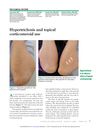
 Prolonged use of topical corticosteroids can cause excessive hair growth.
1 citations
,
January 2013 Glucosylceramides are essential for healthy skin and proper wound healing.