39 citations
,
January 2020 in “Frontiers in Genetics” PDGFC gene may help select goats with desirable curly wool traits.
15 citations
,
January 1991 in “Mammalian Genome” 3 citations
,
September 2013 in “Journal of the American Academy of Dermatology” A new genetic mutation linked to Hutchinson-Gilford progeria syndrome was found in China.
 1 citations
,
October 2025 in “Iranian journal of pharmaceutical research”
1 citations
,
October 2025 in “Iranian journal of pharmaceutical research” Geranyl acetate can protect skin cells from damage and inflammation caused by para-phenylenediamine.
 January 2020 in “Nihon Yakuri Gakkai nenkai yoshishu”
 Reducing 5α-reductase activity helps endometrial cells differentiate, aiding pregnancy.
 April 2024 in “The Journal of urology/The journal of urology”
 SRD5A2 methylation in blood can predict how well someone will respond to finasteride treatment.
47 citations
,
June 2017 in “The FEBS journal” Disabling the FGF5 gene in sheep leads to longer wool.
 42 citations
,
September 2015 in “Gene”
42 citations
,
September 2015 in “Gene” FGF5s can block the effects of FGF5, which may help control hair growth in cashmere goats.
 18 citations
,
October 2010 in “Bioorganic & Medicinal Chemistry Letters”
18 citations
,
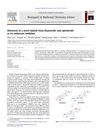
October 2010 in “Bioorganic & Medicinal Chemistry Letters” New hybrid compound found to effectively prevent hair loss.
![Antiexudative Effects of Finasteride and a New Pyrazolo[C]Pyridine Derivative GIZh-72 in Acetic Acid-Induced Experimental Peritonitis](/images/assets/10e636c8-32b7-4d90-b645-80e0039c5960/small/4762.jpg) February 2020 in “Bulletin of Experimental Biology and Medicine”
February 2020 in “Bulletin of Experimental Biology and Medicine” Finasteride and GIZh-72 reduce inflammation, with GIZh-72 being more effective.
July 2026 in “Research Square” 37 citations
,
October 2006 in “Archives of Biochemistry and Biophysics” A unique gene mutation causes vitamin D-resistant rickets without causing hair loss.
 1 citations
,
December 2012 in “I P Pavlov Russian Medical Biological Herald”
1 citations
,
December 2012 in “I P Pavlov Russian Medical Biological Herald” Finasteride increases P-glycoprotein activity in the liver and kidney.
 June 2024 in “British Journal of Dermatology”
 KRT14 gene variants cause dermatopathia pigmentosa reticularis, affecting nails, teeth, and hair.
 March 2026 in “IP Indian Journal of Conservative and Endodontics”
 PRP shows promise for regenerating dental tissues.
9 citations
,
October 2025 in “MedComm” PROTACs offer new ways to treat hard-to-target diseases, with promising drugs for cancer in advanced trials.
2 citations
,
June 2016 in “International journal of experimental pathology” Human skin has less GDNF and its receptor with age.
June 2003 in “Faculty Opinions – Post-Publication Peer Review of the Biomedical Literature” GLABRA2 represses root hair formation by inhibiting a specific gene.
 15 citations
,
January 2010 in “Reproduction, Fertility and Development”
15 citations
,
January 2010 in “Reproduction, Fertility and Development” A certain gene variant may increase the risk of polycystic ovary syndrome in Chinese women.
 1 citations
,
January 2023 in “Biochemical and biophysical research communications”
1 citations
,
January 2023 in “Biochemical and biophysical research communications” Keratin 79 is linked to liver damage and may help diagnose liver diseases.
 June 2023 in “GSC Advanced Research and Reviews”
 Hutchinson-Gilford Progeria Syndrome causes rapid aging from a genetic mutation, with no cure but ongoing research into potential treatments.
8 citations
,
March 2011 in “Endocrine” A new gene mutation causes vitamin D-resistant rickets and hair loss in two siblings.
52 citations
,
July 2011 in “PubMed” TRPS1 is crucial for bone, kidney, and hair follicle development.
227 citations
,
February 1989 in “The Journal of Comparative Neurology” CGRP-IR axons may help maintain and renew tissues.
April 2026 in “Future Medicinal Chemistry” PROTACs have become a breakthrough in medicine by effectively targeting and degrading specific proteins to treat diseases.
 17 citations
,
June 1996 in “The Journal of Steroid Biochemistry and Molecular Biology”
17 citations
,
June 1996 in “The Journal of Steroid Biochemistry and Molecular Biology” FCE 28260 is a stronger and longer-lasting inhibitor of 5α-reductase than finasteride, which may make it a better treatment for certain medical conditions.
2 citations
,
February 2022 in “bioRxiv (Cold Spring Harbor Laboratory)” Impaired LEF1 activation speeds up skin cell development in Hutchinson-Gilford Progeria Syndrome.
333 citations
,
March 2000 in “Proceedings of the National Academy of Sciences” Overexpressing GLI-1 in mice skin can cause tumors like human basal cell carcinomas.
 60 citations
,
August 2008 in “Human molecular genetics online/Human molecular genetics”
60 citations
,
August 2008 in “Human molecular genetics online/Human molecular genetics” A position effect on the TRPS1 gene causes excessive hair growth in humans and mice.
 February 2025 in “Archives animal breeding/Archiv für Tierzucht”
 Certain gene combinations improve cashmere quality and production in Liaoning goats.