 1 citations
,
February 2016 in “Revista Brasileira de Ginecologia e Obstetrícia”
1 citations
,
February 2016 in “Revista Brasileira de Ginecologia e Obstetrícia” High Lipid Accumulation Product levels are linked to more hirsutism in women with Polycystic Ovary Syndrome.
 1 citations
,
January 2015 in “Journal of Clinical Toxicology”
1 citations
,
January 2015 in “Journal of Clinical Toxicology” Babies were mostly born healthy from fathers who took finasteride, but some pregnancies ended early; more research is needed.
 1 citations
,
August 2012 in “Journal der Deutschen Dermatologischen Gesellschaft”
1 citations
,
August 2012 in “Journal der Deutschen Dermatologischen Gesellschaft” A woman's hyperandrogenism was caused by a genetic mutation leading to non-classic adrenogenital syndrome.
 1 citations
,
May 2011 in “Molecular Medicine Reports”
1 citations
,
May 2011 in “Molecular Medicine Reports” The -866G/A polymorphism in the UCP2 gene is not linked to polycystic ovary syndrome.
 1 citations
,
October 2010 in “Cambridge University Press eBooks”
1 citations
,
October 2010 in “Cambridge University Press eBooks” Hormonal therapies are effective for managing hair and skin symptoms in women with PCOS.
 February 2025 in “Cureus”
 Non-compliance with PCOS medication worsens symptoms and highlights the need for better patient support and education.
 November 2023 in “Curēus”
 Eating junk food is linked to higher rates of PCOS and related symptoms in women.
 January 2020 in “Nihon Yakuri Gakkai nenkai yoshishu”
 Reducing 5α-reductase activity helps endometrial cells differentiate, aiding pregnancy.
 December 2017 in “Journal of Medical Science And clinical Research”
 The PCOS questionnaire is valid for Indian women, but metformin doesn't significantly improve symptoms beyond oral contraceptives.
 September 2008 in “Fertility and Sterility”
 Greater intimacy leads to better self-reported health in couples having infertility treatment.
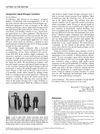 February 2002 in “Dermatologic Surgery”
 A cheap stainless steel container from a retail store can store liquid nitrogen effectively for 8-12 hours, offering a cost-effective alternative to specialized medical containers.
The document listed medical job ads and guidelines for breast cancer screening.
 July 2026 in “Gazi Medical Journal”
 Obesity worsens metabolic issues in women with PCOS.
 June 2026 in “Romanian Journal of Medical Practice”
 Surgery resolved hormone imbalance and symptoms in a rare ovarian tumor case in an elderly woman.
 April 2026 in “Research Square”
 COVID-19 can harm male fertility by reducing sperm stem cells and damaging testicular function.
Testosterone therapy can safely and effectively treat symptoms like low libido and fatigue in women, especially after menopause.
 April 2026 in “Journal of Cancer”
 Cepharanthine shows promise as a natural anticancer treatment.
 March 2026 in “Panacea Journal of Medical Sciences”
 The technique successfully reconstructed a functional neo-vagina with 100% survival and patency, but lacked mucus secretion.
 February 2026 in “Libri Oncologici Croatian Journal of Oncology”
 Imiquimod shows promise as a non-invasive treatment for certain HPV-related lesions, but more research is needed to optimize its use.
 February 2026 in “Oncology Reviews”
 Sacituzumab tirumotecan shows promise in treating breast cancer with manageable side effects.
 January 2026 in “International Journal of Women s Health”
 A new model helps predict treatment success in girls with early puberty.
 January 2026 in “Ankara Medical Journal”
 Pregnancy-related stress may cause hair loss in women in their third trimester.
 November 2025 in “Journal of Contemporary Medicine”
 Women with PCOS have higher cardiometabolic risks.
 November 2025 in “Cureus”
 PCOS-related acne can be managed by targeting hormones and insulin resistance.
 October 2025 in “Pielegniarstwo XXI wieku / Nursing in the 21st Century”
 Oral contraceptives can effectively treat acne by reducing oil production.
 September 2025 in “Reproductive health of woman”
 Metformin reduces high male hormone levels in women with PCOS.
 August 2025 in “Advances in Therapy”
 Physicians in China prioritize clinical hyperandrogenism in PCOS treatment, but clearer guidelines are needed.
 July 2025 in “Medical Science”
 Anabolic steroids and SARMs can cause serious liver damage.
Different oral anticoagulants cause various non-bleeding side effects, so careful monitoring is needed.
 July 2025 in “Bulgarian Portal for Open Science”
 Granulation and epithelialization are crucial for healing large skin wounds.