 January 1957 in “Nihon Chikusan Gakkaiho”
 Rabbit hair color is influenced by the shape and distribution of pigment granules.
 August 1946 in “Journal of the American Medical Association”
 Companies agreed to stop making false health claims about their products.
 March 2025 in “Animal Bioscience”
 Goats' hair and color traits are linked to specific RNA expressions, useful for breeding and textiles.
 1 citations
,
January 2006 in “Elsevier eBooks”
1 citations
,
January 2006 in “Elsevier eBooks” The conclusion is that different types of hair loss in dogs and cats can be cosmetic or serious, and affected animals should not be bred.
 December 2025 in “Journal of Pharma Insights and Research.”
 The shampoo naturally colors and conditions hair safely without toxic chemicals.
 September 1997 in “Dermatologic Surgery”
 The article concludes that uniform density hair restoration is generally preferred for its natural look, but the best approach depends on the individual's characteristics and preferences.
4 citations
,
January 1996 in “British journal of dermatology/British journal of dermatology, Supplement” Mexican hairless dogs can help test new skin treatments.

Hair fibers degrade and change color in very basic water.
 May 2026 in “Zenodo (CERN European Organization for Nuclear Research)”
 The herbal mehendi gel safely colors hair naturally while nourishing and protecting the scalp.
 May 2026 in “Zenodo (CERN European Organization for Nuclear Research)”
 The herbal mehendi gel safely colors hair and nourishes the scalp.
 60 citations
,
January 2004 in “The journal of investigative dermatology/Journal of investigative dermatology”
60 citations
,
January 2004 in “The journal of investigative dermatology/Journal of investigative dermatology” Applying a specific inhibitor lightens skin and hair color.
 58 citations
,
February 2016 in “Scientific reports”
58 citations
,
February 2016 in “Scientific reports” Blocking BACE1 and BACE2 enzymes causes hair color loss in mice.
 30 citations
,
June 2006 in “British journal of dermatology/British journal of dermatology, Supplement”
30 citations
,
June 2006 in “British journal of dermatology/British journal of dermatology, Supplement” Oral zinc sulphate reduces dark hair color in mice.
22 citations
,
January 1985 in “Journal of Human Evolution/Journal of human evolution” Human skin and hair color variation is mainly due to melanin produced by a few genes, with melanin protecting against sun damage.
17 citations
,
January 2015 in “Dermatology online journal” A patient's grey hair regained color during treatment with adalimumab.
15 citations
,
September 1970 in “Journal of Animal Science” Copper in the diet helps maintain hair color and mineral balance in calves.
4 citations
,
January 2016 in “Annals of dermatology/Annals of Dermatology” Iron supplements can restore normal hair color in cases of premature graying linked to iron deficiency.
3 citations
,
January 2019 in “Electronic Imaging” The device accurately estimates natural hair color at the roots in real time.
 3 citations
,
May 2010 in “Archives of dermatology”
3 citations
,
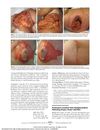
May 2010 in “Archives of dermatology” Herpes zoster infection can cause permanent hair color change in the affected area.
 2 citations
,
September 2020 in “International journal of radiology & radiation therapy”
2 citations
,
September 2020 in “International journal of radiology & radiation therapy” Radiotherapy can cause rare changes in hair color, which should be discussed with patients.
2 citations
,
February 2016 in “Irish journal of psychological medicine” Mirtazapine may cause hair loss and change hair color, but stopping the drug can reverse these effects.
 1 citations
,
March 2019 in “Chinese Medical Journal”
1 citations
,
March 2019 in “Chinese Medical Journal” Researchers identified potential markers for human hair color stem cells.
1 citations
,
December 2013 in “Balkan Journal of Medical Genetics” Cystic fibrosis can cause unusual symptoms like hair color changes, which can improve with proper treatment.
1 citations
,
May 2012 in “Clinical and Experimental Dermatology” Iron can be present in hair color changes without overall iron deficiency.
 September 2017 in “Journal of Investigative Dermatology”
 The new scalp treatment preserves hair color, reduces hair loss, and maintains hair strength.
 April 2016 in “The journal of investigative dermatology/Journal of investigative dermatology”
 BMP signaling controls hair growth and skin color.
July 2007 in “International Journal of Cosmetic Science” The new polymer improves dyed hair's color, moisture, shine, and smoothness.
 42 citations
,
March 2008 in “Molecular and Cellular Endocrinology”
42 citations
,
March 2008 in “Molecular and Cellular Endocrinology” Hormones and neuroendocrine factors control hair growth and color, and more research could lead to new hair treatment options.
 11 citations
,
January 2012 in “Journal of cell science”
11 citations
,
January 2012 in “Journal of cell science” Rac1 is essential for proper hair structure and color.
 11 citations
,
February 2002 in “International Journal of Cosmetic Science”
11 citations
,
February 2002 in “International Journal of Cosmetic Science” Recent findings show that hair growth and color are controlled by a complex network of signals in the hair follicle.