
Advancements in diagnostics, treatments, and technology have improved hair loss detection and restoration, with some types being reversible.
 November 2024 in “Frontiers in Endocrinology”
 Hair analysis can help diagnose adrenal disorders non-invasively.
The system can automatically identify different hair and scalp conditions using machine learning.
 January 2024 in “International Journal of Trichology”
 Hair root dermoscopy is a simple, noninvasive tool to diagnose telogen effluvium.
6 citations
,
August 2022 in “Molecules” A hair test shows promise for early mood disorder diagnosis.
 1 citations
,
November 2024 in “Archives of Dermatological Research”
1 citations
,
November 2024 in “Archives of Dermatological Research” Early and accurate diagnosis of posterior scalp hair loss is crucial for effective treatment and better outcomes.
 1 citations
,
May 2016 in “Current Opinion in Pediatrics”
1 citations
,
May 2016 in “Current Opinion in Pediatrics” Children's hair loss can be caused by various factors and should be treated with appropriate, age-specific methods and psychological support.
 1 citations
,
April 2016 in “Journal of The American Academy of Dermatology”
1 citations
,
April 2016 in “Journal of The American Academy of Dermatology” The study concludes that Loose Anagen Hair Syndrome is a benign condition that usually improves with age but can be hard to diagnose and stressful for the family.

Deep learning can improve non-invasive alopecia diagnosis using hair images.
 September 2022 in “Journal of Cosmetic Dermatology”
 Hair casts may be a useful clue for diagnosing hair loss during the resting phase of hair growth.
 February 2004 in “The New England Journal of Medicine”
 The book is a comprehensive resource on hair disorders, but lacks information on some conditions.
 December 2025 in “Frontiers in Medicine”
 ARWH is a rare hair disorder with no cure, but potential treatments include minoxidil and other therapies.
31 citations
,
November 1986 in “Journal of the American Academy of Dermatology”  November 1993 in “Hair transplant forum international”
 Measuring hair density is crucial for diagnosing and treating hair loss.
17 citations
,
September 2009 in “British Journal of Dermatology” Fragile hair in children is rarely linked to trichothiodystrophy (TTD).
 January 2018 in “Communications in computer and information science”
 Researchers developed a computer system to automatically diagnose hair loss by analyzing scalp images.
 108 citations
,
March 2011 in “Archives of Dermatology”
108 citations
,
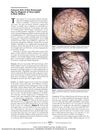
March 2011 in “Archives of Dermatology” Corkscrew hair may be a new sign for quickly diagnosing scalp fungus in black children.
 89 citations
,
December 2010 in “The Journal of Dermatology”
89 citations
,
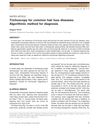
December 2010 in “The Journal of Dermatology” The conclusion is that an algorithm using trichoscopy helps diagnose different types of hair loss but may need updates and a biopsy if results are unclear.
 74 citations
,
January 2020 in “IEEE Access”
74 citations
,
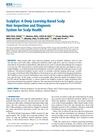
January 2020 in “IEEE Access” ScalpEye accurately diagnoses scalp issues like dandruff and hair loss.
 64 citations
,
July 1997 in “Journal of The American Academy of Dermatology”
64 citations
,
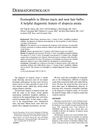
July 1997 in “Journal of The American Academy of Dermatology” Finding eosinophils near hair bulbs helps diagnose alopecia areata.
 35 citations
,
January 2014 in “BioMed Research International”
35 citations
,
January 2014 in “BioMed Research International” Female pattern hair loss involves hormonal factors, genetics, and may be linked to low ferritin levels.
 10 citations
,
August 2014 in “PLoS ONE”
10 citations
,
August 2014 in “PLoS ONE” Hair follicles can help diagnose traumatic brain injury quickly and non-invasively.
7 citations
,
June 2018 in “Journal of the American Academy of Dermatology” The document suggests finding a simpler, cheaper way to diagnose Uncombable Hair Syndrome.
 2 citations
,
July 2013 in “InTech eBooks”
2 citations
,
July 2013 in “InTech eBooks” Scalp biopsy helps tell apart permanent and temporary hair loss types and guides treatment.
 1 citations
,
September 2011 in “UHOD : Uluslararası hematoloji - onkoloji dergisi”
1 citations
,
September 2011 in “UHOD : Uluslararası hematoloji - onkoloji dergisi” Looking at tissue characteristics isn't reliable for telling apart basal cell carcinoma from certain benign skin tumors.
February 2026 in “iScience” Hair metal analysis may help diagnose Parkinson's disease and suggests gut involvement.
April 2020 in “Journal of the Endocrine Society” Hair cortisol measurement can help diagnose and monitor Cushing’s disease.
 February 2026 in “Dermatology Reports”
 Trichoscopy helps diagnose and treat dissecting cellulitis early, preventing scarring.
 August 2024 in “Dermatological Reviews”
 New technologies are improving the diagnosis and treatment of hair and nail disorders.