 3 citations
,
May 2020 in “Annals of the Academy of Medicine Singapore”
3 citations
,
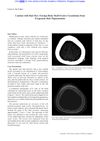
May 2020 in “Annals of the Academy of Medicine Singapore” Hair dye can cause serious scalp issues, including skull erosion.
3 citations
,
July 2023 in “Acta Biomaterialia” PepACS offers a safer, eco-friendly way to perm, dye, and repair hair.
 2 citations
,
September 2021 in “International Journal of Ayurvedic Medicine”
2 citations
,
September 2021 in “International Journal of Ayurvedic Medicine” Despite adverse effects, people continue using hair dyes for aesthetic reasons, highlighting the need for safer options.
 2 citations
,
January 2017 in “Journal of Biotechnology Research Center”
2 citations
,
January 2017 in “Journal of Biotechnology Research Center” Hair dyes affect DNA analysis results, with the prepFiler kit working best for hair with follicles.
 1 citations
,
May 2023 in “Frontiers in medicine”
1 citations
,
May 2023 in “Frontiers in medicine” Hair dyes and perms can damage hair and scalp, but using interventions can reduce harm.
 1 citations
,
July 2016 in “Cosmetics”
1 citations
,
July 2016 in “Cosmetics” Black henna tattoos can cause severe allergies to hair and textile dyes, and there's a need for greater public awareness and regulation.
1 citations
,
January 2010 in “LA Referencia (Red Federada de Repositorios Institucionales de Publicaciones Científicas)” Conditioners improved hair protein retention and combing ease, with some providing thermal protection.
1 citations
,
September 2003 in “Annals of Epidemiology”  1 citations
,
December 2022 in “Middle East Journal of Science”
1 citations
,
December 2022 in “Middle East Journal of Science” Permanent hair dyes use chemicals that react with hydrogen peroxide to create color.
 1 citations
,
December 2021 in “Annals of phytomedicine”
1 citations
,
December 2021 in “Annals of phytomedicine” The herbal hair dye with a 1:2 henna to indigo ratio works well, is safe, and eco-friendly.
 1 citations
,
January 2016 in “Springer briefs in molecular science”
1 citations
,
January 2016 in “Springer briefs in molecular science” Natural plant-based substances can be used as effective hair dyes.
 April 2026 in “Biomolecules”
 Squid ink melanin nanoparticles create a safe, long-lasting black hair dye that protects hair and offers UV protection.
 March 2026 in “Portuguese Journal of Dermatology and Venereology”
 Avoid hair dye after microneedling to prevent scalp pigmentation.
December 2025 in “Journal of Forensic Sciences” Bleaching hair doesn't affect the accuracy of dye identification using SERS.
 December 2025 in “Applied and Computational Engineering”
 Hair dyes can be harmful, but risks vary by person and can be reduced.
 November 2025 in “Zenodo (CERN European Organization for Nuclear Research)”
 Hair dyeing changes hair structure, but new technologies help protect hair while coloring.
 November 2025 in “Indian Journal of Nephrology”
 Hair dye may trigger anti-GBM disease relapse, and rituximab can help manage it.
 November 2025 in “International Journal of Science and Research Archive”
 Oxidative dyes damage hair more than semi-permanent dyes, but new technologies help protect hair while coloring.
October 2024 in “UNESP Institutional Repository (São Paulo State University)” Straightening and dyeing damage hair structure.
 September 2024 in “Heliyon”
 Repeated hair dyeing significantly damages hair.
May 2023 in “Sokoto journal of medical laboratory science” Commercial hair dyes can harm the skin and liver.
 January 2023 in “Fashion and textiles”
 Cationic and nonionic surfactants provide better color intensity and resistance for semi-permanent hair dye than anionic surfactants.
 June 2021 in “Journal of emerging technologies and innovative research”
 Onion and Aloe vera can help protect hair from damage caused by hair dyes.
December 1990 in “Indian Journal of Dermatology Venereology and Leprology” Topical minoxidil and hair dye can improve hair density and appearance in congenital hypotrichosis.
August 1985 in “Proceedings ... annual meeting, Electron Microscopy Society of America/Proceedings, annual meeting, Electron Microscopy Society of America” Hair dye can damage dog hair and cause health issues.
 July 2026 in “International Journal of Applied Pharmaceutics”
 Hair dyes, especially with PPD, can cause skin and rare systemic reactions, and safer alternatives are needed.

Plant-based dyes are a safe, effective, and eco-friendly alternative to synthetic dyes.
 August 2022 in “Contact dermatitis”
 Severe allergic reactions to hair dye can trigger hair loss and may be linked to multiple sclerosis.
 May 2026 in “Zenodo (CERN European Organization for Nuclear Research)”
 Natural hair dyes like henna and beetroot are safer but have limited colors and may fade easily.
 May 2026 in “Zenodo (CERN European Organization for Nuclear Research)”
 Natural hair dyes are safer but have limited shades and may fade with washing.