January 2006 in “DOAJ (DOAJ: Directory of Open Access Journals)” Loose anagen hair syndrome causes easily pulled, thin hair in kids but is harmless and temporary.
Hair product allergies are common, especially to hair dyes, and hairdressers are at higher risk.
 43 citations
,
January 2013 in “Indian Journal of Dermatology, Venereology and Leprology”
43 citations
,
January 2013 in “Indian Journal of Dermatology, Venereology and Leprology” The article concludes that advancements in hair cosmetics require dermatologists to stay informed about products and their potential risks, including allergies and higher risks for hairdressers.
 4 citations
,
July 2019 in “Clinics in Dermatology”
4 citations
,
July 2019 in “Clinics in Dermatology” The document concludes that while white skin, nail, and mucosa diseases increase skin cancer risk, they are generally harmless, especially compared to darker pigmentation conditions.
 1 citations
,
January 2018 in “Acta dermato-venereologica”
1 citations
,
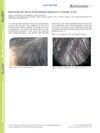
January 2018 in “Acta dermato-venereologica” A teenager's hair with alternating white and dark bands, known as Pili annulati, is a genetic condition that is usually harmless and often considered attractive.
 3 citations
,
October 2021 in “Clinical, Cosmetic and Investigational Dermatology”
3 citations
,
October 2021 in “Clinical, Cosmetic and Investigational Dermatology” Scalp melanoma, a deadly skin cancer, is often found late due to its hard-to-see location, especially in older men. Early detection, possible treatments, and the role of hairdressers in spotting it early are discussed. More research is needed to improve detection and treatment.
January 2026 in “The American Journal of Medical Sciences and Pharmaceutical Research” Understanding and managing the scalp microbiome is crucial for preventing dandruff, seborrhea, and hair loss.
13 citations
,
May 2019 in “Archives of dermatological research” Tranexamic acid reduces skin aging more in female mice.
 2 citations
,
November 2017 in “Journal of Cosmetic Dermatology”
2 citations
,
November 2017 in “Journal of Cosmetic Dermatology” Injecting platelet-rich plasma under the skin significantly improves hair growth and quality without harmful effects.
 December 2023 in “Journal of General Procedural Dermatology and Venereology Indonesia”
 A 61-year-old Filipino man had a skin condition that looked like another disease, making diagnosis difficult.
May 2000 in “Journal of Investigative Dermatology” Hedgehog signaling is crucial for hair development, cadherins affect cell adhesion, neutrophils play a role in skin lesions, and BP230 autoantibodies impact skin stability.
14 citations
,
July 2015 in “International Journal of Molecular Sciences” S-Methylmethionine sulfonium can protect skin from UVB damage.
January 2017 in “OPAL (Open@LaTrobe) (La Trobe University)” Collagen peptides may boost skin and hair-related gene expression.
Collagen peptides may boost skin and hair-related gene expression.
4 citations
,
January 2024 in “Allergy” Everyone has an immune response to PPD, but reactions differ, causing tolerance, mild inflammation, or allergy.
 March 2023 in “International journal of integrated medical research”
 Keratosis pilaris is a common skin condition where hair follicles get clogged with keratin, mostly on the arms and thighs.
 January 2020 in “Turk Dermatoloji Dergisi”
 Men with baldness, ear creases, and hairy ears have a higher risk of heart disease.
 31 citations
,
September 2016 in “PLoS ONE”
31 citations
,
September 2016 in “PLoS ONE” Cell division orientation varies by body site and is linked to epidermal thickness and cell density.
8 citations
,
February 2005 in “International Journal of Cosmetic Science” Applying a special soy milk extract on skin can make it more elastic and hydrated.
8 citations
,
January 1989 in “PubMed” Minoxidil did not affect hair growth in newborn mice.
 245 citations
,
January 1998 in “Genes & Development”
245 citations
,
January 1998 in “Genes & Development” Hoxc13 gene is essential for hair, nail, and papilla development.
100 citations
,
August 2008 in “American Journal Of Pathology” VEGF-A is crucial for normal skin function and may be linked to psoriasis.
95 citations
,
July 2007 in “Journal of Experimental Botany” Root hairs help barley grow better in zinc-deficient soil.
 62 citations
,
May 1997 in “Journal of Pharmaceutical Sciences”
62 citations
,
May 1997 in “Journal of Pharmaceutical Sciences” Sebaceous glands in the skin play a key role in absorbing the antiandrogen drug RU 58841, especially when it's encapsulated in liposomes.
58 citations
,
April 1993 in “Developmental Biology” bFGF delays hair growth in mice.
 46 citations
,
December 2010 in “The journal of investigative dermatology/Journal of investigative dermatology”
46 citations
,
December 2010 in “The journal of investigative dermatology/Journal of investigative dermatology” Disrupting Acvr1b in mice causes severe hair loss and thicker skin.
43 citations
,
March 1942 in “The Journal of experimental medicine/The journal of experimental medicine” Mice need pantothenic acid to make inositol.
 41 citations
,
October 2008 in “The American journal of pathology”
41 citations
,
October 2008 in “The American journal of pathology” Blocking a specific protein signal can make hair grow on mouse nipples.
 24 citations
,
July 1998 in “Journal of the South African Veterinary Association”
24 citations
,
July 1998 in “Journal of the South African Veterinary Association” Ringworm in dairy calves can spread to humans.
17 citations
,
May 1995 in “Anatomy and Embryology” Injecting 6-OHDA in newborn mice delays hair growth and thins skin.