 4 citations
,
February 2022 in “International Journal of Molecular Sciences”
4 citations
,
February 2022 in “International Journal of Molecular Sciences” Myotonic Dystrophy may age cells faster, and drugs that target aging could be potential treatments.
15 citations
,
June 2020 in “The journal of investigative dermatology/Journal of investigative dermatology” Mice with extra human KLK14 had hair and skin problems, including weaker cell bonds and inflammation, linked to Netherton syndrome.
 18 citations
,
February 2010 in “Odontology”
18 citations
,
February 2010 in “Odontology” The document concludes that Rabson-Mendenhall syndrome requires novel treatments for insulin resistance and emphasizes the importance of dental care in affected patients.
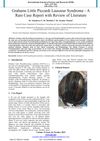 October 2023 in “International Journal of Science and Research (IJSR)”
 Early diagnosis of GLPLS is crucial to prevent complications, but scarring alopecia is irreversible.
July 2025 in “Journal of Investigative Dermatology” Scarring alopecia involves increased immune cells and specific gene changes near damaged hair follicles.
59 citations
,
September 2021 in “Journal of Allergy and Clinical Immunology” Netherton syndrome has two subtypes with shared immune traits but different allergic and immune responses, suggesting targeted treatments.
 September 2024 in “Cermin Dunia Kedokteran”
 Fahr syndrome causes brain calcification and is managed by treating symptoms and underlying issues.
 6 citations
,
January 2020 in “BMC Medical Genetics”
6 citations
,
January 2020 in “BMC Medical Genetics” A new mutation in the STS gene causes X-linked ichthyosis, even in rare female cases.
 June 2024 in “British Journal of Dermatology”
 Scalp disease in dermatomyositis causes significant symptoms and has unique features.
January 2018 in “Indian Dermatology Online Journal” DM and AA may share a common cause.
 13 citations
,
January 2012 in “International journal of trichology”
13 citations
,
January 2012 in “International journal of trichology” The study found that hair fragility in Pili annulati may be caused by cavities and damage within the hair shafts.
56 citations
,
October 2010 in “Pediatric Clinics of North America” Epidermal nevi are skin cell clusters linked to various syndromes.
33 citations
,
February 2012 in “British Journal of Dermatology” Mutations in the p63 gene affect skin adhesion, barrier integrity, and hair growth.
21 citations
,
January 2008 in “Indian Journal of Dermatology Venereology and Leprology” 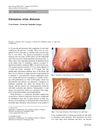 3 citations
,
April 2012 in “Internal and Emergency Medicine”
3 citations
,
April 2012 in “Internal and Emergency Medicine” The girl's swelling and skin issues improved with fluid restriction and diuretics.
May 2025 in “Dermatology Reports” A genetic mutation in the LIPH gene causes a rare hair disorder with sparse, curly hair.
1 citations
,
July 2004 in “The Journal of Dermatology” Generalized hair follicle hamartoma can occur with systemic lupus erythematosus.
7 citations
,
August 2008 in “Immunogenetics” A gene mutation in mice causes increased mast cells and disorganized hair follicles in their skin.
5 citations
,
May 2014 in “Clinical and Experimental Dermatology” Mutations in the desmoplakin gene can cause hair problems and deadly heart disease.
 January 2025 in “JCEM Case Reports”
 Diagnosing and managing Glucocorticoid Resistance Syndrome is complex due to genetic differences and varied symptoms.
53 citations
,
September 2004 in “American journal of medical genetics. Part C, Seminars in medical genetics” Mutations in keratin genes cause cell fragility and various skin disorders.
January 2025 in “International Journal of Trichology” Loose anagen hair syndrome in children often resolves on its own.
July 2025 in “Frontiers in Medicine” Mutations in the LIPH gene cause woolly hair in a child.
 April 2016 in “The journal of investigative dermatology/Journal of investigative dermatology”
 MPZL3 is crucial for seborrheic dermatitis development.
January 2026 in “JDDG Journal der Deutschen Dermatologischen Gesellschaft” A 5-year-old boy has Nevus Comedonicus Syndrome, causing skin lesions and a cataract.
 7 citations
,
May 2019 in “European Journal of Human Genetics”
7 citations
,
May 2019 in “European Journal of Human Genetics” BMP4-related anomalies can cause a wide range of eye, brain, and hand/foot problems, and new cases show this variability.
1 citations
,
September 2022 in “European Journal of Dermatology” Gene sequencing is essential for diagnosing junctional epidermolysis bullosa.
 70 citations
,
January 2000 in “Hormone Research in Paediatrics”
70 citations
,
January 2000 in “Hormone Research in Paediatrics” SAHA syndrome is a condition in women involving skin and hair issues, often related to hormonal imbalances, and is treated based on the underlying cause.
 July 2011 in “British Journal of Dermatology”
 Dermatologists give better information on pathology forms, hypersensitivity vasculitis is a common skin issue, misdiagnoses can occur, and various skin conditions are linked to loss of elastin or genetic factors.
2 citations
,
June 2019 in “The Journal of Dermatology” Two cases showed skin abnormalities without bone or neural defects.