 April 2018 in “Journal of Investigative Dermatology”
 Blocking a specific immune cell signal can trigger hair growth.
16 citations
,
November 2008 in “Hormone research” The treatment slowed hair growth but didn't always match the improvements seen by doctors or patients.
Androgenetic alopecia causes gradual hair thinning due to genetics and hormones, with treatment options including scalp prostheses.
 November 2025 in “Archiv für Pathologische Anatomie und Physiologie und für Klinische Medicin”
 Sporadic trichoblastic neoplasms generally don't recur or spread, with one case showing a specific genetic fusion.
 March 2023 in “Journal of Applied Biomedicine”
 Oleanolic acid improved hair growth in mice by affecting hair growth pathways and reducing inflammation.
11 citations
,
August 2019 in “PubMed” Hirsutism in women is mostly caused by polycystic ovary syndrome and idiopathic hyperandrogenism.
 6 citations
,
August 2006 in “Journal of Cutaneous Pathology”
6 citations
,
August 2006 in “Journal of Cutaneous Pathology” Two teenage brothers had a rare, treatment-resistant form of female-pattern hair loss with unusual scalp changes.
1 citations
,
January 2019 in “PubMed” cgVEGF164 boosts hair follicle growth in mice.
 58 citations
,
June 1987 in “Archives of Dermatological Research”
58 citations
,
June 1987 in “Archives of Dermatological Research” EGF and FGF boost hair cell growth, hydrocortisone slows it, and minoxidil doesn't affect it.
April 2023 in “The Medical Journal of Australia” A five-year-old girl has a harmless, unchanging bald patch on her scalp.
 February 2023 in “Cosmoderma”
 An infant with complete hair loss was diagnosed with a genetic disorder affecting hair growth.
April 2019 in “Journal of Investigative Dermatology” Frontal Fibrosing Alopecia involves disrupted cholesterol pathways, fibrosis, and increased mast cells.
5 citations
,
March 1996 in “Archives of Dermatological Research” Certain cytokines and growth factors can stop hair growth and may play a role in alopecia areata.
 January 2024 in “Archives of pathology & laboratory medicine”
 New findings may help diagnose and understand scarring alopecia better.
5 citations
,
March 2016 in “CRC Press eBooks” Hirsutism treatments can slow new hair growth, but existing hair needs removal, and eflornithine helps reduce hair growth.
 5 citations
,
June 2023 in “BMC genomics”
5 citations
,
June 2023 in “BMC genomics” A specific gene mutation causes long hair in Angora rabbits.
 47 citations
,
May 1995 in “Journal of Investigative Dermatology”
47 citations
,
May 1995 in “Journal of Investigative Dermatology” Hair follicles in people with alopecia have lower levels of a key blood vessel growth protein.
 April 2023 in “Dermatologica Sinica”
 Sex hormones affect hair growth and loss, and treatments for related hair diseases include various medications, hair transplantation, and light therapy.
8 citations
,
October 2024 in “Developmental Cell”  4 citations
,
April 2018 in “Biotechnology Letters”
4 citations
,
April 2018 in “Biotechnology Letters” Human growth factor 20 can boost mouse whisker growth.
 1 citations
,
September 2021 in “Gynäkologische Endokrinologie”
1 citations
,
September 2021 in “Gynäkologische Endokrinologie” Hair loss has many causes, so treatment varies.
47 citations
,
April 1978 in “Journal of Cutaneous Pathology” Basal cell epithelioma resembles fetal hair follicles, not adult or fetal skin.
 October 2023 in “Oncotarget”
 Apoptotic cells help cause hair follicle cell death during regression.
25 citations
,
October 1975 in “Journal of Cutaneous Pathology” Hair growth in alopecia areata is hindered due to impaired cell activity in the surrounding tissue.
 2 citations
,
March 2019 in “Veterinary dermatology”
2 citations
,
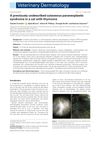
March 2019 in “Veterinary dermatology” Thymoma in cats can cause hair loss without inflammation.
154 citations
,
October 1996 in “Proceedings of the National Academy of Sciences of the United States of America” Estrogen affects hair growth and skin cell multiplication.
5 citations
,
June 2016 in “University of Zagreb University Computing Centre (SRCE)” Most canine follicular tumors in Croatia are benign, but some can be malignant, so testing is important.
7 citations
,
April 2000 in “Archives of Pathology & Laboratory Medicine” June 2025 in “Journal of Ultrasound in Medicine” High-frequency ultrasound effectively evaluates and diagnoses frontal fibrosing alopecia.
4 citations
,
January 2019 in “Journal of cutaneous pathology” The mTOR pathway may be involved in the development of hair follicle tumors, with higher activity in malignant tumors.