April 2013 in “e-Jurnal Medika Udayana” Finasteride effectively treats male pattern baldness.
 January 1993 in “Inpharma Weekly”
 A new food supplement was highly effective in curing hair loss in young men.
 2 citations
,
March 2012 in “JAMA”
2 citations
,
March 2012 in “JAMA” Early surgery reduces seizure risk in drug-resistant epilepsy; testosterone to DHT conversion doesn't affect muscle anabolism; veterans with PTSD likely to have riskier opioid use; bevacizumab helps in hereditary bleeding disorder.
 1 citations
,
February 1988 in “The BMJ”
1 citations
,
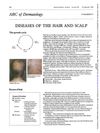
February 1988 in “The BMJ” The document explains different hair and scalp conditions, including common hair loss after pregnancy or illness, drug-induced hair loss, hereditary excessive hair growth, patterned baldness, autoimmune hair loss, and permanent loss due to skin disease, with generally limited treatment options.
 August 2022 in “RECISATEC”
 Female pattern hair loss is common, often starts in the 30s or 40s, worsens after menopause, and can negatively affect quality of life.
 April 2016 in “Medical Acupuncture”
 The document concludes that hair loss in women is treated with medications, therapies, and surgery in Western medicine, and with acupuncture and herbs in Chinese medicine, but hereditary hair loss is hard to reverse.
 August 2010 in “Journal of Investigative Dermatology”
 New hair regrowth model introduced, imiquimod kills skin cancer cells, T-cadherin loss makes skin cancer more invasive, no strong link between PTCH1 gene and skin cancer after transplant, and male teens more likely to have hereditary hair loss.
September 2020 in “Eureka: Health Sciences” The emulgel with specific ingredients was effective for treating hair loss.
 37 citations
,
January 2010 in “International Journal of Trichology”
37 citations
,
January 2010 in “International Journal of Trichology” Hair loss affects quality of life, self-esteem, and confidence, but younger patients cope better.
 1 citations
,
February 2017 in “MOJ bioequivalence & bioavailability”
1 citations
,
February 2017 in “MOJ bioequivalence & bioavailability” Treating hair loss effectively may require a multi-sided approach, using different treatments together, and topical treatments could be more effective and safer than oral ones.
January 2005 in “Farmaceutski glasnik” Minoxidil and finasteride are key treatments for hair loss.
January 2006 in “Casopís lékar̆ů c̆eských” Female hair loss is influenced by genetics and hormones, often starting in middle age or after hormonal changes.
 20 citations
,
July 2017 in “Scientific Reports”
20 citations
,
July 2017 in “Scientific Reports” A single amino acid change in the vitamin D receptor can disrupt its function and lead to hair loss.
4 citations
,
July 2019 in “Vestnik Rossiĭskoĭ akademii meditsinskikh nauk / Rossiĭskaia akademiia meditsinskikh nauk” Both genetics and lifestyle factors contribute to male pattern baldness.
July 2026 in “International Journal of Homoeopathic Sciences” Constitutional homeopathy may effectively manage alopecia areata in children.
 February 2023 in “Medical Clinical Update”
 Some people with alopecia areata, a hair loss condition, get better within a year without treatment, but it can happen again.
 May 2010 in “Journal of the Dermatology Nurses' Association”
 Cicatricial alopecia causes permanent hair loss and is treated to relieve symptoms and stop progression.
4 citations
,
February 2025 in “Journal of Autoimmunity” Alopecia Areata often runs in families and is linked to other autoimmune conditions.
2 citations
,
June 2021 in “Sultan Qaboos University medical journal” Familial frontal fibrosing alopecia is rare, mostly affects women, and often occurs between sisters or mother-daughter pairs.
January 2025 in “Pharmaceutical journal/The pharmaceutical journal” Alopecia areata causes patchy hair loss due to the immune system attacking hair follicles.
7 citations
,
July 2001 in “Endocrinology” Vitamin D 1α-hydroxylase is crucial for bone health and vitamin D metabolism.
 32 citations
,
May 2020 in “European Journal of Pharmacology”
32 citations
,
May 2020 in “European Journal of Pharmacology” Stem cell therapies show promise for hair regrowth but face production and application challenges.
January 2009 in “La ley penal: revista de derecho penal, procesal y penitenciario” Androgenetic alopecia is the most common hair loss, more severe in men, and best treated with a combination of hair growth promoters and antiandrogens.

Caffeine in Alpecin shampoo may help prolong hair root activity and reduce hair loss.
May 2017 in “Journal of the American Academy of Dermatology” Monilethrix is a rare, inherited condition causing fragile hair and hair loss, with no cure but some treatments may help.
54 citations
,
January 1995 in “Human Molecular Genetics” Monilethrix is linked to a gene cluster on chromosome 12.
6 citations
,
December 2015 in “Medicine” Cronkhite-Canada syndrome may be more treatable and less severe than previously thought.
2 citations
,
January 2014 in “Case Reports in Clinical Medicine” Cronkhite-Canada syndrome is a rare condition causing gut polyps, hair loss, skin changes, and nail issues, often with a poor outlook.
October 2017 in “The American Journal of Gastroenterology” Early diagnosis and nutritional support are crucial for managing Cronkhite-Canada Syndrome.
57 citations
,
August 1997 in “Pediatrics International” VDDR I and II are genetic disorders affecting vitamin D use, causing rickets, with VDDR I treatable by vitamin D supplements and VDDR II needing high doses and calcium.