46 citations
,
May 1991 in “British Journal of Dermatology” Heparin can inhibit hair growth in mice when injected.
 June 2018 in “Journal of Clinical Periodontology”
 A patient with "strawberry gingivitis" improved after correct treatment for Granulomatosis with polyangiitis, highlighting the need for early diagnosis.
 118 citations
,
May 2015 in “European journal of pharmaceutics and biopharmaceutics”
118 citations
,
May 2015 in “European journal of pharmaceutics and biopharmaceutics” The hydrogel with a 1:3 ratio of hydroxyethyl cellulose to hyaluronic acid is effective for delivering drugs through the skin to treat acne.
 1 citations
,
September 2023 in “Baghdad Journal of Biochemistry and Applied Biological Sciences”
1 citations
,
September 2023 in “Baghdad Journal of Biochemistry and Applied Biological Sciences” The mFG score is effective for diagnosing hirsutism.
 136 citations
,
April 2013 in “Clinical Cancer Research”
136 citations
,
April 2013 in “Clinical Cancer Research” The drug IPI-926 is safe at 160 mg daily and may help treat certain tumors, especially basal cell carcinoma.
 August 2016 in “Journal of Investigative Dermatology”
 The enzyme CD73 helps control human hair growth and could be targeted to treat hair growth disorders.
 September 2024 in “Pediatrics in Review”
 Parental support and gender-affirming care are crucial for the mental health of transgender adolescents.
 December 2022 in “The Journal of Cosmetic Medicine”
 Hairline-lowering surgery effectively reduces a high hairline with immediate, noticeable results.
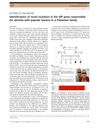 5 citations
,
September 2013 in “The Journal of Dermatology”
5 citations
,
September 2013 in “The Journal of Dermatology” Researchers found a new mutation in the HR gene causing hair loss and skin bumps in a Pakistani family.
112 citations
,
January 2013 in “Experimental dermatology” Faulty Notch signalling may cause hair follicle changes and inflammation in hidradenitis suppurativa.
 17 citations
,
October 2006 in “Molecular and Cellular Endocrinology”
17 citations
,
October 2006 in “Molecular and Cellular Endocrinology” The L457(3.43)R mutation in the human lutropin receptor causes increased activity and hormone insensitivity, leading to precocious puberty.
13 citations
,
March 1997 in “Research in Veterinary Science/Research in veterinary science” Epithelial proliferation and hyperkeratosis are linked to gastric ulcers in pigs.
 January 2024 in “ACS Biomaterials Science & Engineering”
 A new method using a microfluidic device can prepare hair follicle germs efficiently for potential use in hair loss treatments.
 April 2023 in “Dermatologica Sinica”
 Sex hormones affect hair growth and loss, and treatments for related hair diseases include various medications, hair transplantation, and light therapy.
 1 citations
,
April 2016 in “Journal of Investigative Dermatology”
1 citations
,
April 2016 in “Journal of Investigative Dermatology” Blocking Prostaglandin D₂ may help treat hair loss.
May 2024 in “International journal of medicine and psychology.” Ganser syndrome may result from both organic and psychogenic factors.
 September 1997 in “Journal of the European Academy of Dermatology and Venereology”
 Hirsute women with ovarian-sourced hirsutism are more likely to have irregular periods, with higher BMI and altered hormone ratios.
 July 2022 in “Journal of Investigative Dermatology”
 High platelet numbers in PRP may not be essential for hair growth, and certain growth factors could negatively affect treatment outcomes for hair loss.
 August 2023 in “Journal of Investigative Dermatology”
 Ganoderma lucidum extract and its component, ganoderic acid A, may effectively prevent hair loss.
 September 2022 in “bioRxiv (Cold Spring Harbor Laboratory)”
 A parasite-derived molecule speeds up skin healing and affects immune cell behavior without increasing scarring.
 May 2026 in “International Journal of Molecular Sciences”
 The new human placental extract may help prevent hair graying and reduce nerve pain from chemotherapy.
 August 2025 in “International Journal of Contemporary Pediatrics”
 HLD10 can include increased body hair and Mongolian spots.
10 citations
,
May 2024 in “Lasers in Surgery and Medicine” Laser hair removal effectively reduces hidradenitis suppurativa symptoms with few side effects.
 80 citations
,
January 1995 in “The American Journal of Medicine”
80 citations
,
January 1995 in “The American Journal of Medicine” Hair loss in androgenetic alopecia is caused by genetic factors and androgen excess, and can be treated with combined therapies.
 51 citations
,
November 2011 in “Reproductive Biology and Endocrinology”
51 citations
,
November 2011 in “Reproductive Biology and Endocrinology” About 13% of women had idiopathic hirsutism and 8.5% had polycystic ovary syndrome in a group of Iranian women.
 1 citations
,
December 1997 in “Journal of The European Academy of Dermatology and Venereology”
1 citations
,
December 1997 in “Journal of The European Academy of Dermatology and Venereology” All women with significant unwanted hair growth have hormonal imbalances, often from polycystic ovary syndrome.
March 2010 in “Gynecologic and Obstetric Investigation” Hirsutism in women can be a cosmetic issue or a sign of hormonal imbalance, treatable with hormonal and cosmetic methods.
 105 citations
,
February 1996 in “Journal of biological chemistry/The Journal of biological chemistry”
105 citations
,
February 1996 in “Journal of biological chemistry/The Journal of biological chemistry” The TGM3 gene's promoter region is key for skin and hair cell function and may aid gene therapy.
Most excessive hair growth is due to idiopathic hirsutism or PCOS; treatment starts with cosmetic methods and drugs like cyproterone acetate or spironolactone, with results in 6-12 months.
 14 citations
,
March 2010 in “Gynecological endocrinology”
14 citations
,
March 2010 in “Gynecological endocrinology” New treatments for excessive hair growth in women include insulin modulators and enzyme inhibitors.