 December 2022 in “Curēus”
 Genetic testing confirmed a young girl has Atrichia with Papular Lesions due to mutations in the hairless gene.
3 citations
,
August 1988 in “PubMed”  December 2024 in “Journal of Clinical Research in Pediatric Endocrinology”
 21-hydroxylase deficiency causes hormone imbalances leading to various symptoms, and diagnosis involves clinical and genetic tests.
 3 citations
,
March 2010 in “Dermatologica Sinica”
3 citations
,
March 2010 in “Dermatologica Sinica” A Taiwanese patient had hair loss and skin bumps without the usual gene mutation, suggesting other genetic factors might be involved.
14 citations
,
May 2022 in “Stem cell reports” The study created hair-bearing skin models that lack a key protein for skin layer attachment, limiting their use for certain skin disease research.
May 2025 in “Dermatology Reports” A genetic mutation in the LIPH gene causes a rare hair disorder with sparse, curly hair.
January 2008 in “HAL (Le Centre pour la Communication Scientifique Directe)” The mutant HR bmh protein affects hair follicle formation by failing to repress vitamin D receptor activity.
 October 2025 in “EMJ Dermatology”
 Histopathology is crucial for accurately diagnosing eruptive vellus hair cysts.
25 citations
,
November 2020 in “Proceedings of the National Academy of Sciences” HoxC genes are crucial for normal hair and nail development.
 16 citations
,
January 2010 in “American Journal of Neuroradiology”
16 citations
,
January 2010 in “American Journal of Neuroradiology” Specific brain and bone imaging findings can help diagnose Trichothiodystrophy.
3 citations
,
January 2020 in “The journal of investigative dermatology/Journal of investigative dermatology” Skin cells from people with Epidermolysis Bullosa Simplex have abnormally placed and less active mitochondria.
October 2021 in “European Journal of Dermatology” CAL-PDT is safer and more effective for treating actinic keratosis on the scalp.
 1 citations
,
February 2013 in “Clinical pediatrics”
1 citations
,
February 2013 in “Clinical pediatrics” The baby’s hair loss was due to a rare genetic condition, not treatable by usual methods.
5 citations
,
November 1979 in “PubMed” A hereditary condition causes hair loss and twisted hair in some family members.
 5 citations
,
October 2015 in “The American journal of pathology”
5 citations
,
October 2015 in “The American journal of pathology” Mice with a mutated Dsg3 gene showed severe symptoms but not the typical blistering of pemphigus vulgaris.
 10 citations
,
July 2015 in “Current opinion in pediatrics, with evaluated MEDLINE/Current opinion in pediatrics”
10 citations
,
July 2015 in “Current opinion in pediatrics, with evaluated MEDLINE/Current opinion in pediatrics” New genes linked to ichthyosis were found, but there's still no cure; treatment options are improving.
5 citations
,
January 2002 in “European journal of pediatrics” "D-CHRAMPS syndrome" is a newly identified condition with multiple severe symptoms.
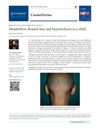 January 2026 in “Cosmoderma”
 A 9-year-old girl has a rare hair disorder causing beaded, sparse hair.
 50 citations
,
October 1986 in “European journal of pediatrics”
50 citations
,
October 1986 in “European journal of pediatrics” A boy with severe Vitamin D-resistant rickets did not respond to treatment and lacked a common symptom, suggesting a need for alternative treatments.
June 2022 in “Dermatologic Therapy” Oral minoxidil and growth factors improved hair density and thickness in a girl with hereditary hair loss.
8 citations
,
December 2016 in “Hormone Research in Paediatrics” Tunisian children with hereditary vitamin D-resistant rickets showed improvement with calcium treatment, and new genetic mutations were identified.
 November 2025 in “Journal of Saidu Medical College Swat”
 Biotinidase deficiency can mimic other conditions, making early diagnosis and treatment crucial to prevent lasting issues.

A new AIRE gene mutation causes rare autoimmune symptoms in a Lebanese boy.
4 citations
,
November 2019 in “Harper's Textbook of Pediatric Dermatology” Endocrine diseases in children can cause various skin and hair changes.
A white-tailed deer fawn in South Dakota was the first cervid found with congenital hypotrichosis, a condition causing sparse or missing hair.
 January 2023 in “International Journal of Contemporary Pediatrics”
 A rare genetic disease causes rickets and often hair loss in young children, which can improve with specific treatments.
August 2016 in “Journal of Investigative Dermatology” EZH2 is essential for hair growth and skin cell development.
January 2005 in “Journal of Cutaneous Pathology” The hair erector muscle is involved in various skin conditions and disorders.
 September 2023 in “Cutis”
 A baby girl has a hair disorder called monilethrix, causing fragile hair that may improve over time.

Doctors should consider Netherton syndrome in patients with chronic skin and hair issues to avoid misdiagnosis.